


A Countertop Machine That Makes 1.25 kg Of Ice An Hour, Fills Its Own Bin, And Runs From A Battery Or A Wall Socket
Most ice machine listings lead with a capacity number and stop there. The number is only half the story, because 30 kg per 24 hours is a rate, not a tank: it works out at about 1.25 kg of ice every hour, produced continuously, into a bin that holds 10 kg. Whether that is enough depends entirely on how fast the ice leaves the bin, and that is a calculation about your business rather than about the machine.
The IM-30 is a countertop cube machine built around exactly that trade: small footprint, ordinary cube ice, a bin you can reach into with a scoop, and a compressor that draws its power from 12 V or 24 V DC as happily as from a 220 V adapter. Put a 19 litre water bottle on the lid and it needs no plumbing at all, which is why the same cabinet turns up behind a bar, in a food truck, on a boat and in a clinic store room.
This page is written the way we would explain it across a counter: where the numbers come from, how long a bin lasts at different draw rates, what the DC side actually needs, and which of the four things that go wrong in service are worth preventing in week one.
30 kg PER 24 HOURS |
10 kg STORAGE BIN |
354 mm WIDTH |
DC 12 V / 24 V |
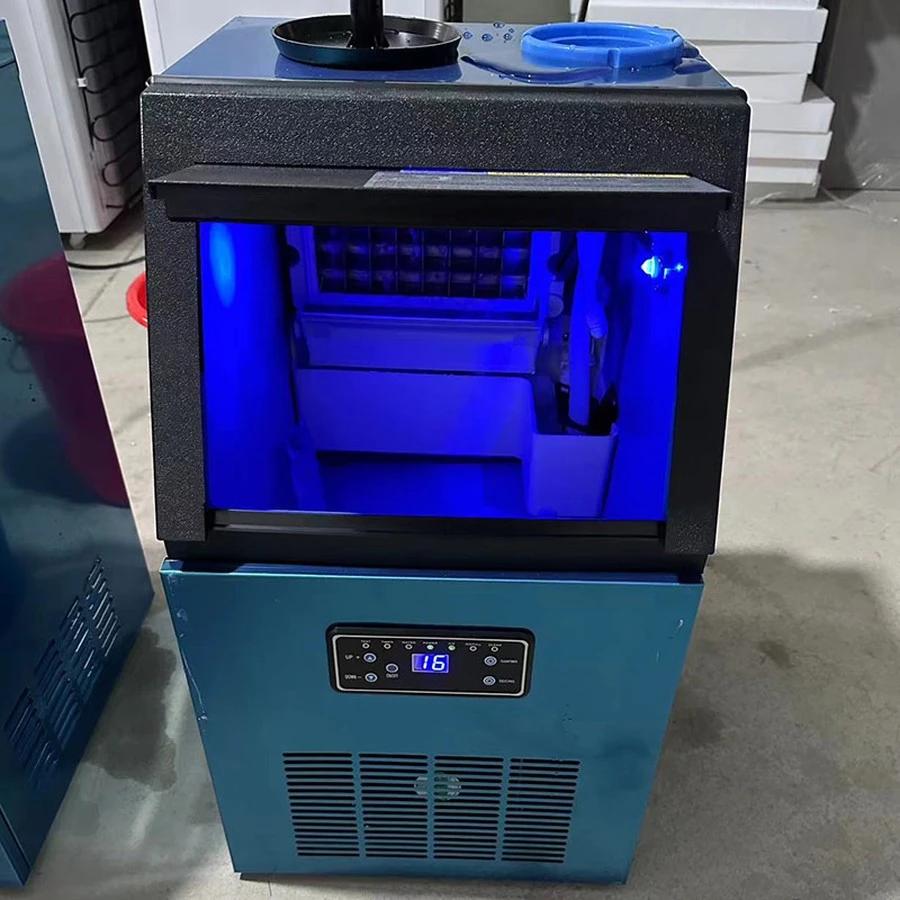
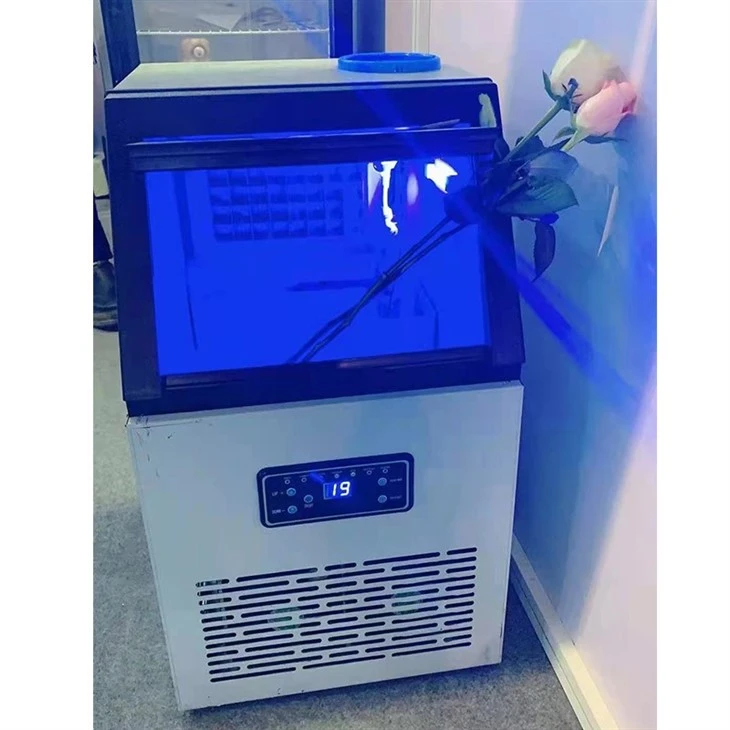
IM-30 on the factory floor: lid closed, cube grid lit inside the bin, control panel and condenser grille on the front face.
1.25 kg An Hour: The Only Number That Sizes This Machine
Divide 30 kg by 24 hours and the machine produces roughly 1.25 kg of ice per hour once it has settled into its cycle. The bin holds 10 kg. Those two figures together describe everything: the machine refills the bin at 1.25 kg/h, and the bin is a buffer between production and consumption.
So the useful question is not "how much ice does it make" but "how fast do we take ice out". Three worked cases, all with the machine running continuously:
| Draw rate | What happens to the bin | Planning conclusion |
| 0.5 kg/h small cafe, ice in drinks |
Bin stays full; the machine cycles on and off once it is topped up | Comfortable. The compressor is idle most of the day, which is good for battery life |
| 1.25 kg/h busy bar at peak |
Bin holds steady at whatever level it started, no spare capacity | Balanced: this is the machine working exactly as designed, with nothing in reserve for a rush |
| 2 kg/h fish display, heat of the day |
Bin drains at about 0.75 kg/h, so a full bin lasts roughly 13 hours | Workable with a full bin at opening, but two machines or a bigger model are the honest answer |
Arithmetic only - no allowance for ice melting in the bin, which adds to the drain in a hot room.
This is also why the machine is bought in pairs more often than in ones by anyone selling ice rather than using it: two cabinets stacked or side by side give the redundancy that a single countertop unit cannot, for less than the price of the next size up in a floor-standing machine.
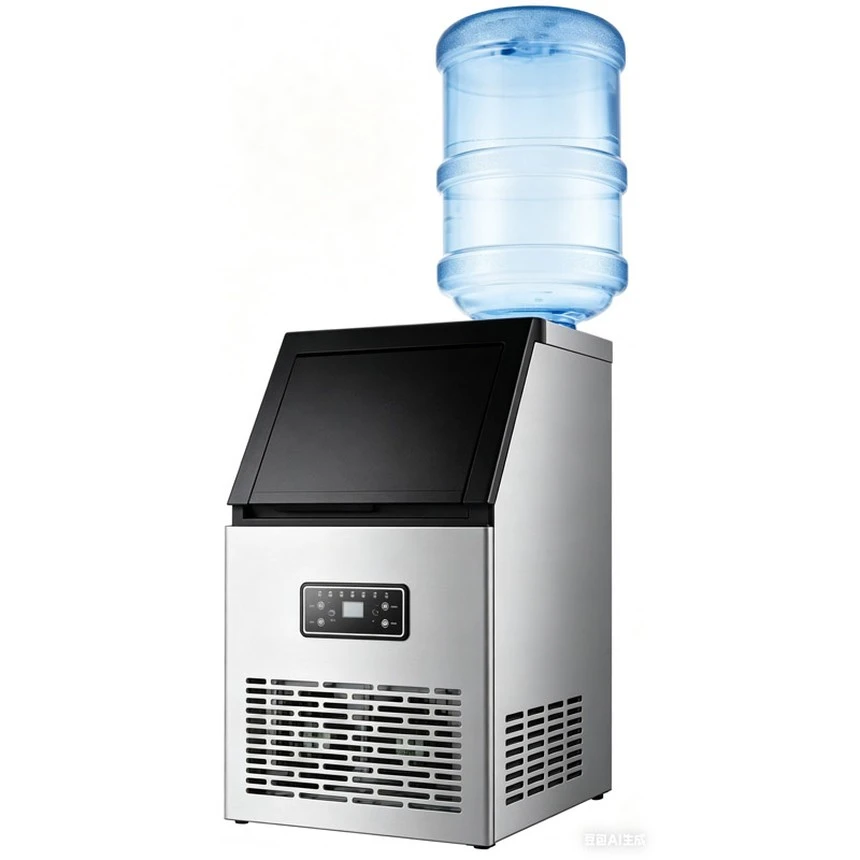
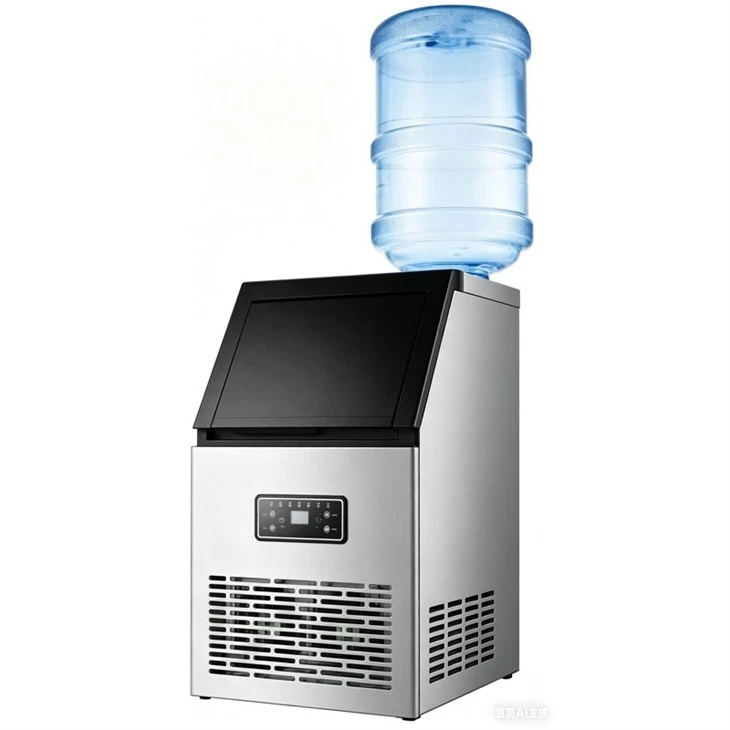
The machine with a 19 litre bottle inverted into the lid: no plumbing, no mains water connection, refill on a schedule rather than on demand.
Where These Numbers Come From
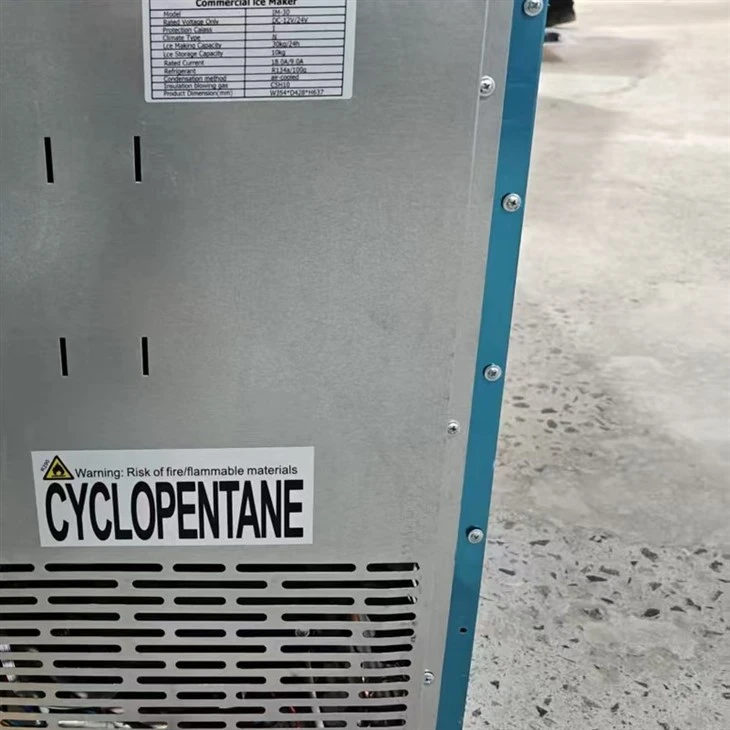
Every figure on this page is taken from the rating label fixed to the machine, not from a brochure. That matters on an ice machine, because the label is what a health inspector, a customs officer or an electrician will read. The plate on this model states:
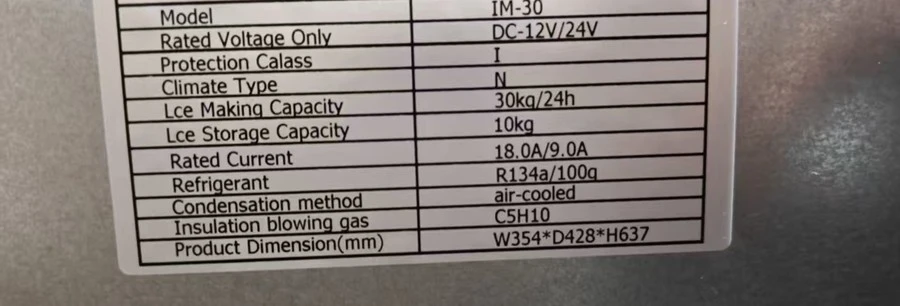
The rating plate: model, supply, protection class, climate class, capacity, storage, current, refrigerant, condensation method, blowing agent and dimensions.
| Ice making capacity | 30 kg / 24 h |
| Ice storage capacity | 10 kg |
| Rated voltage | DC 12 V / 24 V |
| Rated current | 18.0 A at 12 V / 9.0 A at 24 V |
| Refrigerant | R134a, 100 g |
| Condensation | Air-cooled |
| Climate class | N - rated for 16 to 32 °C ambient |
| Insulation blowing agent | Cyclopentane (C5H10) |
| Product dimensions | 354 × 428 × 637 mm (W × D × H) |
Two things the label deliberately leaves out, and so do we: packed weight and carton size. Both are quoted on the order confirmation for the exact build and packing, because 12 V and 24 V versions with different adapters and accessories do not weigh the same.
A Bottle On The Lid Instead Of A Water Main
The single design decision that makes this machine portable is the lid. Water enters through a reservoir top-up under a hinged cover, and a standard 19 litre bottle can be inverted straight into it - the same bottle that a water cooler uses. No tap, no float valve, no drain connection, no plumber.
That sounds like a convenience feature. In practice it changes where the machine can go. A food truck, a boat, a market stall, a site office, a clinic with an unreliable mains supply - none of them can justify a plumbed machine, and all of them can carry a bottle. It also removes a whole class of failure: there is no inlet solenoid to stick, no filter housing to leak, and no water line to freeze in an unheated room.
The trade is refilling. At 1.25 kg of ice an hour the machine consumes water at roughly the same rate, so a 19 litre bottle lasts somewhere between a shift and a day depending on draw. The practical routine is a bottle in the morning and a spare in the store room; anything busier wants two bottles and a marker pen on the calendar.
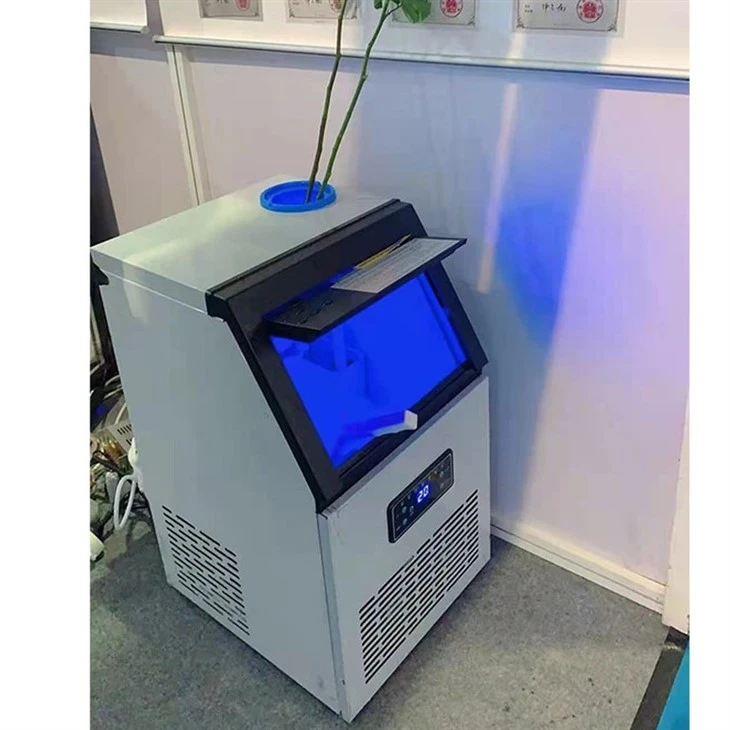
Lid open: the water reservoir and the cube grid of the evaporator, with the ice scoop resting in the bin.
354 Millimetres, And What That Buys On A Counter
The cabinet is 354 mm wide, 428 mm deep and 637 mm tall. That is a footprint of about 0.15 m² - smaller than a microwave, and short enough to sit under a wall cabinet or on a back-bar shelf without blocking the sight line. On a bar counter that is the difference between having ice on the station and walking to a back room for it.
The height matters as much as the width. At 637 mm the lid opens below shoulder height, so filling it is a two-handed job that does not need a stool, and the bin is reachable with a scoop from the front. Machines that are 900 mm tall are more capacious and much worse to live with in a tight service area.
It is also light enough to move by hand between stations: counter by day, store room by night. That is not a feature you will find in a specification table, but it is why this model gets bought for events and seasonal sites where a fixed installation cannot be justified.
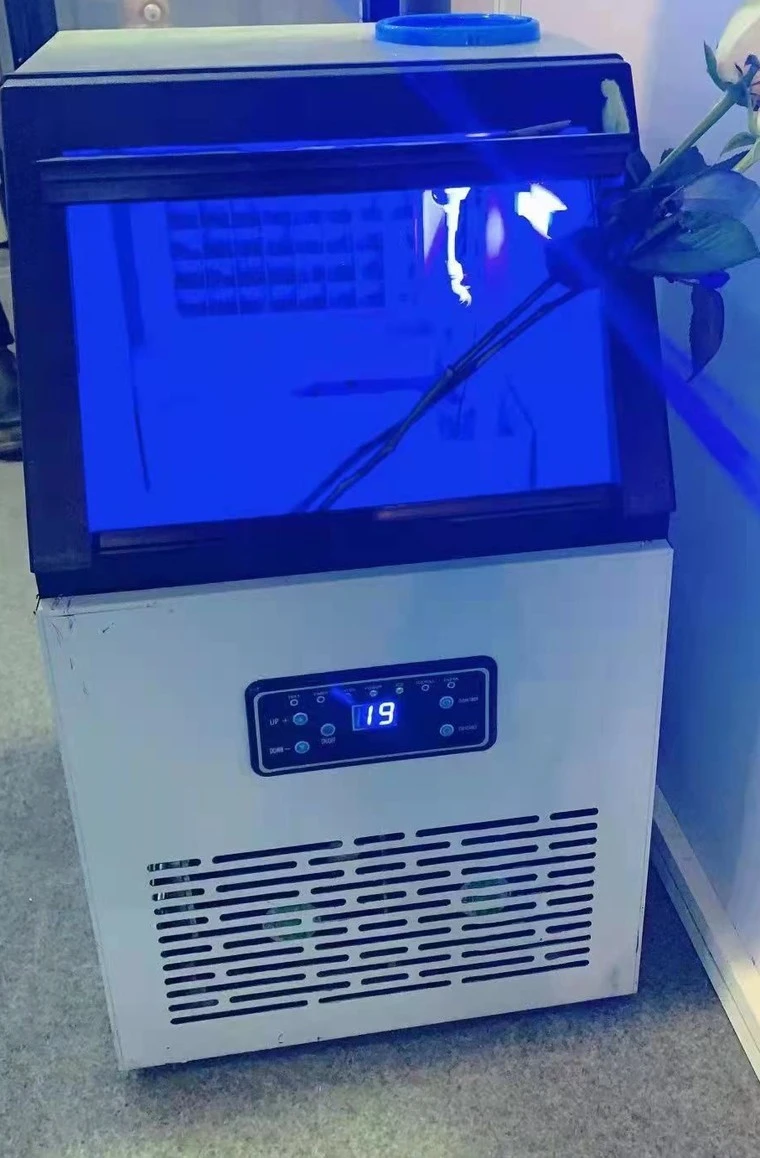
Front view standing on a counter-height surface: 354 mm wide, control panel at working height, condenser grille below.
The Hybrid Bit: 12 V Or 24 V In, Up To 50 V From The Panels
"Hybrid 10–50 VDC" describes two different voltages on the same machine, and confusing them is the most common mistake buyers make with this class of product. On the load side the compressor runs from a 12 V or 24 V battery. On the source side a solar array can deliver anything up to 50 V DC into the charge controller, which then charges that battery at 12 V or 24 V.
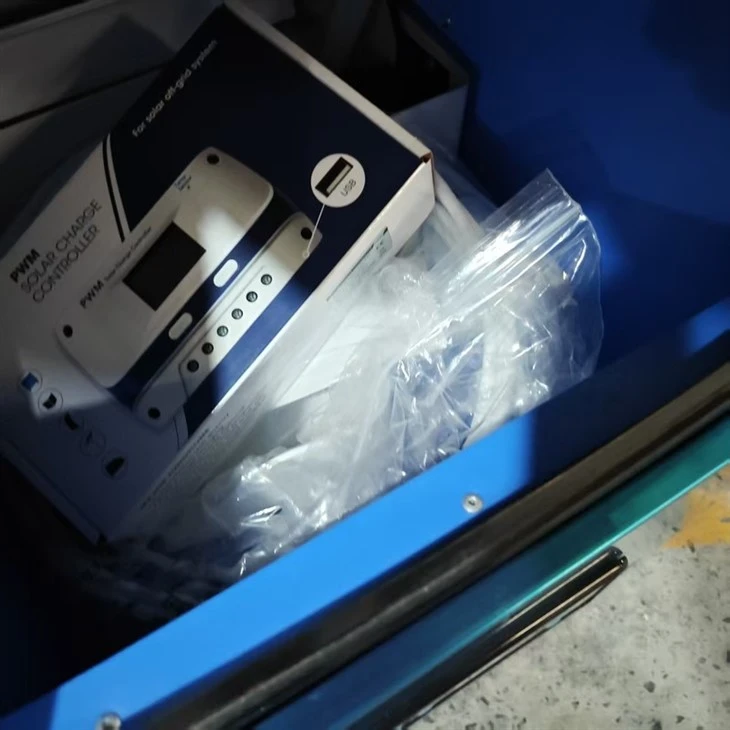
The controller supplied with this machine is a PWM unit rated 12 V / 24 V, 50 A, with a maximum PV input of 50 V and a maximum array of 650 W at 12 V or 1300 W at 24 V. Read those numbers together and the design intent is obvious: a modest array is enough, because the machine is a 216 W load, not a cold room.
Three ways people actually wire it. Mains first: a 220 V adapter feeding the DC input, no battery at all - the simplest installation and the right answer wherever the grid is stable. Battery and panel: a 12 V or 24 V battery bank charged by the panels, machine on the battery, which is what an off-grid bar or a boat wants. Both: a mains charger on the same battery bank for the monsoon weeks, with the panels carrying the rest of the year.
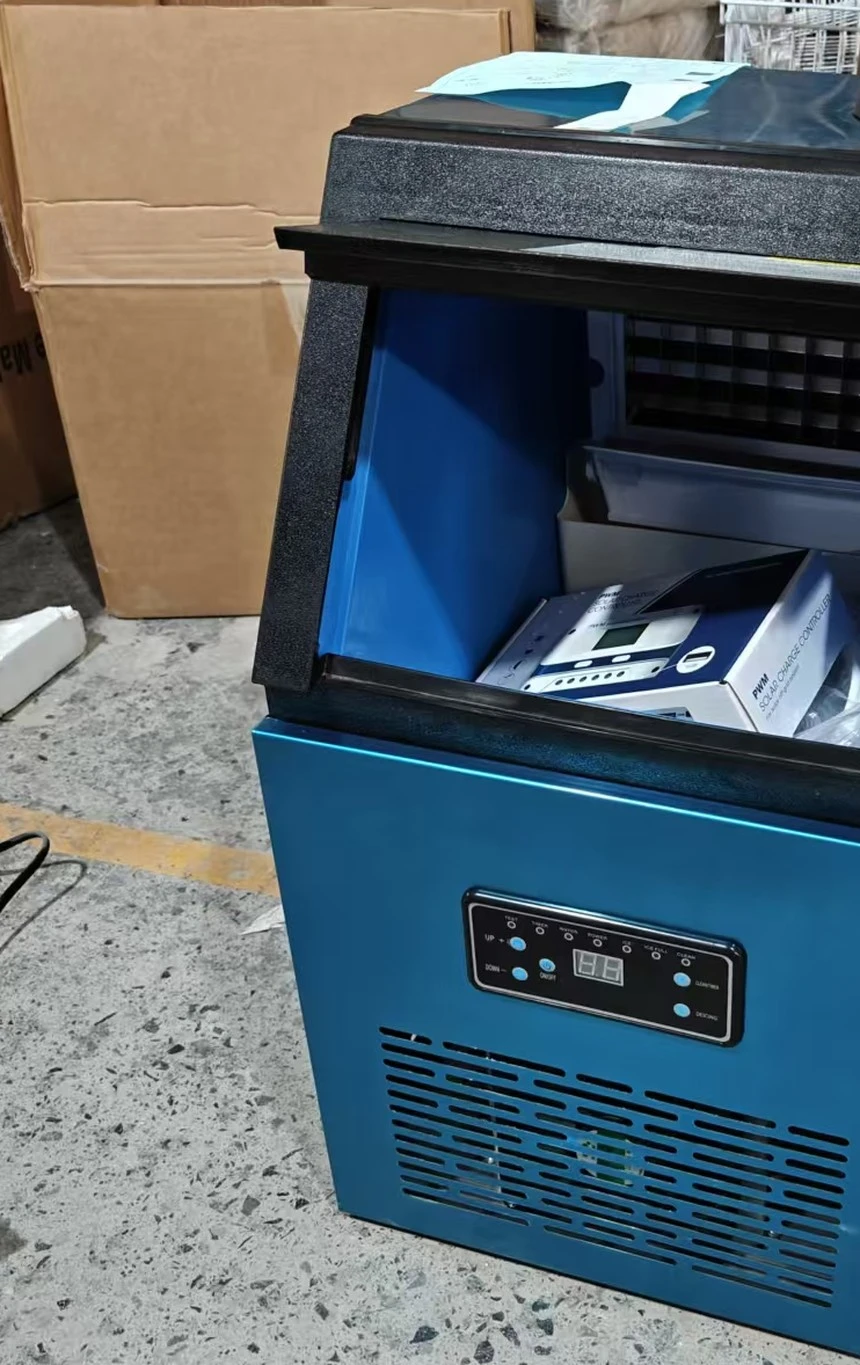
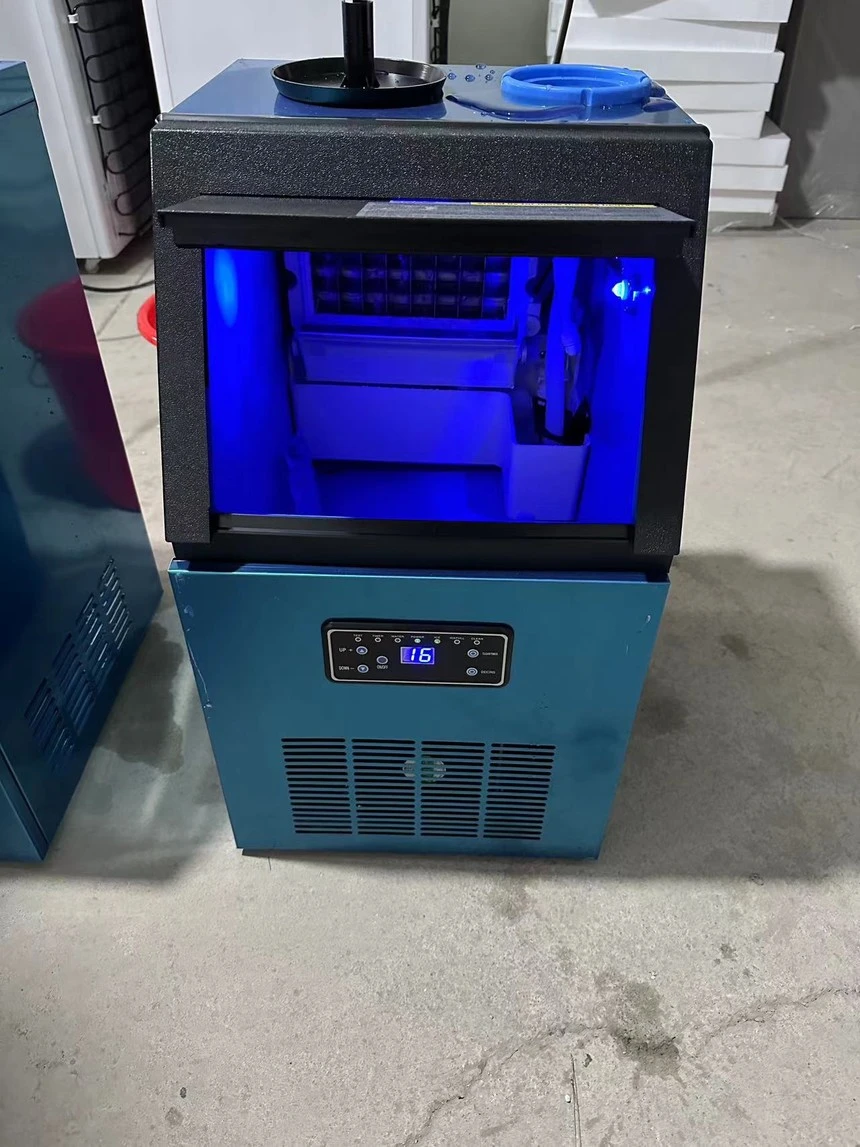 |
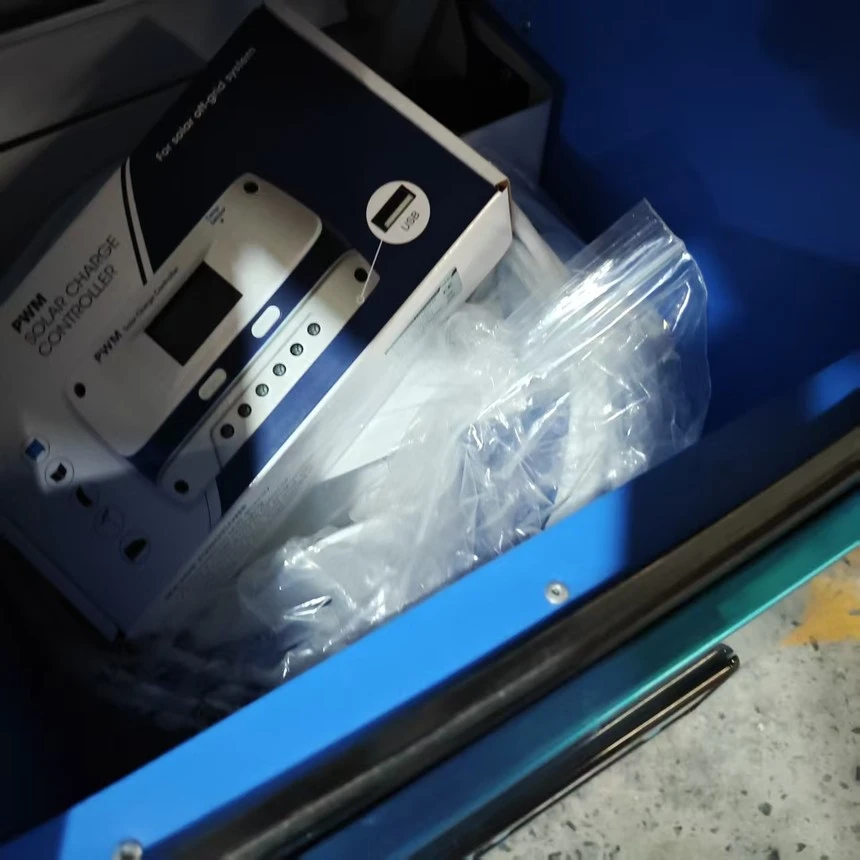 |
Left: the machine as shipped, with the protective film still on the body panels. Right: the PWM charge controller and accessory pack inside the bin on arrival.
18 Amps Or 9 Amps: Why The Voltage Decides The Cable
The label gives two currents for the same machine: 18.0 A at 12 V and 9.0 A at 24 V. Same compressor, same cooling, double the current at half the voltage - which is the whole argument for 24 V on anything except a vehicle.
Current is what heats a cable, and heat in a cable is lost energy plus a voltage drop at the machine end. Double the current quadruples the loss in the same conductor. In practice a 12 V installation wants the battery within a couple of metres and cable thick enough for 18 A continuous; the same installation at 24 V tolerates a longer run with thinner cable, and the compressor sees a healthier voltage at start-up.
Two habits worth adopting: protect the circuit at the battery end, not at the machine, and size for start current rather than the running figure. A compressor that browns out on start will trip a low-voltage cut-out, recover, and trip again - which looks like a refrigeration fault and is actually a wiring fault.
If the site already has a 12 V system with short runs, this machine will run on it happily. If the site is being built from scratch, build 24 V.
How The Cube Is Made, And Why Shape Matters
Inside the bin there is a horizontal evaporator plate with a grid of downward-facing cups. Water is pumped over the plate, fills the cups, and freezes from the outside in. When the cycle ends the plate is warmed briefly, the cubes release, and a rake sweeps them down into the bin. That is the whole mechanism - no moulds to fill by hand, no trays to empty.
The shape is a solid cube rather than a crescent or a tube. A cube melts slowly relative to its surface area, stacks well in a glass, and does not bridge into a single lump in the bin the way thin flake ice does. For drinks service that is what you want; for packing fish, crushed cube is worse than flake, which is worth knowing before you buy an ice machine for the wrong job.
The bin itself is insulated with cyclopentane-blown foam - that is what the C5H10 on the label refers to. In a 32 °C room a full bin will lose ice to melt over a day; keep the lid shut, and accept that the bin is a buffer rather than a freezer. It is not designed to hold ice overnight without loss, and no countertop machine is.
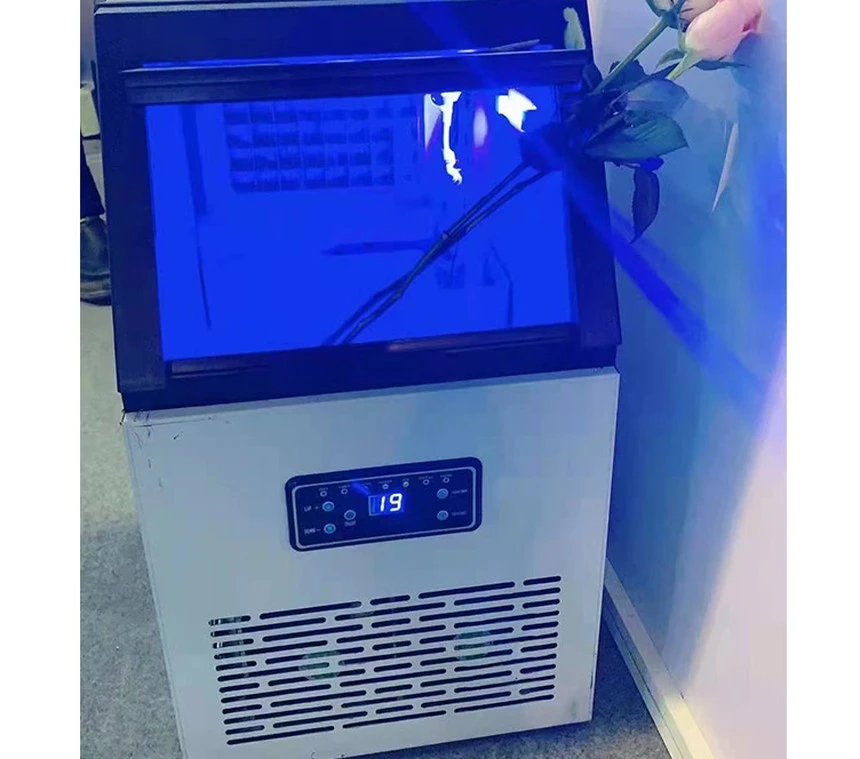
The cube grid seen through the open door: freezing cups on the underside of the evaporator plate, ice visible in the bin below.
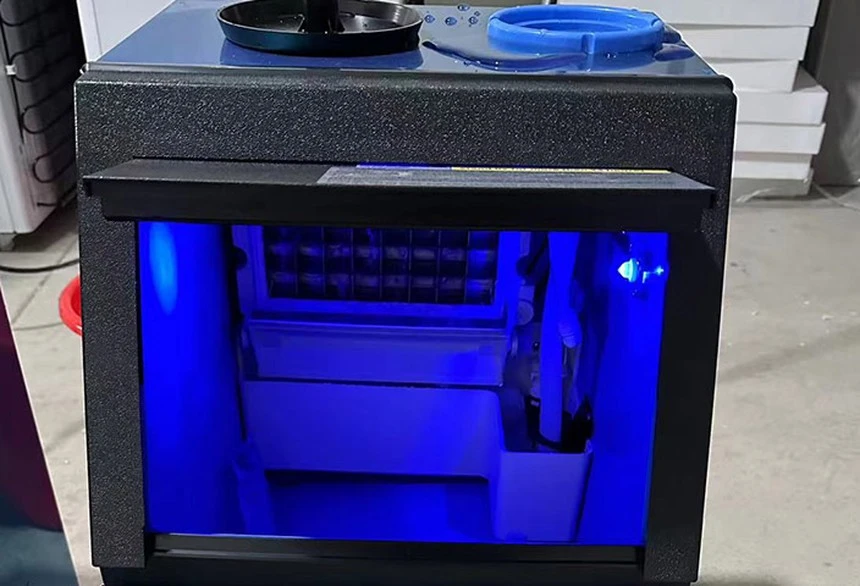
Close view of the lid opening and the evaporator assembly, with the illuminated bin behind.
Air-Cooled, Class N, And The 100 mm Behind The Grille
The condenser is air-cooled with a fan behind the front grille. That makes the machine self-contained - no water cooling, no drain for condenser water - and it also makes the room part of the refrigeration circuit. The label rates the cabinet for climate class N, 16 to 32 °C ambient. Above that, output falls and the compressor runs longer; below it, the machine is comfortable.
The grille needs air, which is the one installation rule that gets ignored. A machine pushed into a closed cabinet, or with its front grille against a shelf, recycles its own hot air and loses output long before anything fails. Leave the front clear, keep 100 mm behind the cabinet, and brush the grille every couple of weeks in a floury or greasy kitchen - a dust mat on the coil is the single most common reason a working machine "stops making ice".
The rear face also carries the rating plate and the cyclopentane warning label. Both are meant to stay legible: they are what a technician, an inspector or a buyer of a used machine will look for.
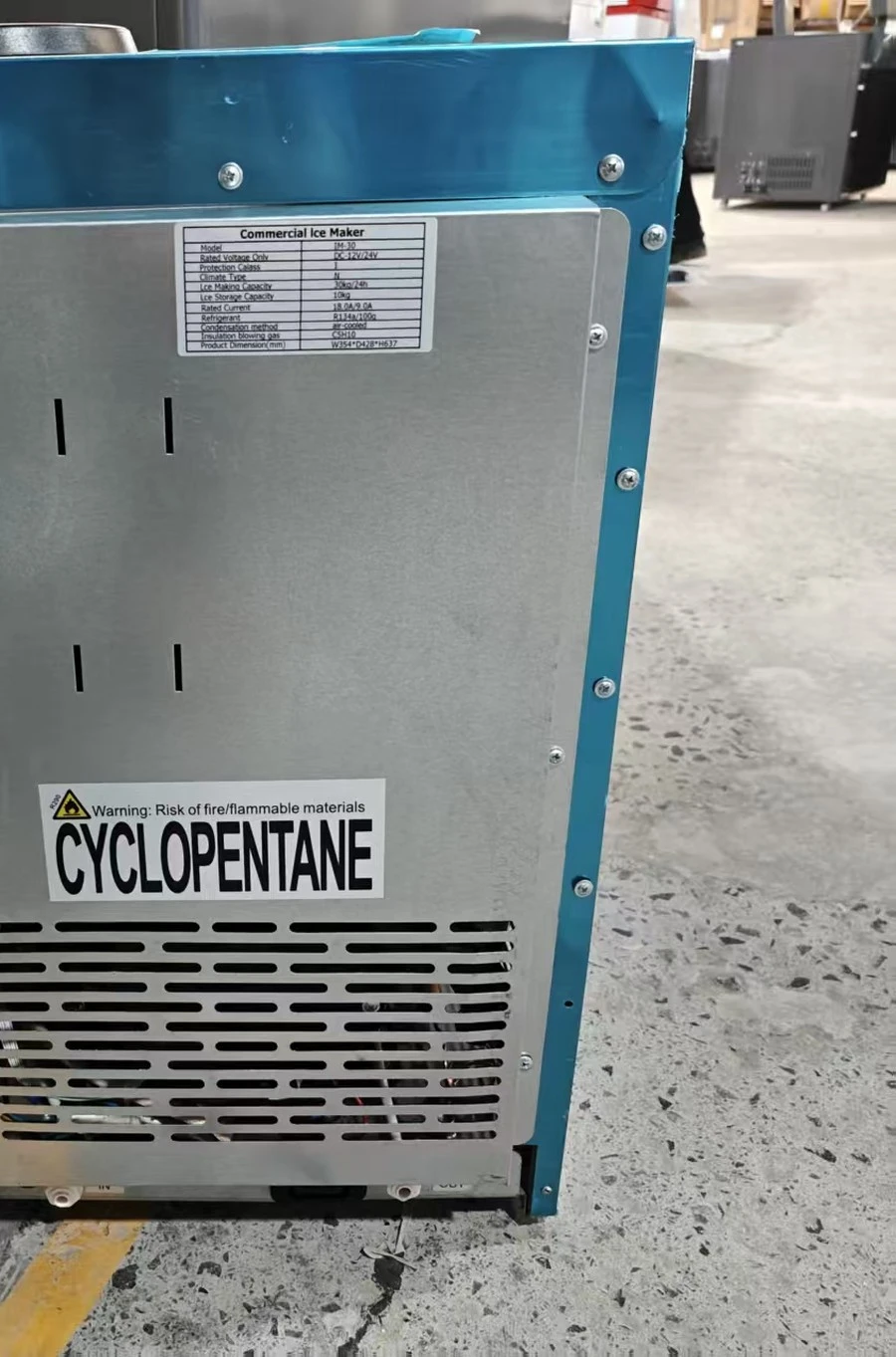
The rear panel: rating plate at the top, service access in the middle, fan grille at the bottom, and the cyclopentane warning label where it belongs.
A Routine That Keeps The Ice Sellable
Ice is a food. The machine will make clear, hard cubes from dirty water just as happily as from clean water, and the difference only shows up in the glass. Four habits cover almost everything:
Water. Potable water in the bottle, and the bottle washed between refills. The machine has no filter; whatever is in the bottle is in the cube.
Scoop. One scoop, stored dry, never left standing in the bin. A scoop left in the ice melts a hole, then the melt refreezes into a lump around it.
Bin. Drain and wipe weekly. Ice that has been sitting for days picks up whatever has been in the bin with it.
Grille and gasket. Brush the condenser monthly, wipe the door gasket weekly. These two are the whole maintenance schedule for the refrigeration side.
Six Places A Countertop Cube Machine Actually Fits
| Setting | How it is used | What to plan |
| Bar / cafe | Cubes for drinks at the station, backup when the delivery is late | Mains adapter; two bottles a day at peak; scoop on a dry holder |
| Food truck / kiosk | Drinks service with no plumbed supply | 12 V from the vehicle battery with the engine running, or a 24 V pack; strap the cabinet down |
| Boat / RV | Ice for the cooler and for drinks, off the house bank | 24 V preferred for cable length; gimbal or chock the cabinet; expect lower output in a hot engine room |
| Clinic / health post | Cold packs for vaccine carriers and injuries | Sealed packs rather than loose cubes; a written fill and release routine for staff |
| Office / pantry | Drinks through the working day | Low draw, so the machine idles most of the day; a bottle on a weekly refill is enough |
| Market stall | Ice for fish, produce and drinks in the same day | Highest draw of the six; run a full bin at opening and treat 10 kg as a working day, not a shift |
The machine does not change between these sites. The draw rate, the bottle routine and the voltage do.
Specification, IM-30
| Model | IM-30 |
| Type | Countertop ice cube machine, air-cooled, self-contained |
| Ice making capacity | 30 kg / 24 h |
| Storage capacity | 10 kg insulated bin |
| Ice type | Solid cube, formed on a horizontal evaporator grid |
| Water feed | Manual reservoir, accepts a 19 L bottle inverted into the lid |
| Power supply | DC 12 V / 24 V, with 220 V AC adapter option |
| Solar input | Hybrid via PWM controller: 12 V / 24 V, 50 A, max PV 50 V, 650 W (12 V) / 1300 W (24 V) |
| Rated current | 18.0 A at 12 V / 9.0 A at 24 V |
| Refrigerant | R134a, 100 g |
| Condensation | Air-cooled, fan-assisted, front grille |
| Climate class | N (16 to 32 °C ambient) |
| Protection class | I |
| Insulation blowing agent | Cyclopentane (C5H10) |
| Product dimensions | 354 × 428 × 637 mm (W × D × H) |
| Packed weight, carton | Confirmed per build on the order confirmation |
| Included | Ice scoop, charge controller, accessory pack; bottle not included |
| Options | 12 V or 24 V build, AC adapter, panel and battery sizing, private label |
Before You Order: Six Questions Buyers Ask
Inside the factory that builds this system
|
Hangzhou Juka Solar Technology was founded in 2015 around one problem: putting solar energy, new energy and smart control to work inside a refrigeration circuit. The range has since grown from a single DC chest freezer to solar refrigerators, solar ice makers, mobile ice-cream carts, delivery tricycles and beverage retail carts - all of them exported, most of them to Belt and Road markets. The work does not stop at the container. Partners in Ghana, Gabon, Cameroon, Nigeria, Kazakhstan and India are supported in setting up their own local production for retail and delivery refrigeration, which is how a cold chain becomes permanent rather than a series of one-off shipments. For a solar system this matters more than for a mains-only freezer. Panel sizing, controller rating and battery capacity all depend on cabinet volume and site conditions, so the cabinet and the electronics are engineered together instead of being bought separately by the importer. |

|
What is decided before the cabinet is built
|
Wall thickness is a production parameter 65 mm or 110 mm foam is set on the foaming line, not assigned in a brochure. Insulation that is specified but not achieved is the usual reason a solar cabinet underperforms in its first hot season. |
One bill of materials Panel, controller, battery and cabinet are listed together, so the importer receives a system whose parts were sized against each other rather than sourced independently. |
|
Voltage as an order option DC input, AC adapter voltage, plug type and control panel artwork are selected per market on the same platform - no separate tooling run for a different destination. |
Repeatable on the second container Foam thickness, fittings and controller model are held per customer, so a follow-up order matches the first one instead of drifting. |
Certification and test documentation
CE marking covers the electrical arrangement, and utility model patents cover the cabinet and the direct-drive control layout. Documents travel with the order so they can be presented at customs and to institutional or tender buyers.

CE - low voltage and EMC |

CE - supplementary schedule |

Utility model patent - cabinet structure |
On the floor

|

|

|

|
Six control points behind every cabinet
01 |
Foaming runs inside a constant 20-23 °C room, so the foam quality does not shift with the season. |
02 |
Condenser and evaporator are nitrogen purged before any pipe joint is made, keeping the internal circuit clean. |
03 |
Vacuum is pulled to below 20 Pa. A unit that does not reach spec is never charged with refrigerant. |
04 |
Two leak tests per cabinet with an INFICON detector - one unpowered, one running. |
05 |
A constant-temperature test room confirms refrigeration parameters under identical conditions all year. |
06 |
Production and quality control are separate departments. Only cabinets signed off by a QC inspector are packed and warehoused. |
Machines on the line
Equipment |
What it gives the buyer |
Automatic laser cutting machine |
Consistent panel geometry, tight tolerances, clean edges |
Punch press and bending machine |
Repeatable cabinet forming from unit to unit |
Dual-gun high-pressure foaming machine |
Even density across the whole cabinet, no thin spots |
CACL high-precision filling machine |
Precise refrigerant charge on every unit |
INFICON high-sensitivity leak detector |
Finds leaks that ordinary detectors pass |
OEM, ODM and local assembly
Cabinet-only supply, private label, SKD and CKD shipments are all available, together with technical guidance for partners who would rather assemble locally than import finished units. Helping partners build their own refrigeration business is the part of the work that outlasts a single purchase order.
What can be changed on a standard order:
✓ Customer logo and cabinet colour
✓ Voltage options and plug type
✓ Packaging design
✓ Product configuration, baskets and fittings
✓ Panel, controller and battery included, or cabinet supplied on its own
Hot Tags: portable solar ice cube machine, China portable solar ice cube machine manufacturers, suppliers, factory


