

When I first started hearing from coastal communities asking if our solar deep freezers could work in their unique environments, I’ll admit I had to do a little digging too. As a supplier who’s spent years refining our off-grid refrigeration solutions, I knew coastal areas came with specific challenges—high humidity, salt air, harsh sunlight, and sometimes erratic power sources. But over the past five years, we’ve deployed hundreds of units in places like coastal Kenya, coastal Brazil, and even small island communities in the South Pacific, so I can tell you with confidence: yes, a solar deep freezer can absolutely thrive in a coastal area—if you pick the right model and set it up correctly. Let me walk you through what I’ve learned, because it’s not just about hooking up panels and hoping for the best.
First, let’s talk about the big concerns when it comes to coastal conditions. Salt air is the enemy of metal and electrical parts. It’s corrosive; it eats away at the outer casing, wears down wiring, and even affects the compressor over time if not protected. Then there’s humidity—coastal air holds more moisture, which can lead to condensation inside the freezer if the seal isn’t tight, or rust on the frame. Also, while sunlight is abundant (which is why solar works so well there), coastal areas might have occasional heavy rain, storm surges, or even salt spray from rough seas during high tides. All of these factors mean you can’t just take a standard inland solar freezer and plop it down on a beach. You need a unit built with coastal durability in mind.
That’s why we designed our series of DC solar deep freezers with these exact challenges in mind. Let’s start with insulation, because that’s the heart of any deep freezer’s efficiency and performance. Thicker foam insulation reduces energy use, which is critical when you’re relying on solar power. Our models come in different foam thicknesses for different needs. For example, the BD/BC-358H 65mm Foaming Thickness Normal DC Solar Deep Freezer Refrigerator is a workhorse for moderate coastal climates. The 65mm foam is enough to keep the internal temperature stable even when the outside air is muggy, because it minimizes the transfer of heat from the warm, humid coastal air into the freezer. But if you’re in an area with extreme temperatures—like a coastal desert where days are sweltering—we recommend the BD/BC-208H 85mm Foaming Thickness Normal DC Solar Deep Freezer Refrigerator. The extra 20mm of foam adds a thicker barrier against heat, so your compressor doesn’t have to work overtime to keep things frozen, which saves battery life and extends the unit’s lifespan.
I remember a conversation last year with a fisherman in Zanzibar who was using a cheap imported solar freezer that died after just six months. He told me the salt air had rusted the metal frame and the humidity had made the seals brittle. When we replaced it with a BD/BC-358H—which has a powder-coated steel casing that resists salt corrosion—he called me three months later saying it was still running strong. The key there was not just the insulation, but the material of the exterior. All our solar freezers use a food-grade, powder-coated outer shell that’s been tested to withstand salt spray. We even add a sealant to all electrical connections to prevent moisture from getting in, which is a game-changer in high-humidity coastal environments.
Another big point for coastal areas is power reliability. Many coastal communities are off-grid or have very unstable grid power, which is why solar deep freezers make so much sense. But it’s not just about having solar panels—it’s about matching the freezer’s power needs to the amount of sunlight available. Coastal areas usually get plenty of sun, but if you’re in a place that has a short rainy season, you need a unit that’s efficient enough to run on a modest number of panels. Our DC models run on 12V or 24V systems, which are compatible with standard solar setups, and they have a low-power compressor that doesn’t draw too much energy. For small-scale operations, like a local market selling fresh seafood, a single-door model like the 65mm Foaming Thickness Normal 12v/24v Solar Deep Freezer Single Door BD/BC-158 is perfect—it’s compact, energy-efficient, and fits on a small porch or even a shaded area near the beach. For larger operations, like a fishing cooperative that needs to store hundreds of kilograms of fish, the 85mm Foaming Thickness Normal 12v/24v Solar Deep Freezer Double Doors BD/BC-608 has double the capacity and the extra insulation to handle higher heat loads.
Wait, some people ask about storm surges and high winds. I’ll be honest—no freezer is going to survive a direct hit from a hurricane, but we’ve designed our units to be mounted securely, either on a raised platform or a concrete pad, to withstand strong coastal winds. We also recommend keeping the solar panels elevated at least three feet off the ground to avoid salt spray during high tides or minor storm surges. One of our clients in Guyana had a storm surge that came up to their panel mounts, and when the water receded, their panels (and the freezer) were fine because they’d been elevated properly. That’s a simple but crucial step—location and mounting matter as much as the unit itself.
Humidity control is another thing we’ve had to refine for coastal areas. When the air is humid, it’s easy for condensation to build up inside the freezer if the door seal isn’t airtight. All our models use heavy-duty rubber door seals that are tested to resist cracking in both high humidity and extreme temperatures. We also include a small drainage system in the bottom of the freezer to get rid of any excess water, which prevents mold or rust from forming. In my experience, the number one maintenance issue in coastal areas isn’t the freezer itself—it’s people not cleaning the door seals regularly. Salt and dirt can build up on the seals, making them lose their grip over time. We include a free seal cleaning kit with every unit sold, and I always tell customers to wipe the seals with a mild soap solution once a month to keep them working.
Let’s talk about real-world results, because numbers don’t lie. Last year, we partnered with a women’s cooperative in coastal Kerala, India. They were selling fresh mangoes and fish, but before using our solar freezers, they had to throw away 30% of their produce due to spoilage, since the local grid only had power 6 hours a day. They installed a BD/BC-208H along with a 4-panel solar setup. In the first six months, their spoilage dropped to under 5%, because the freezer stayed at a steady -18°C even when the sun was shining. The extra 85mm foam meant the compressor only ran for 4 hours a day, even when the outside temperature was 35°C with 80% humidity. They told us they increased their monthly income by 40% because they could keep their produce fresh longer and sell it at a higher price. That’s the impact we’re talking about—solar deep freezers aren’t just a product; they’re a tool that helps coastal communities grow.
Now, let’s address some common misconceptions. Some people think solar freezers are too expensive for small-scale coastal operations, but when you factor in the cost of spoilage and the unreliable grid power, they’re actually a long-term investment. Our models have a lifespan of 10-15 years with proper maintenance, which is way longer than most imported units. Also, we offer flexible payment plans and after-sales support in many coastal regions, so you don’t have to worry about being stuck with a unit no one can repair. We also have a range of Off Grid Cold Storage solutions that are perfect for larger coastal facilities, like fish processing plants or community cold storage hubs. These are designed to hold even more volume and can be customized to fit the specific needs of a coastal operation—whether that’s more insulation, reinforced framing, or higher-capacity solar setups.
Another thing to consider is sunlight intensity. Coastal areas usually have strong, direct sunlight, which is ideal for solar panels, but sometimes there’s sea fog that can reduce sunlight in the early morning or late afternoon. Our freezers are designed with efficient compressors that can adapt to variable power input, so even if you get a little less sun one day, the battery can handle it. We also recommend sizing the battery bank to last 2-3 days without sunlight, just in case of a few cloudy days or a storm. That buffer is important in coastal areas where weather can be unpredictable.
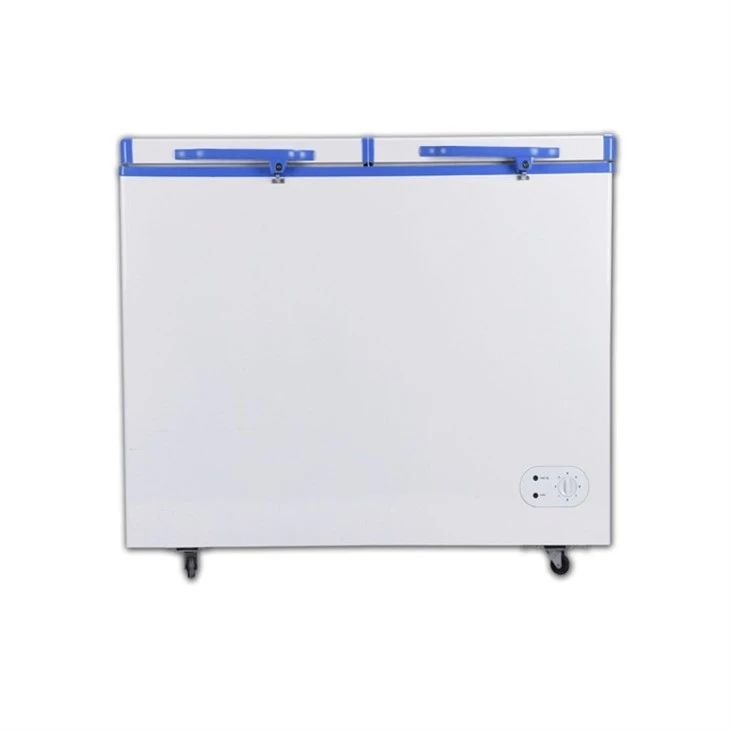

I’ll be the first to admit that coastal use does require a little more planning than inland use. You can’t just order a freezer and have it work without thinking about mounting, maintenance, and panel placement. But when you pick the right model—like our BD/BC-358H, BD/BC-208H, or BD/BC-608—and follow a few simple steps, it works just as well (if not better) than it does inland. The key is choosing a unit built for the specific conditions, not a one-size-fits-all model.
As someone who’s been in this business for over a decade, I’ve seen how a good solar freezer can change lives. In coastal communities, where fresh food is hard to keep and power is scarce, a reliable deep freezer isn’t a luxury—it’s a necessity. Fishermen can sell more of their catch instead of throwing it away. Farmers can get better prices for their produce because it stays fresh longer. Small businesses can grow and employ more people. That’s why we’ve spent so much time refining our models to work in coastal areas—because we care about the communities that need them most.
If you’re in a coastal area and you’re wondering which solar deep freezer is right for you, don’t guess. Reach out to our team—we’ve worked with hundreds of customers in coastal regions, and we can help you pick the right model based on your specific needs, whether that’s a small single-door unit for a market stall or a large cold storage hub for a cooperative. We’ll also share tips on mounting, maintenance, and sizing your solar setup to make sure it works perfectly for your location.
Don’t let the coastal environment scare you off. Solar deep freezers are more than capable of handling salt air, humidity, and even occasional bad weather—you just need the right product and the right support. We’re here to help you every step of the way, so you can stop worrying about spoilage and start growing your business.
References
- Global Solar Refrigeration Association. (2022). "Performance of DC Solar Cold Storage Units in Humid Coastal Climates." Renewable Energy for Rural Development Journal.
- Coastal Engineering Research Center. (2021). "Corrosion Resistance of Powder-Coated Steel for Marine Applications." U.S. Army Corps of Engineers Technical Report.
- Food and Agriculture Organization (FAO). (2020). "Reducing Post-Harvest Spoilage in Small-Scale Coastal Fisheries and Agriculture." FAO Fisheries and Aquaculture Circular.
- International Energy Agency (IEA). (2023). "Off-Grid Solar Solutions for Cold Chain Management." IEA Renewable Energy Working Paper.