

Hey there! As a supplier of solar air conditioners, I often get asked how these nifty devices control temperature. Well, let's dive right into it!
The Basics of Solar Air Conditioners
First off, you gotta understand the main difference between a regular air conditioner and a solar one. A regular AC runs on electricity from the grid, which can be a real energy - hog and cost you a fortune in bills. On the other hand, a solar air conditioner uses the sun's energy, making it more eco - friendly and cost - effective in the long run.
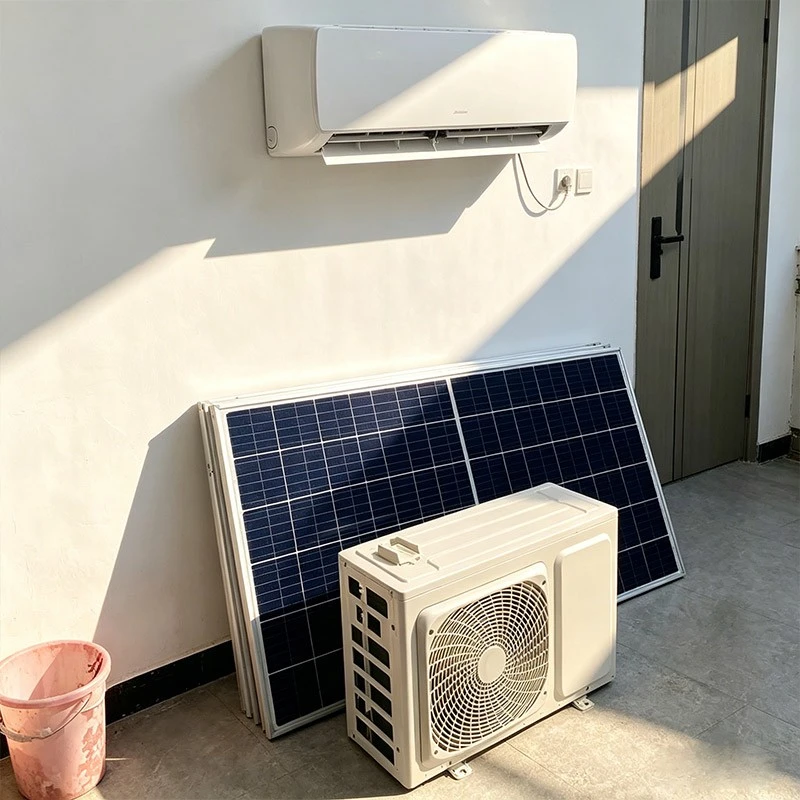
Our company offers a variety of solar air conditioners, like the 18000btu Solar Air Conditioner Off Grid Pura Solar Air Conditioner 48V and the 9000btu Solar Air Conditioner Off Grid Pura Solar Air Conditioner 48v. These are great for places where you don't have easy access to the power grid. And if you're connected to the grid, we also have the 9000btu Solar Air Conditioner On Grid Hybrid Solar Air Conditioner, which can use both solar power and grid electricity.
How Solar Energy is Harnessed
The whole process starts with the solar panels. These panels are made up of photovoltaic (PV) cells, which are like little energy factories. When sunlight hits these cells, they create an electric current through a process called the photovoltaic effect. It's pretty cool how it all works!
The electricity generated by the solar panels is then sent to a charge controller. This controller is like a traffic cop for the electricity. It makes sure that the power going to the battery (if it's an off - grid system) or the air conditioner is the right amount and the right voltage. Overcharging a battery can cause damage, and an improper voltage can mess up the air conditioner, so the charge controller is super important.
The Cooling Process
Once the solar air conditioner gets the power it needs, it's time to start cooling. The basic principle behind an air conditioner, whether it's solar or not, is the refrigeration cycle. This cycle has four main parts: the compressor, the condenser, the expansion valve, and the evaporator.
The compressor is the heart of the air conditioner. It takes in low - pressure refrigerant gas and squeezes it into a high - pressure, high - temperature gas. This high - pressure gas then moves to the condenser. The condenser is like a big radiator. As the hot gas flows through it, it releases heat to the outside air. Cool air from outside blows over the condenser coils, helping the refrigerant to cool down and turn into a high - pressure liquid.
After the condenser, the high - pressure liquid refrigerant goes through the expansion valve. This valve suddenly reduces the pressure of the refrigerant, which causes it to expand and turn into a low - pressure, cold liquid. This cold liquid then enters the evaporator.
The evaporator is inside the room that you want to cool. As the warm air from the room blows over the evaporator coils, the cold refrigerant in the coils absorbs the heat from the air. The now - cooled air is then blown back into the room, and the cycle continues.
Temperature Control Systems
Now, let's talk about how the air conditioner actually controls the temperature. Most modern solar air conditioners come with a thermostat. A thermostat is like a little brain for the air conditioner. You set the temperature you want on the thermostat, say 72°F (22°C).
The thermostat constantly measures the temperature of the air in the room. If the temperature is higher than the set temperature, the thermostat sends a signal to the air conditioner to start the cooling cycle. The compressor kicks in, and the refrigerant starts flowing through the system to cool the air.
Once the room temperature reaches the set temperature, the thermostat sends another signal to the air conditioner to stop the compressor. This way, the air conditioner only runs when it needs to, saving energy and keeping your room at a comfortable temperature.
Some of our more advanced models, like the ones with 12000btu, also have smart temperature control features. They can learn your temperature preferences over time and adjust the cooling automatically. For example, if you usually like a cooler temperature at night, the air conditioner can sense the time and adjust the temperature accordingly.
Factors Affecting Temperature Control
There are a few factors that can affect how well a solar air conditioner controls the temperature. The size of the room is a big one. If you have a large room but a small air conditioner, it'll struggle to cool the space down to the desired temperature. That's why it's important to choose the right size of air conditioner for your room.
The insulation of the room also matters. A well - insulated room will hold the cool air better, and the air conditioner won't have to work as hard to maintain the temperature. On the other hand, a room with poor insulation will let the cool air escape, and the air conditioner will have to run more often.
The amount of sunlight and heat coming into the room is another factor. If your room gets a lot of direct sunlight, it'll be harder for the air conditioner to keep the temperature down. You can use curtains or blinds to block out the sunlight and help the air conditioner work more efficiently.
Why Choose Our Solar Air Conditioners
Our solar air conditioners are top - notch when it comes to temperature control. They use the latest technology to ensure that you get the perfect temperature in your room every time. Whether you need a unit for a small bedroom or a large living room, we have the right size and capacity for you.

We also offer great customer support. If you have any questions about how to set up or operate your solar air conditioner, or if you're having trouble with temperature control, our team is here to help.
Let's Connect!
If you're interested in our solar air conditioners and want to learn more about how they can control temperature in your space, we'd love to hear from you. Just reach out to us, and we can have a chat about your needs, preferences, and how our products can be the perfect fit for you. We're always ready to discuss possible purchases and answer any questions you might have.
References
- "Heating, Ventilating, and Air - Conditioning Technology" by Eugene Silberstein, Linda Larson, and Mark Larson.
- "The Solar Energy Handbook" by Hugh P. McNeal.