

As a solar freezer supplier, I've witnessed firsthand the growing demand for these energy - efficient appliances. Solar freezers are a boon in off - grid areas and places with unreliable electricity. However, understanding how their performance degrades over time is crucial for both us suppliers and our customers.
Refrigeration System Degradation
The core of any freezer is its refrigeration system. In solar freezers, this system is designed to operate using solar power, which adds an extra layer of complexity. Over time, the compressor, the heart of the refrigeration cycle, can experience wear and tear. The compressor is responsible for compressing the refrigerant gas, raising its temperature and pressure, and then circulating it through the system to remove heat from the freezer compartment.
Frequent start - stop cycles can cause mechanical stress on the compressor. In solar freezers, the power supply can be intermittent depending on sunlight availability. This means the compressor may start and stop more often than in a traditional freezer connected to a stable grid. As the compressor ages, its efficiency decreases. It may take longer to reach the desired temperature, and it will consume more energy to maintain that temperature. For instance, a new solar freezer might be able to reach - 18°C within 30 minutes and consume only 100Wh of energy per day to maintain this temperature. After a few years of use, it could take up to an hour to reach the same temperature and consume 150Wh per day.
The refrigerant in the system can also be a source of performance degradation. Over time, small leaks can develop in the refrigerant lines. Even a tiny leak can cause a significant drop in cooling performance. As the refrigerant level decreases, the compressor has to work harder to achieve the same cooling effect. This not only reduces the efficiency of the freezer but can also lead to premature compressor failure.

Insulation Erosion
Another key factor in solar freezer performance degradation is insulation. High - quality insulation is essential for maintaining a low temperature inside the freezer while minimizing the amount of energy required to do so. Modern solar freezers often use polyurethane foam insulation, which offers excellent thermal resistance.
However, this insulation can deteriorate over time. Exposure to temperature fluctuations, humidity, and physical damage can all contribute to insulation erosion. For example, if the freezer is installed in a humid environment, moisture can seep into the insulation material. Moisture reduces the insulation's ability to resist heat transfer, allowing more heat to enter the freezer compartment.
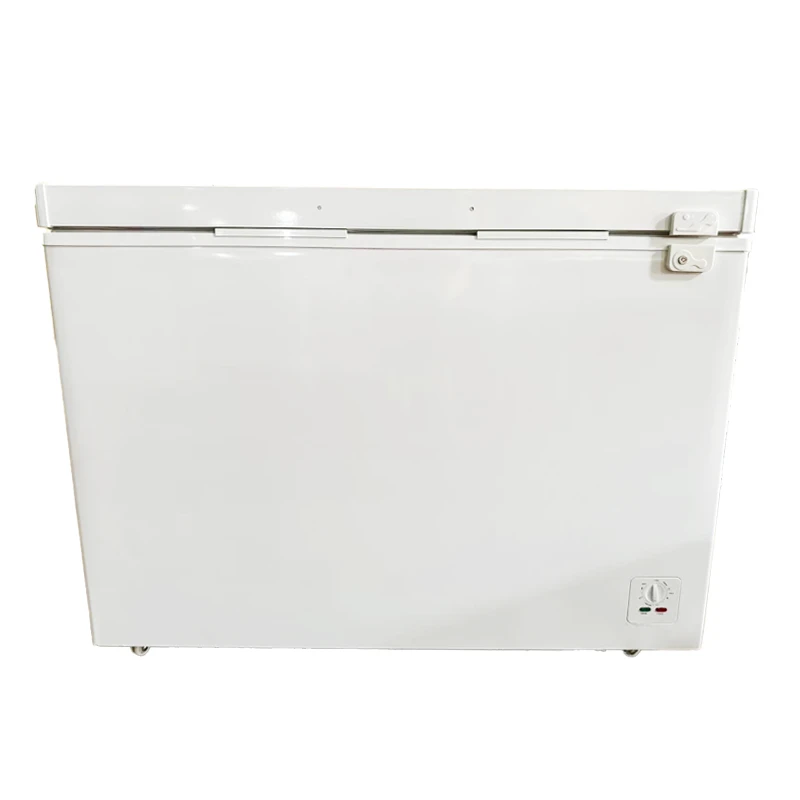
Our 85mm Foaming Thickness Normal 12v/24v Solar Deep Freezer Single Door BD/BC - 408 comes with a relatively thick layer of insulation, which provides better long - term performance compared to freezers with thinner insulation. But even with thick insulation, it's not immune to degradation. The 65mm foaming thickness models, such as our 65mm Foaming Thickness Normal 12v/24v Solar Deep Freezer Single Door BD/BC - 308 and 65mm Foaming Thickness Normal 12v/24v Solar Deep Freezer Single Door BD/BC - 158, may experience more rapid performance degradation due to the thinner insulation layer.
Solar Panel Efficiency Decline
Since solar freezers rely on solar panels to generate power, the performance of these panels is also a critical factor. Solar panels are made up of photovoltaic cells that convert sunlight into electricity. Over time, these cells can degrade due to several factors.
One of the main causes of solar panel degradation is exposure to sunlight itself. The ultraviolet (UV) rays in sunlight can cause chemical reactions in the photovoltaic cells, which can reduce their efficiency. Additionally, environmental factors such as temperature, humidity, and dust accumulation can also affect panel performance. High temperatures can cause the electrical resistance of the cells to increase, reducing the amount of electricity they can produce.
Dust and debris can accumulate on the surface of the solar panels, blocking sunlight from reaching the photovoltaic cells. This reduces the panel's ability to generate electricity. Regular cleaning can help mitigate this issue, but over time, the overall efficiency of the panels will still decline. A new solar panel might have an efficiency rating of 20%, but after 10 years of use, this could drop to 15% or even lower.
Battery Aging
Solar freezers often use batteries to store the energy generated by the solar panels for use during periods of low sunlight or at night. These batteries are typically lead - acid or lithium - ion batteries. Both types of batteries experience aging over time.
Lead - acid batteries are more commonly used in solar freezers due to their relatively low cost. However, they have a limited number of charge - discharge cycles. Each time a lead - acid battery is charged and discharged, a small amount of the active material inside the battery plates is lost. Over time, this leads to a reduction in the battery's capacity. A new lead - acid battery might be able to store 100Ah of charge, but after a few years of use, its capacity could drop to 60Ah or less.
Lithium - ion batteries, on the other hand, have a longer lifespan and a higher number of charge - discharge cycles compared to lead - acid batteries. But they are also not immune to aging. High temperatures and overcharging can accelerate the aging process of lithium - ion batteries. As the battery capacity decreases, the solar freezer may not be able to operate for as long during periods without sunlight.
Impact of Maintenance
Proper maintenance can significantly slow down the performance degradation of solar freezers. Regular cleaning of the solar panels, checking the refrigerant levels, and inspecting the insulation for damage can all help keep the freezer running efficiently for longer.
However, in many off - grid areas where solar freezers are commonly used, maintenance can be challenging. There may be a lack of trained technicians, and replacement parts may be difficult to obtain. This can lead to more rapid performance degradation and a shorter overall lifespan for the solar freezer.
Conclusion
In conclusion, the performance of a solar freezer degrades over time due to several factors, including refrigeration system wear, insulation erosion, solar panel efficiency decline, and battery aging. As a solar freezer supplier, it's our responsibility to educate our customers about these issues and provide them with the best possible products and maintenance advice.
If you're interested in purchasing a solar freezer or have any questions about their long - term performance, we're here to help. Contact us to discuss your specific needs and find the best solar freezer solution for you.
References
- "Solar Refrigeration Systems: Design, Analysis, and Applications" by various experts in the field.
- Industry reports on the long - term performance of solar freezers and their components.
- Manufacturer's specifications and technical documents for solar freezers and related components.