

If you’ve ever stood in front of a showroom or scrolled through product pages, wondering if a 24 volt freezer is actually the right fit for your needs, you’re not alone. As a supplier of Freezer 24 Volts systems, I’ve fielded this exact question hundreds of times—from weekend campers planning a cross-country road trip, to small business owners stocking fresh produce for rural communities, to homeowners off-grid in remote areas with limited power access. The truth is, choosing the wrong size 24 volt freezer isn’t just an inconvenience; it can lead to wasted energy, spoiled food, or even a system that’s too bulky to fit in your intended space.
Unlike standard wall plug-in freezers, 24 volt freezers are designed for mobility, off-grid use, and low-power operations, which means their sizing rules are a little different. You can’t just go by the square footage of your garage or the amount of food you think you’ll store. You have to account for power capacity, space constraints, how often you access the freezer, and even the climate where you’ll use it. Let’s break this down step by step, using real-world examples and insights I’ve gained from years working with customers on their freezer choices.
First, start with the core purpose: what will you be using your 24 volt freezer for? This is the foundation of every good size decision. A family going camping for two weeks will have very different needs than a village market vendor selling frozen meat and fish. Let’s run through common use cases to give you a sense:
- Recreational use: Campers, RVers, and boaters often need compact, portable storage. For a small group of 2-4 people, you’ll want enough space for frozen meals, snacks, and beverages—think a volume that fits 20-50 liters of food. If you’re taking a longer trip (over a month) or have a larger group (5+ people), you’ll need 50-100 liters minimum.
- Residential off-grid: Homeowners not connected to the power grid usually want a freezer that can store a mix of frozen groceries, bulk meat, and homemade meals. For a single person or small household (1-2 people), 100-150 liters is often enough. For a family of 3-5, 150-250 liters is a sweet spot.
- Commercial or semi-commercial use: Small businesses like roadside stands, remote work sites, or community food pantries need consistent, reliable storage for inventory. This usually means 250 liters or more, with extra features like double temperature zones or durable construction for daily use.
Wait, but why not just pick the largest unit that fits? Because 24 volt freezers run on battery power, usually paired with solar panels for off-grid setups. A larger freezer uses more energy, which means you’ll need bigger, more expensive batteries and solar panels to keep it running. For example, a 100 liter 24 volt freezer uses roughly 1.2 kWh of power per day in moderate temperatures, while a 250 liter unit uses around 2.8 kWh. If you’re relying on a small solar array, that difference can mean the difference between your freezer staying cold and your batteries dying mid-week. That’s why matching size to purpose is non-negotiable.
Next, measure your available physical space. This sounds obvious, but you’d be surprised how many customers forget to check dimensions and order a freezer that’s too big for their RV, truck bed, or utility room. 24 volt freezers come in a range of footprints, from under-counter models to upright units, and it’s not just about length and width—you have to account for clearance on top, sides, and back for ventilation. Poor ventilation is one of the top causes of early freezer failure, and even a unit that fits perfectly on the floor can overheat if there’s no room for air to circulate.
Let’s talk about a real example from last year. A customer named Jake from Portland, Maine, ordered a compact 80 liter 24 volt freezer for his tiny home’s back porch. He measured the space as 24 inches wide, 30 inches deep, and 32 inches tall, and the product page said the freezer was 22 inches wide, 28 inches deep, and 30 inches tall. But he didn’t leave 6 inches of clearance on the back for the compressor and cooling system. Within a month, the freezer was running constantly, his power bill spiked, and half his ground beef spoiled. We had to help him move it to a shaded, well-ventilated spot and add a small fan for airflow—something he would have done if he’d considered clearance from the start.
For reference, most 24 volt freezer models have standard dimension ranges: compact portable units (for camping) are 18-24 inches wide, 12-20 inches deep, and 18-24 inches tall (20-100 liters). Upright or double-door models for residential or small commercial use are 28-48 inches wide, 25-35 inches deep, and 55-70 inches tall (150-300 liters). If you’re planning to use your freezer in a vehicle, always factor in space for other gear too—storage is at a premium on RVs, boats, and work trucks, so don’t oversize just for extra space you might not need.
Once you’ve nailed down purpose and physical space, it’s time to calculate your actual storage needs. This is where many people go wrong: they guess how much food they’ll store, but frozen food takes up more space than you think, and different items have different volumes. For example, 1 kilogram of frozen berries takes up about 1 liter of space, while 1 kilogram of frozen meat takes up about 0.5 liters because it’s denser. A standard grocery store gallon of ice cream is about 3.8 liters, and a case of frozen dinners is around 10 liters.
A good rule of thumb is to plan for 70% utilization of your freezer’s capacity. Why 70%? Because if you stuff it to the brim, cold air can’t circulate, which makes the compressor work harder (wasting energy) and leads to uneven freezing (spoiling food). If you leave too much empty space, you’re wasting money on a bigger, more expensive unit that’s not being used. Let’s test this rule with a common scenario: a family of 4 storing bulk meat, frozen vegetables, and homemade meals.
Total estimated food volume: 50 liters for bulk meat (100 kg, at 0.5 L/kg), 30 liters for frozen vegetables, 20 liters for homemade meals, and 10 liters for ice and frozen desserts. That adds up to 110 liters total. If we use the 70% rule, we divide 110 by 0.7, which gives us roughly 157 liters. So a 150-160 liter freezer is perfect for this family—just enough space without being oversized. If you only store occasional frozen items, you can go lower; if you host regularly or preserve a lot of homegrown food, you might bump up to 180-200 liters.
If you’re new to 12 volt or 24 volt appliances, you might be wondering how this compares to the 12V models you’ve seen for camping. A lot of people mix up 12 volt and 24 volt freezers, but they’re designed for similar use cases—just different power requirements. 12V freezers are great for smaller, shorter trips, while 24 volt freezers are better for longer off-grid stays or more consistent power because they use less amperage. If you’re considering a portable option for occasional weekend trips, check out a 12v Freezer to compare sizes and features that suit recreational use. But if you need something for month-long off-grid living or small business, a Freezer 24 Volts is going to be more reliable and energy-efficient.
Another important factor: temperature zones. If you’re storing both frozen goods and fresh items (like a cooler for drinks), a dual-temperature freezer is a great option. Dual-temperature models have two separate compartments, one for freezing (0°F or below) and one for refrigeration (34-40°F). Most of our dual-temp Refrigerator Freezer models have the same sizing flexibility as single-temp units, ranging from compact portable to larger upright sizes. This is perfect for people who don’t want to carry a separate fridge and freezer, saving both space and money. For example, our BCD-258D model, which has a 65mm Foaming Thickness Normal 12v/24v Solar Deep Freezer Double Temperature Double Doors, is a 258 liter unit that works for both frozen and refrigerated storage, making it ideal for small businesses or large families who need multi-use space. The thick foam insulation also helps keep energy use low, which is a big plus for off-grid setups.
Now, let’s talk about energy efficiency, which is tied directly to size and will save you money long-term. 24 volt freezers use compression technology, which is way more efficient than old absorption-style freezers, especially in hot climates. But larger freezers will always use more energy, so it’s important to match size to your power source. If you’re running your freezer on a solar panel and battery bank, calculate your total daily power budget first. For example, if your solar array gives you 3 kWh per day, a 100 liter freezer that uses 1.2 kWh is a great fit, while a 250 liter unit that uses 2.8 kWh would leave you with only 0.2 kWh for other appliances, which is not enough.
Don’t forget to account for climate when calculating energy use. If you’re in a hot, dry area (like Arizona or parts of Africa), your freezer has to work harder to keep food cold, so you might want to size a little smaller or invest in extra insulation. If you’re in a cold climate (like Canada or Alaska), a smaller freezer will work just as well because the surrounding air is already cool, reducing the compressor’s workload.
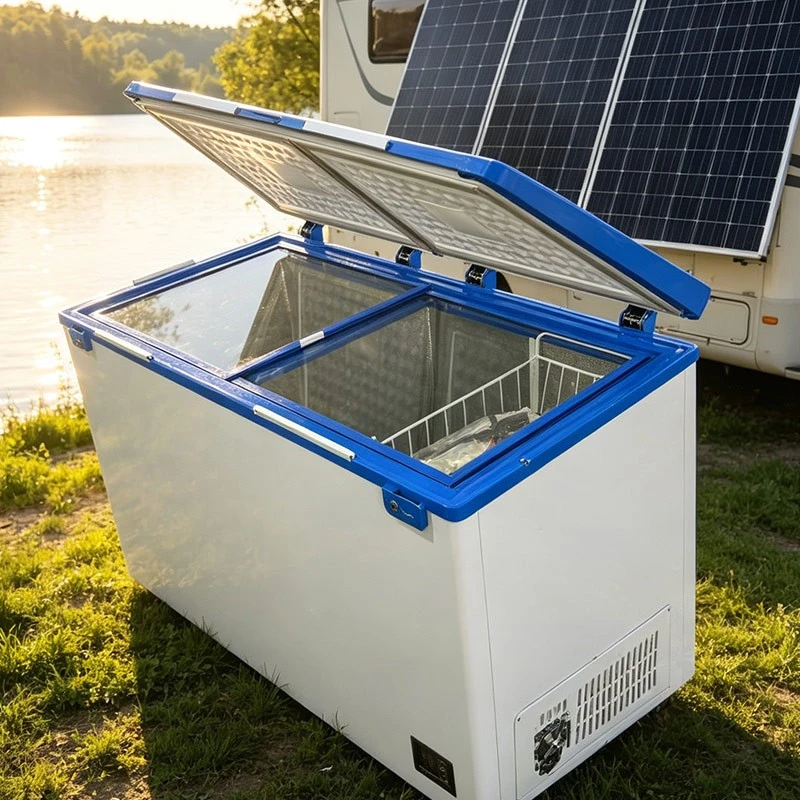
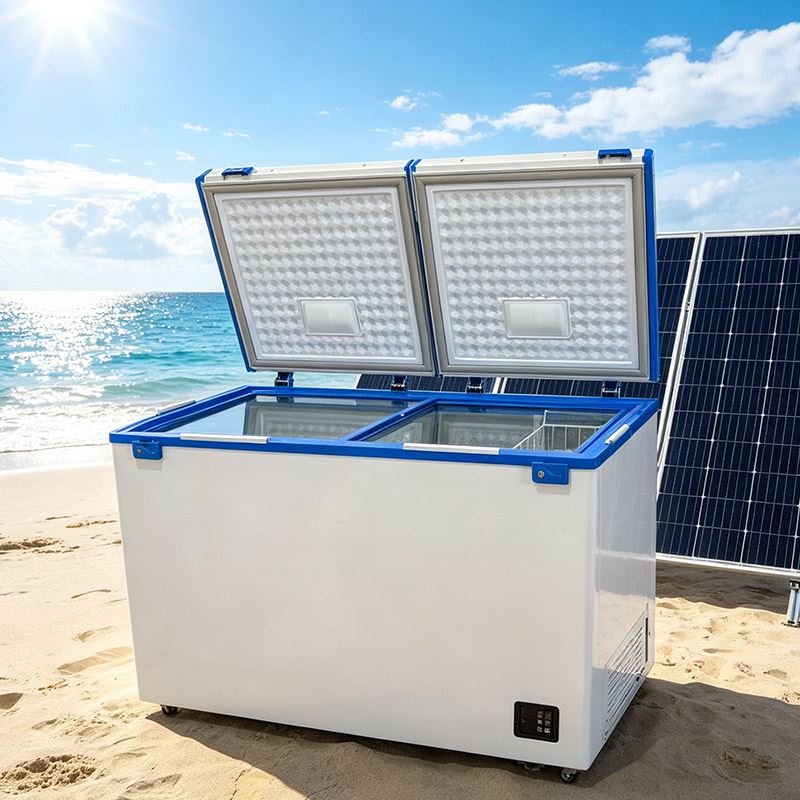
If budget is a concern, you don’t have to sacrifice quality for size. Our Affordable Freezer line includes compact 24 volt models starting at 50 liters, perfect for casual campers or small households. These units are built with the same durable components as our larger models, but they’re scaled down for people who don’t need extra storage space. Just make sure to compare the energy use specs on affordable models—some cheaper units use outdated technology that wastes more power, so look for units with high SEER (Seasonal Energy Efficiency Ratio) ratings, which we list clearly on all our product pages.
Wait, let’s address a common mistake: buying a “future-proof” freezer that’s way larger than your current needs. It’s easy to think, “I might need extra space someday,” but over-sizing a 24 volt freezer can end up costing you thousands in extra battery and solar panel upgrades. For example, if you start with a 100 liter freezer and later find you need more space, you can always add a small secondary 12v Freezer or Refrigerator Freezer instead of replacing your entire 24 volt system. That’s a flexible approach that many of our long-term customers swear by.
Let’s wrap this up with a quick step-by-step checklist you can use right now to choose your 24 volt freezer size:
- Define your core use case: Recreational (campers, road trips), residential off-grid, or commercial/semi-commercial. This tells you the general size range you need.
- Measure your available space: Calculate width, depth, height, and leave 4-6 inches of clearance on all sides for ventilation. Never guess—use a tape measure.
- Establish your food storage volume: Add up the total volume of food you’ll store, then use the 70% utilization rule to find the minimum freezer capacity.
- Consider your power source: If you’re using solar or battery power, match freezer size to your daily power budget to avoid running out of energy.
- Factor in extra features: Do you need dual temperature zones? If so, look at dual-compartment models like our BCD-258D. Do you need portability? Stick to compact, lightweight units.
If you’re still unsure, reach out to our team—we’ve helped hundreds of customers narrow down the right size 24 volt freezer for their unique needs, whether they’re setting up a small RV kitchen, a remote farm stand, or an off-grid home. We don’t just sell freezers; we help you find a solution that fits your lifestyle and budget.
Choosing the right size 24 volt freezer doesn’t have to be overwhelming. By focusing on your specific needs, physical space, and power requirements, you’ll end up with a unit that keeps your food cold, saves you money on energy, and works perfectly for years to come. Whether you’re a weekend adventurer or a small business owner, there’s a Freezer 24 Volts that’s the right fit for you. If you’re ready to start browsing our range, check out our full selection of 24 volt freezers and compare sizes to find your perfect match. We’re here to help with any questions along the way—contact our team to discuss your requirements and place your order today.
References
- Solar Refrigerator Freezer Product Specifications. AB Commercial Appliance Solutions.
- 12V vs 24V Off-Grid Appliance Energy Efficiency Guide. Off-Grid Living Journal, 2023.
- Food Storage Volume and Freezer Utilization Best Practices. National Frozen Food Association, 2022.
- Ventilation Requirements for Compression Refrigeration Units. HVAC Equipment Safety Standards, 2021.