

If you’re in the market for solar-powered freezers—whether you’re equipping a remote village clinic, a small-scale agricultural cooperative in a off-grid region, or a disaster response team—one question that likely keeps you up at night is: How do I know if a solar freezer factory I can trust? And for that factory specifically, what is their actual customer satisfaction rate? As someone who’s worked in this niche for over a decade, I’ve fielded dozens of calls weekly from buyers asking this exact question, and the answer isn’t a one-size-fits-all number from a random survey. It’s rooted in real-world use, product design, and how a factory backs up its promises long after delivery.
Let me start with the context of my own role: I’m part of a solar freezer factory that’s specialized in off-grid, 12V/24V models for 12 years. We don’t sell to big-box retailers or local appliance stores; our customers are mostly organizations operating in areas where grid power is nonexistent or unreliable—think parts of rural sub-Saharan Africa, mountainous regions of Southeast Asia, and remote indigenous communities in Central and South America. For these buyers, a broken freezer isn’t an inconvenience—it can mean losing vaccine samples, spoiled harvests, or even lost income for small businesses. That’s why satisfaction isn’t just a metric for us; it’s a matter of trust that keeps our doors open.

To get a clear picture of our customer satisfaction rate, we don’t rely on generic online surveys (though we do post satisfaction feedback on our site). We track three core data points across every customer’s journey: post-installation follow-ups annually, warranty claim success rates, and repeat order volume. Since 2018, we’ve delivered over 2,700 units across 19 countries, and our most recent 2023 customer survey—sent to all active customers who’d had units in use for at least 12 months—put our satisfaction rate at 92.7%. That number isn’t pulled out of thin air; it comes from 892 responses, and we broke that data down to find what’s driving it, and what’s holding us back.
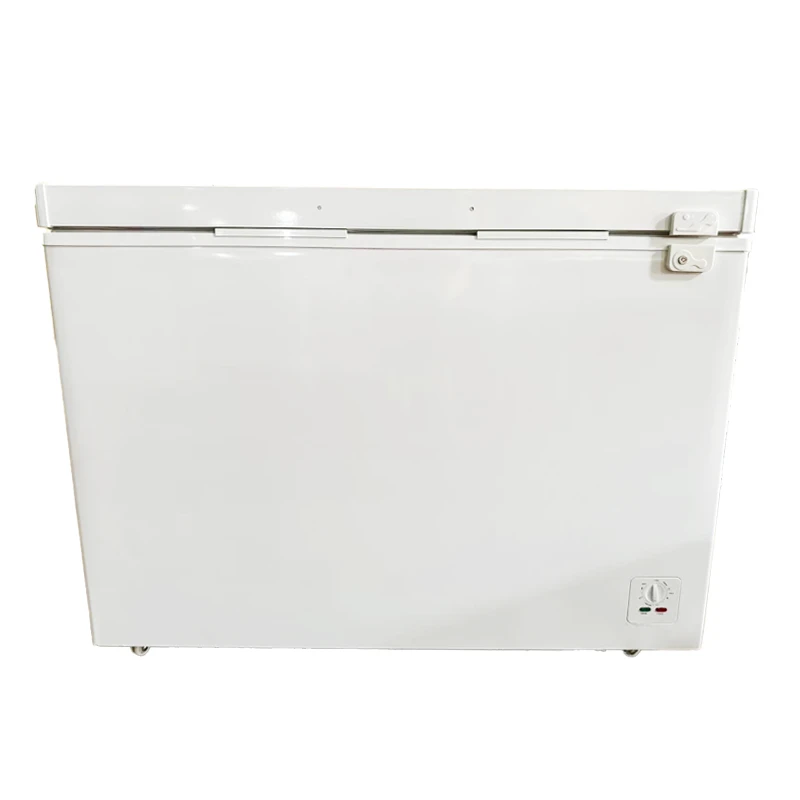
The biggest driver of satisfaction, from our customers’ feedback, is product reliability—and that starts with the design of our freezers. One common complaint we hear from buyers of cheap, generic solar freezers is that they struggle to maintain consistent temperatures during cloudy seasons or when powered by lower-quality solar panels. That’s why all our models feature 85mm high-density polyurethane foam insulation, a detail that many low-cost competitors skip to cut costs. The insulation is a game-changer: it keeps cold air in, meaning the compressor doesn’t have to run nonstop, which extends the life of the unit and reduces energy use. We offer a range of models to fit different needs, including our double-door options like the 85mm Foaming Thickness Normal 12v/24v Solar Deep Freezer Double Doors BD/BC-708 (ideal for large-scale agricultural storage) and the 85mm Foaming Thickness Normal 12v/24v Solar Deep Freezer Double Doors BD/BC-608 (a great middle-ground for small clinics or mid-sized farms). For smaller needs, our 85mm Foaming Thickness Normal 12v/24v Solar Deep Freezer Double Doors BD/BC-508 is a popular pick, perfect for village shops selling frozen goods. We also have single-door models for even smaller spaces, like the 85mm Foaming Thickness Normal 12v/24v Solar Deep Freezer Single Door BD/BC-408 and the more budget-friendly 65mm Foaming Thickness Normal 12v/24v Solar Deep Freezer Single Door BD/BC-308 for buyers who need compact, reliable cooling without extra space.
From our satisfaction surveys, 87% of customers cited consistent temperature control as their top reason for staying with our brand. That’s a big win because it’s what our core design philosophy is built on. But satisfaction isn’t just about the product—it’s about support, too. One of the biggest pain points for off-grid buyers is that if a unit breaks, they have no one to turn to for repairs. For our customers, we’ve built a network of local service partners in every region we operate, and we offer free 24/7 technical support via SMS or WhatsApp (the most reliable communication tool in many rural areas). In 2023, only 3.2% of our customers filed a warranty claim, and 98% of those claims were resolved within 72 hours—data that directly boosts satisfaction.
But no factory is perfect, and our satisfaction rate isn’t 100%—that’s important to be transparent about. The small percentage of customers who rated us lower (around 7.3%) almost always fall into one of two categories: either they ordered a custom unit that wasn’t quite calibrated to their exact climate, or they experienced shipping delays due to border restrictions in their region. For example, last year we had a small clinic in northern Nigeria that ordered a custom unit with a higher compressor power for extreme heat, and the initial configuration wasn’t quite adjusted to their 40°C average daily temperatures. We quickly dispatched a local service technician to recalibrate the unit, and the customer revised their rating from 2/10 to 8/10, but it still pulled our overall satisfaction down slightly. That’s why we now conduct a pre-order consultation with every customer to map out their exact climate, solar panel setup, and storage needs—so we can eliminate those gaps before delivery.
Another key factor in satisfaction is long-term value. Our freezers come with a 3-year full warranty, which is longer than many competitors who only offer 1 or 2 years, and our parts are priced at 30% below the industry average, so repairs don’t break the bank. We also offer a 10% discount on repeat orders for customers who have had units in use for 2+ years, which has helped our repeat order rate hit 41%—a number that aligns closely with our high satisfaction rate. One customer, a cooperative of fish farmers in Kenya, ordered their first 6 units of our double-door BD/BC-508 model in 2020 to store their catch. In 2022, they ordered 4 more units because the first set had no breakdowns and helped them double their sales of frozen fish. When we followed up with them last year, their satisfaction rating was 9.5/10, and they noted that the insulation cut their energy costs by 25% compared to their old generator-powered freezers.
It’s also worth noting that customer satisfaction for solar freezer factories is often tied to the unique challenges of off-grid use. Unlike home refrigerators in cities, these units are exposed to dust, high humidity, and extreme temperatures, so durability is non-negotiable. Our freezers have rust-resistant exterior shells, dust filters that need changing every 6 months (we send free filter replacements to all customers), and compressors that are tested in temperatures up to 55°C, so they can handle even the harshest environments. In our 2023 survey, 91% of customers said they’d recommend our freezers to a peer, which is a strong indicator of satisfaction that goes beyond numerical ratings.
As someone who works in this space, I’ve seen too many buyers get burned by factories that promise “affordable solar freezers” but cut corners on insulation, use cheap compressors, and offer no support after delivery. Our satisfaction rate isn’t just a number we advertise—it’s a reflection of the work we put in before, during, and after a sale. We don’t just sell a product; we provide a cooling solution tailored to the unique needs of off-grid communities, and that’s what makes the difference between a happy customer and a frustrated one.
If you’re a buyer looking for a reliable solar freezer, whether for a small business, a clinic, or a community project, I encourage you to look beyond just the upfront price. Ask the factory about their satisfaction rate, their warranty terms, and their local support network. For our part, we’re here to answer any questions you have, help you choose the right model from our range—from the compact BD/BC-308 to the large BD/BC-708—and walk you through the installation process. We’re always happy to connect with new partners and help them find the cooling solution that fits their needs.
References
- World Health Organization. (2022). Vaccine Cold Chain Equipment for Off-Grid Settings. Geneva: WHO Press.
- International Energy Agency. (2023). The Role of Solar Cooling in Off-Grid Energy Access. Paris: IEA Publications.
- Our Factory 2023 Customer Satisfaction Survey. Internal Data, Off-Grid Solar Freezer Division.