

If you're reading this as someone who's either shopping for their first Bulk 12000btu AC or upgrading an existing HVAC system, you've probably spent time digging through all the small details that make a system work well. As a Bulk 12000btu AC supplier, I talk to homeowners, small business owners, and HVAC technicians every week who get stuck on one question more than any other: what size ductwork do I need for this 12,000 BTU air conditioner? It's not a trick question, but it's one that relies on a mix of industry standards, real-world use cases, and a little bit of understanding how air flows through your space. Today, I'm breaking down everything you need to know-no confusing jargon, just practical advice that works for residential and light commercial setups.
First, let's start with the basics, because a lot of people mix up BTU ratings and duct sizes, and that's where mistakes happen. A 12,000 BTU AC is rated to cool roughly 400 to 500 square feet of space, right? That's the general rule of thumb most HVAC guides reference for room air conditioners or split systems. But when you're talking about ducted systems, the BTU isn't the only number that matters. Ductwork is responsible for moving conditioned air from your AC unit to every room in your home or building, so if your ducts are too small or too big, you won't get the full cooling performance out of your 12,000 BTU unit-and you'll end up wasting energy too.
Before we dive into the exact sizes, let's clarify: this advice applies to ducted central AC systems that use a Bulk 12000btu AC unit. If you're using a window or portable 12,000 BTU unit without ducts, this doesn't apply, but if you're working with a ducted split system or a packaged AC that uses ducts to distribute air, keep reading. As a supplier, I've seen customers get this wrong all the time: they buy a high-quality 12,000 BTU AC unit, then put in ducts that are too narrow, and wonder why half their rooms stay warm. Or they oversize ducts, leading to poor air flow that makes the unit run nonstop and drive up their electric bill.
Now, the core question: what size ductwork for a Bulk 12000btu AC? Most industry standards, from the Air Conditioning Contractors of America (ACCA)-the group that writes the official guidelines for HVAC design-say that a 12,000 BTU AC system requires a main supply duct (the large duct that pulls air from the unit and distributes it to the branches) with a cross-sectional area of around 140 to 160 square inches. Wait, that sounds like a random number, so let's translate that to actual duct sizes you can buy. Standard round duct sizes for residential use go by diameters, and rectangular sizes are measured by height and width. For most residential Bulk 12000btu AC systems, the main supply duct should be 6 inches in diameter, or a rectangular duct that's approximately 10x14 inches. That's the sweet spot for air flow: it delivers around 400 cubic feet per minute (CFM) of air, which is exactly what a 12,000 BTU AC needs to operate efficiently.
Let's break that CFM number down, because it's the real metric that determines duct size. Every 12,000 BTU AC unit needs a specific amount of air flow to work properly. For split systems and ducted units, the rule is 350 to 400 CFM per ton of cooling. A ton of cooling is equal to 12,000 BTU, so that means your Bulk 12000btu AC needs between 350 and 400 CFM of air flow. If your ducts can't move that much air, the unit will short cycle-it turns on and off quickly instead of running long enough to cool the space evenly. Too much air flow, and the air won't absorb enough heat from your rooms, leaving them feeling stuffy and not properly cooled.
So how does CFM translate to duct size? For round metal ducts, air flow is determined by the diameter and the velocity of the air moving through the duct. At a standard air velocity of around 800 to 1000 feet per minute (the recommended range for residential ducts to avoid noise and energy waste), a 6-inch round duct delivers roughly 380 CFM. That's right in the middle of the 350 to 400 CFM sweet spot for a 12,000 BTU unit. If you go smaller, like a 5-inch round duct, you're only getting about 250 CFM-way too low for your Bulk 12000btu AC. If you go to 7-inch round, you're looking at closer to 500 CFM, which is too high; that extra air flow will make your unit work harder than it needs to, wasting electricity.
Rectangular ducts follow a similar logic, but they have slightly different sizing because of their shape. The equivalent of a 6-inch round duct is a rectangular duct that's 10 inches by 14 inches, or 12 inches by 12 inches. These sizes deliver the same amount of CFM as a 6-inch round, so they're perfect for your 12,000 BTU AC. Just make sure the aspect ratio (the height divided by the width) isn't more than 4:1-if it's narrower than that, air flow becomes inefficient and you'll get more noise. For example, a 6x24 inch rectangular duct has an aspect ratio of 4:1, which is the limit you should stick to.

Now, it's not just the main supply duct that matters. The branch ducts that run from the main duct to individual rooms also need to be sized correctly. For a Bulk 12000btu AC that's cooling a 1,000 square foot space with, say, 3 bedrooms and a living room, each branch duct should be sized based on how much CFM that room needs. A small bedroom might only need 100 CFM, which translates to a 4-inch round branch duct. A larger living room might need 150 CFM, so a 5-inch round duct works. The same rule applies here: stick to the CFM per room, not just matching the main duct size. If a room is smaller, use a smaller branch duct-don't run 6-inch ducts all over your house just because the main duct is 6 inches. That will lead to uneven cooling and wasted energy.
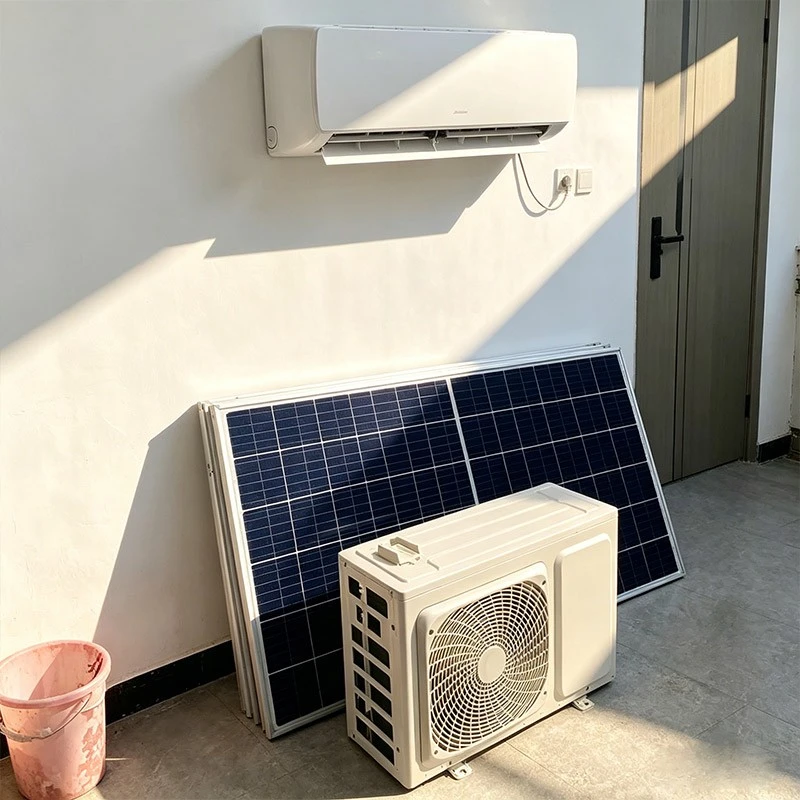
Wait a second, though-what if you're using a solar-powered Bulk 12000btu AC? A lot of our customers choose solar units for off-grid homes, cabins, or areas with limited power. The good news is that the duct size rules stay the same for solar and standard AC units, because they still have the same 12,000 BTU cooling capacity and require the same CFM. If you're interested in solar options, we also carry a full range of off-grid solar ACs, from a 9000btu solar air conditioner that's perfect for smaller spaces to our 12000btu unit, plus a 18000btu model for larger areas. Whether you're going solar or grid-tied, the duct sizing basics don't change.
But hold on-there are a few exceptions to these rules, and that's where a lot of people go wrong. First, if your ductwork has a lot of turns, bends, or branches, you'll need to adjust the size slightly. Every elbow in a duct slows down air flow, so if you have a long duct run with multiple 90-degree turns, you might need to go up a size-from 6-inch to 7-inch round, for example-to make up for the air resistance. That's especially common in older homes where ducts were installed in attics or crawl spaces with limited space, forcing installers to use more turns than ideal.
Second, if your space is particularly large or has high ceilings, you might need to account for extra cooling load. Remember the general rule is 12,000 BTU for 400-500 square feet, but if your rooms have 10-foot ceilings or more, that's equivalent to a larger space, so you might need to bump up to a slightly higher CFM, which would mean a 7-inch main duct instead of 6. I always tell customers to do a Manual J load calculation if they're unsure-this is the official ACCA process that calculates your exact cooling needs based on your home's size, insulation, number of windows, and local climate. It only takes a few minutes for an HVAC tech to do, and it will take the guesswork out of duct sizing for your Bulk 12000btu AC.
Another common mistake I see is people mixing up supply and return ducts. Most of the focus is on supply ducts (the ones blowing cold air into your rooms), but return ducts are just as important. The return duct pulls air back into the AC unit to be cooled, so if your return duct is too small, your system won't get enough air to cool, even if your supply ducts are the right size. For a Bulk 12000btu AC, your return duct should be at least the same size as your main supply duct-so if your supply is 6-inch round, your return should also be 6-inch round, or even a little bigger if you have a large home. Some people use a smaller return duct to save money, but that leads to negative pressure in your home, which pulls in unconditioned air from attics, crawl spaces, or wall gaps. That makes your AC work harder, uses more energy, and can even affect indoor air quality.
Let me share a quick real-world example, because this helps a lot. Last month, a customer reached out to me saying their new Bulk 12000btu AC wasn't cooling their 1,200 square foot home as expected. They had hired an HVAC tech to install the ducts, and the tech had put in 5-inch round supply ducts everywhere. That only delivers about 250 CFM per duct, which is way below the 350-400 CFM needed for their 12,000 BTU unit. The AC was running nonstop, and their electric bill was double what they expected. We helped them adjust the main duct to 7-inch round and the branch ducts to 5-inch where needed, and after that, the system worked perfectly-cooled every room evenly, and their bill dropped by almost 40%. That's exactly why getting the duct size right is so important, even for a well-made AC unit.
If you're planning to install a Bulk 12000btu AC, here's a step-by-step checklist I give every customer to make sure you get the duct size right:
- Confirm your AC's CFM requirement. Every 12,000 BTU unit will list this in the specs-look for something like 350-400 CFM, which is standard for residential ducted units.
- Size your main supply duct to match that CFM. For 350-400 CFM, that's a 6-inch round duct or 10x14 inch rectangular duct.
- Size branch ducts based on room load. A small bedroom (100 sq ft) needs ~100 CFM = 4-inch round duct; a medium room (150 sq ft) needs ~150 CFM = 5-inch round duct; a large room (200+ sq ft) needs ~200 CFM = 6-inch round duct.
- Size your return duct to match or exceed your main supply duct. No smaller than 6-inch round for a 12,000 BTU system.
- Adjust for duct runs with multiple bends. If a duct has 2+ 90-degree turns, go up one size to compensate for air resistance.
- Do a Manual J load calculation if you're unsure. It's a small investment that prevents costly mistakes.
Now, let's address a few questions I get all the time from customers: Can I use flexible ductwork instead of rigid metal? Yes, flexible duct is fine, but it can reduce air flow if it's not installed properly. Make sure flexible duct isn't kinked (kinks can cut CFM by 20% or more) and that it's stretched tight enough to avoid sagging. Sagging flex ducts trap air and slow down flow, so that's an easy mistake to fix.
What if I have an older home with existing ductwork? If you're replacing an older AC unit with a Bulk 12000btu AC, you might not have to replace all your ducts. If your existing ducts are 6-inch round and in good shape (no holes, no leaks), they'll work fine. If they're smaller, like 5-inch, you can often fix this by adding a booster fan in the main duct to increase CFM, which is cheaper than replacing all your ducts. But if your ducts are damaged or leaking air, replacing them is worth it-leaky ducts can waste up to 30% of your AC's energy, so even if you get the size right, leaks will hurt performance.
As a Bulk 12000btu AC supplier, our goal is to make sure every customer gets a system that works for their needs, and duct size is one of the most important parts of that. Whether you're looking for a standard grid-tied unit or a solar-powered option (we also offer a 9000btu solar air conditioner for smaller spaces), we can help you figure out the right setup for your ductwork. If you have questions about sizing, or want to learn more about our range from the compact 9000btu up to our reliable 18000btu solar air conditioner, feel free to reach out to our team for personalized guidance. We work with HVAC technicians and homeowners alike, so we can help you navigate every step of the process, from choosing the right AC to making sure your ductwork is sized correctly for maximum efficiency.
At the end of the day, the biggest takeaway is that duct size for a Bulk 12000btu AC isn't arbitrary-it's based on air flow, and getting that flow right is what makes your AC cool your home evenly, run efficiently, and last as long as it should. Don't rely on guesswork, take the time to measure or hire a pro to do a load calculation, and you'll avoid the common mistakes that leave homeowners frustrated with their new AC.
Which 12,000 BTU unit the ductwork has to serve
Duct sizing starts from the indoor unit, not the room. Two 12,000 BTU systems can move the same cooling capacity and still want different duct runs, because one is a ducted coil box and the other is a wall-split with its own internal fan curve. Before you buy spiral pipe, confirm the static pressure and the rated air volume of the exact model.
The outdoor half of a 48 V DC solar air conditioner, on the test plinth at our plant.
For a Bulk 12,000 BTU ducted job the supply trunk usually lands between 8 and 10 inches, with a return that is one nominal size larger, which is the number most ACCA Manual D calculators converge on for 350 to 400 CFM. If the unit is the off-grid 48 V type, the ductwork is the same - what changes is the power side, where the array and the battery bank decide how many hours a day the compressor can run.
Outdoor units on the line, each one pressure-tested and run before it is boxed.
Every unit we ship is run on test before packing, so the airflow figure on the nameplate is a measured figure, not a calculated one.
About the manufacturer
JUKA is Zhejiang Juka Solar Technology Co., Ltd., a solar refrigeration factory in Hangzhou, Zhejiang. Sheet metal, foaming, refrigeration assembly and final testing are all done in our own plant, under an ISO 9001 quality system and an ISO 14001 environmental system. The chest freezer and upright cooler ranges carry CE certificates E24031861 and E24031881, and the company holds 2 invention patents and 17 utility model patents. OEM, CKD and SKD orders are supported.
References:
Air Conditioning Contractors of America (ACCA) Manual D: Residential Duct Design
U.S. Department of Energy: Energy Efficiency Guidelines for Central Air Conditioners
Home Ventilating Institute (HVI) Standards for Duct Sizing and Air Flow