



What Actually Arrives, And What Only Looks Like A Product
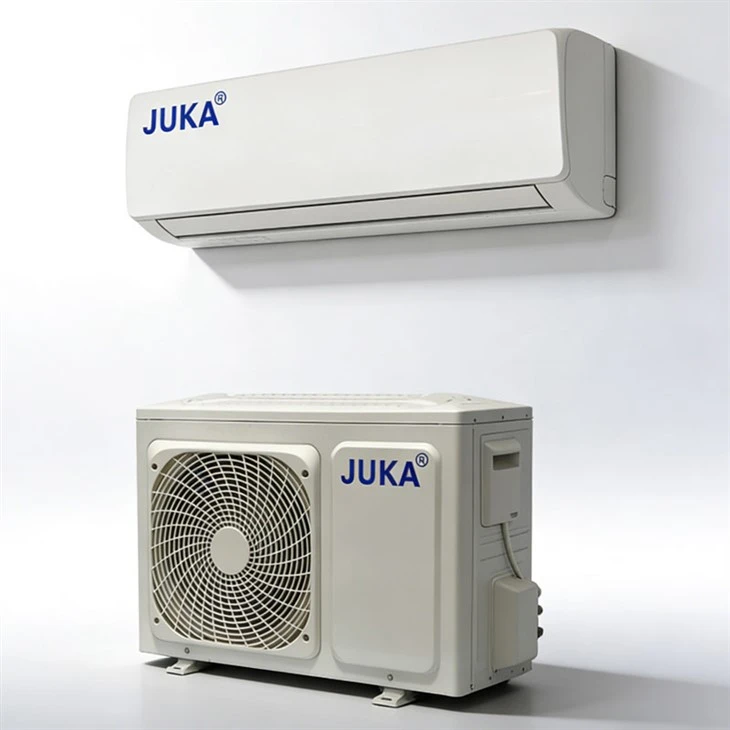
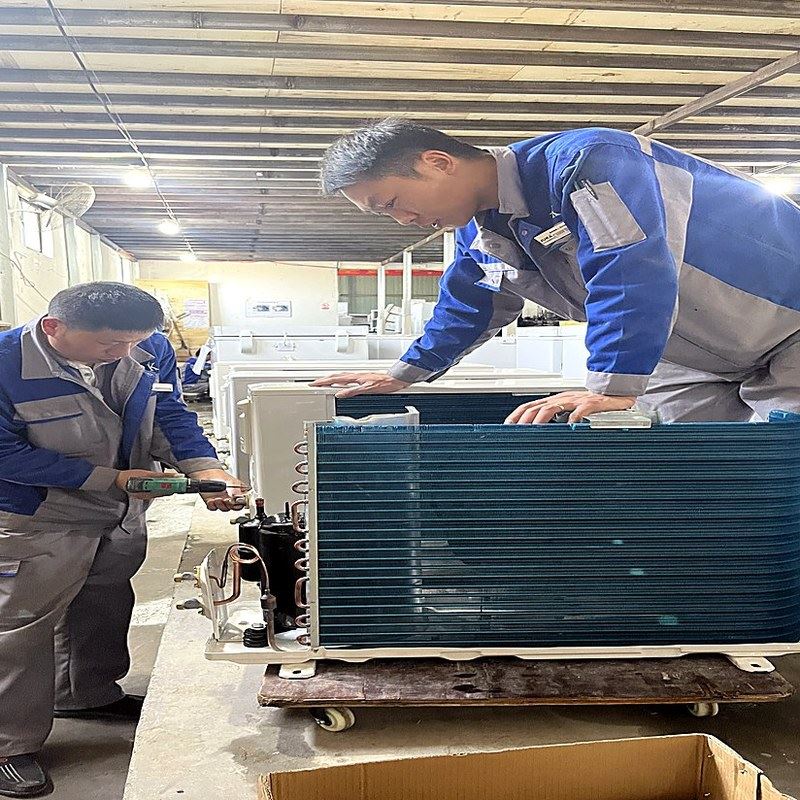
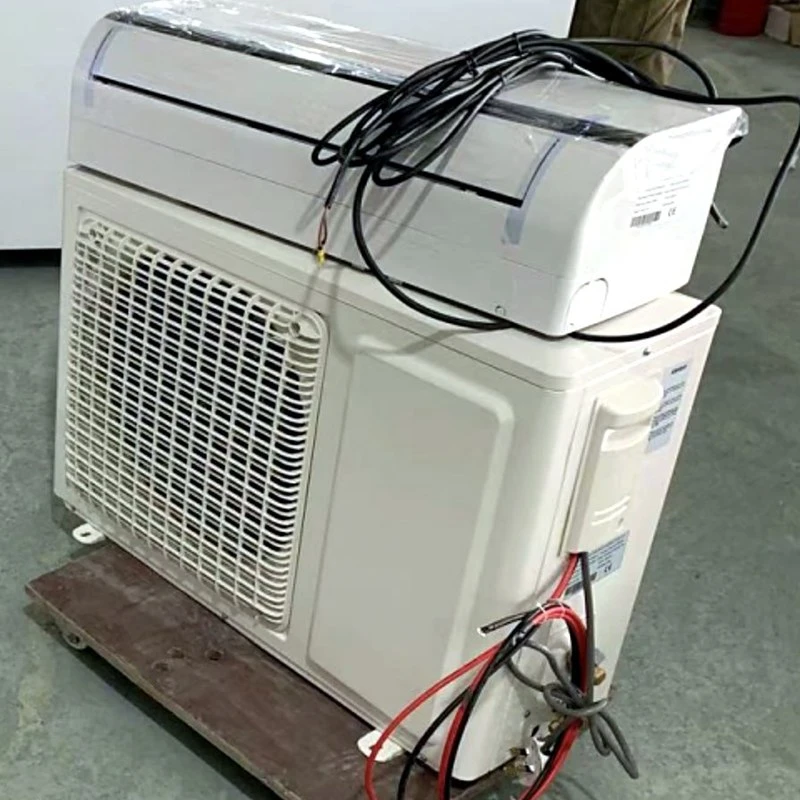
Suppliers who have only built refrigeration cabinets usually underestimate one thing: an air conditioner is not assembled, it is joined. Five sub-assemblies arrive tested and charged with nitrogen, and the value you add is joining them correctly: a leak-free copper circuit, a dry system, an exact refrigerant charge, and an electrical panel that passes a hipot test. Get the joining right and the unit runs for a decade. Get it wrong and you will find out in month three, in the customer's bedroom.
| Assembly | What is inside it | What your line does with it | Where it usually goes wrong |
|---|---|---|---|
| A1 Indoor coil pack | Copper tube and aluminium fin evaporator, brazed headers, nitrogen holding charge | Visual fin check, leak sniff at headers, fit into the chassis | Fin damage in transit; header brazing cracked by rough handling |
| A2 Indoor air path | Cross flow blower wheel, motor, rubber mounts, drain pan, filter | Balance check by ear and hand, drain slope check, harness routing | Blower seated off-centre; drain pan slope reversed so condensate runs backward |
| A3 Outdoor unit | Rotary or scroll compressor, condenser coil, axial fan, four way valve, accumulator | Mount, torque, braze the three joints, pressure hold | Compressor mounts over-torqued; braze heat reaching the valve body |
| A4 Copper circuit | Insulated pair coil, flare nuts, drain hose, interconnecting cable | Cut, flare or braze to length, insulate, torque to spec | Under-flared joints; insulation cut back too far at the wall entry |
| A5 Control and display | Main PCB, display board, transformer, sensors, remote handset | Plug harness, set model code, run functional and hipot test | Wrong model code loaded, so the unit runs at the wrong capacity |
The Box Count Is The First Number A Buyer Should Ask For
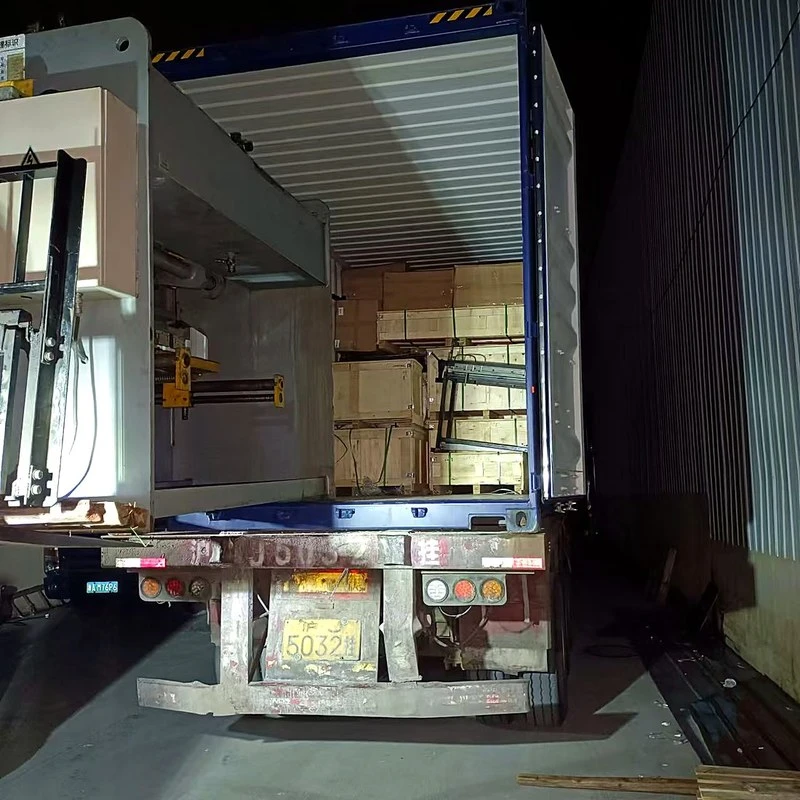
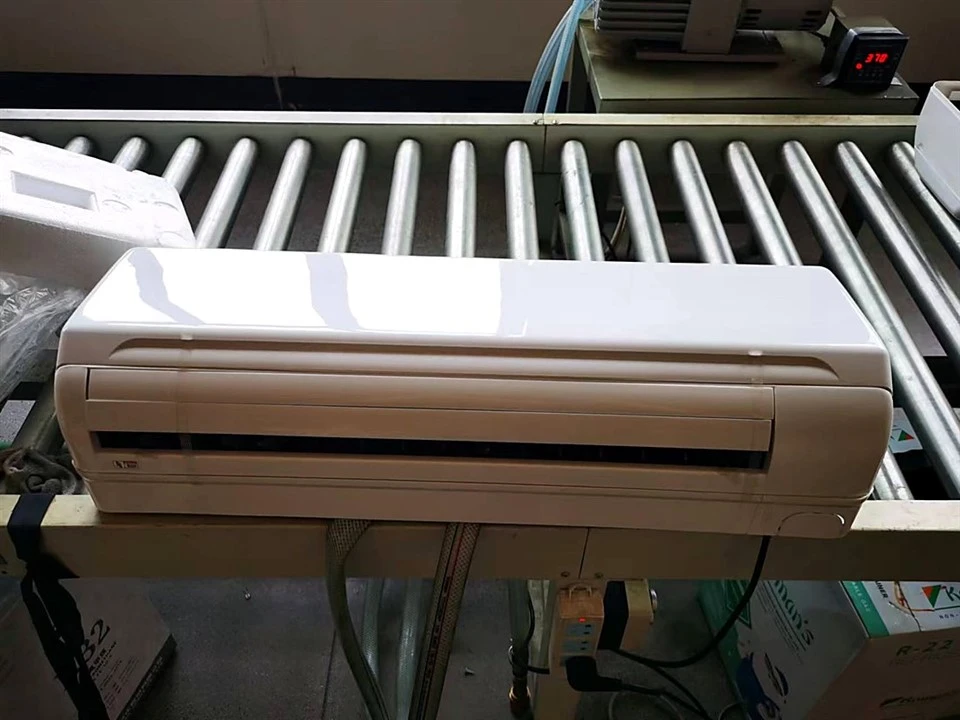
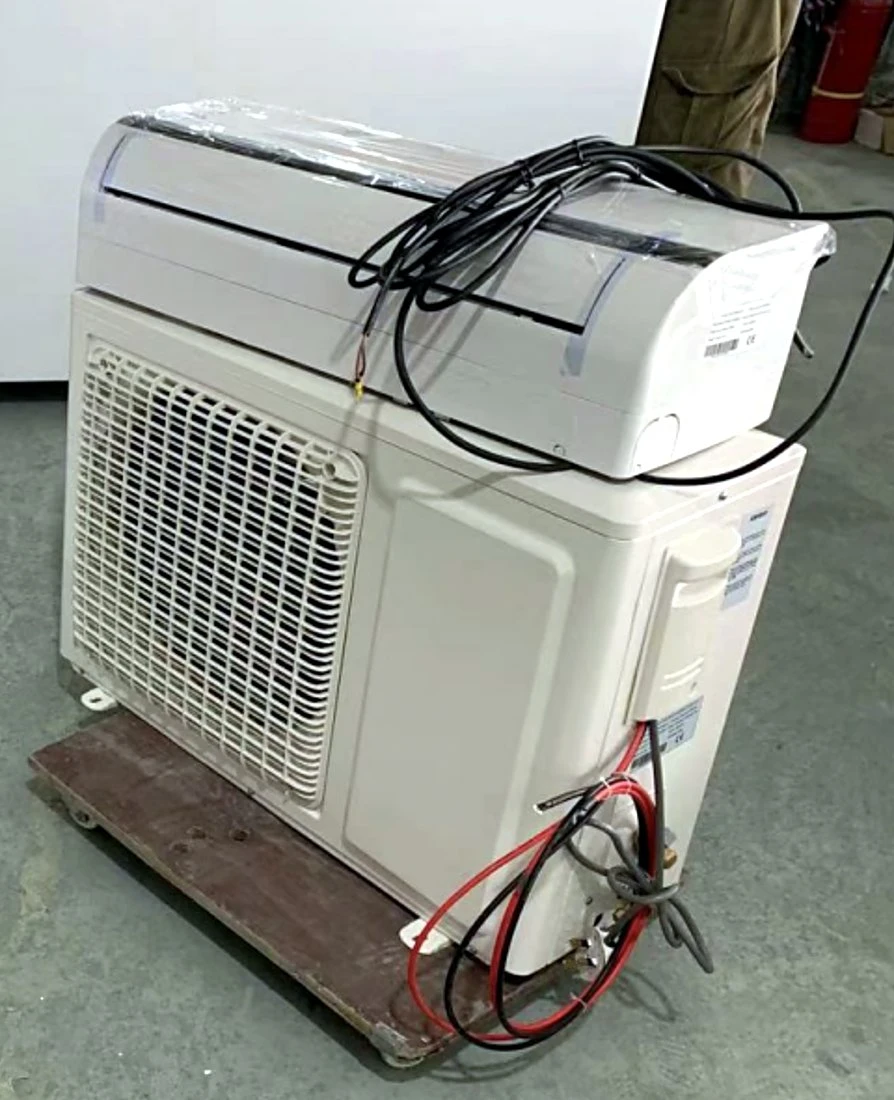
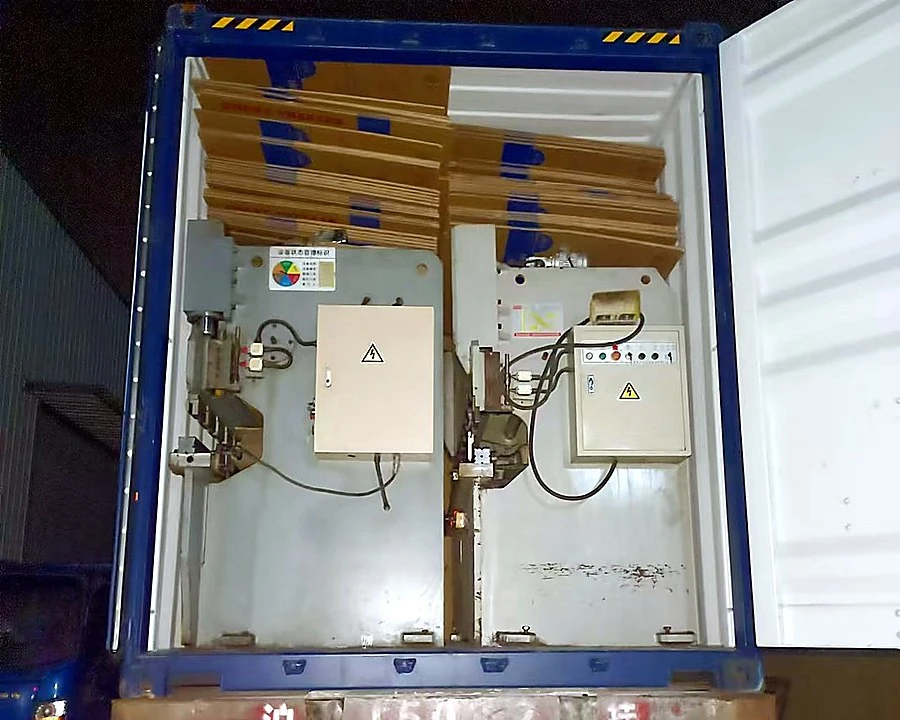
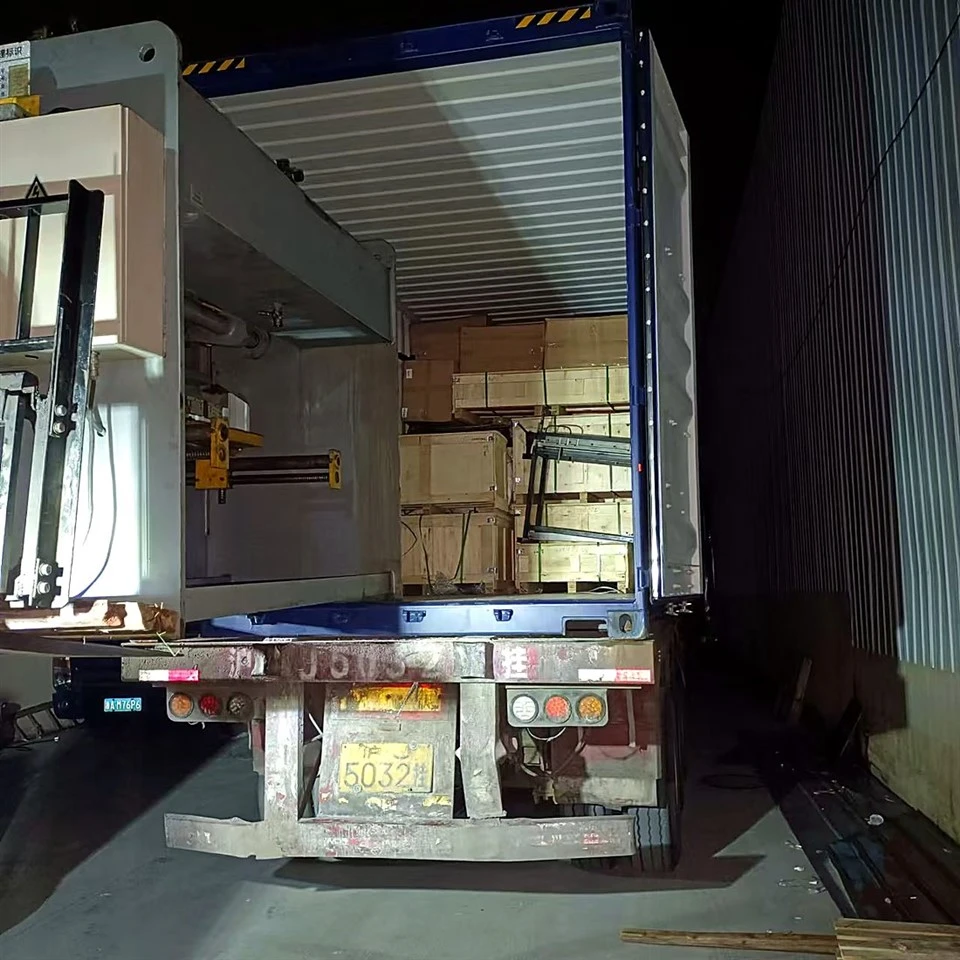
Shipping a finished split system means shipping a lot of air. Packing the same capacity as knocked-down assemblies removes the outer carton, the foam end caps and most of the void, and it lets a 40 foot high cube carry the assemblies of roughly two to three times the finished units, model for model. Ask for the box count and the packed volume before you ask for the price; the freight line usually decides the deal.
| Carton | Contents | Packed as | Why it travels separately |
|---|---|---|---|
| 01 | Indoor chassis with coil and blower fitted | Moulded pulp ends, 5 ply | Longest item; sets the carton length |
| 02 | Indoor front panel and filter frame | Flat stack, 20 to 40 per bundle | Thin ABS; deforms if loaded vertically |
| 03 | Outdoor unit, fully assembled | Timber base, strapped | Heaviest single piece, 25 to 40 kg |
| 04 | Copper pair coil, 3 to 5 m | Coil in a plastic ring | Bends permanently if crushed |
| 05 | Interconnecting cable and drain hose | Bundled with carton 04 | Loose items get lost in transit |
| 06 | Wall bracket and vibration pads | Shrink bundle | Steel; abrades neighbouring cartons |
| 07 | Remote handset, screws, manual | Bag inside carton 01 | Small parts theft and loss |
| 08 | Drain extension and seal kit | Bag inside carton 05 | Installer level part, not factory level |
| 09 | Optional: solar DC interface board | Anti static bag, carton 07 | Sensitive; needs its own packing |
CBU, SKD And CKD Are Three Different Businesses
The letters describe how far the factory has already gone. Choosing the depth is not a matter of ambition; it is a matter of which steps your team can already do to a repeatable standard, and which certificates your market will accept from a local assembly line rather than from an importer.
| Depth | What crosses the border | What your line must be able to do | Typical first order |
|---|---|---|---|
| CBU | Finished, charged, boxed units | Nothing beyond storage, sale and installation | One 40 HQ, mixed models |
| SKD | Indoor and outdoor units assembled and charged; copper and brackets loose | Unbox, inspect, pair, pressure test the joints, vacuum, commission | One 40 HQ, two capacities |
| CKD | Coil packs, chassis, panels, compressors, boards, copper, fasteners, all separate | Braze, evacuate, weigh in charge, run hipot and performance test, pack | Two 40 HQ, one capacity to start |
Four Decisions That Cost More To Change Later Than To Make Now
Ten Modules Between An Empty Hall And A Unit That Holds A Vacuum
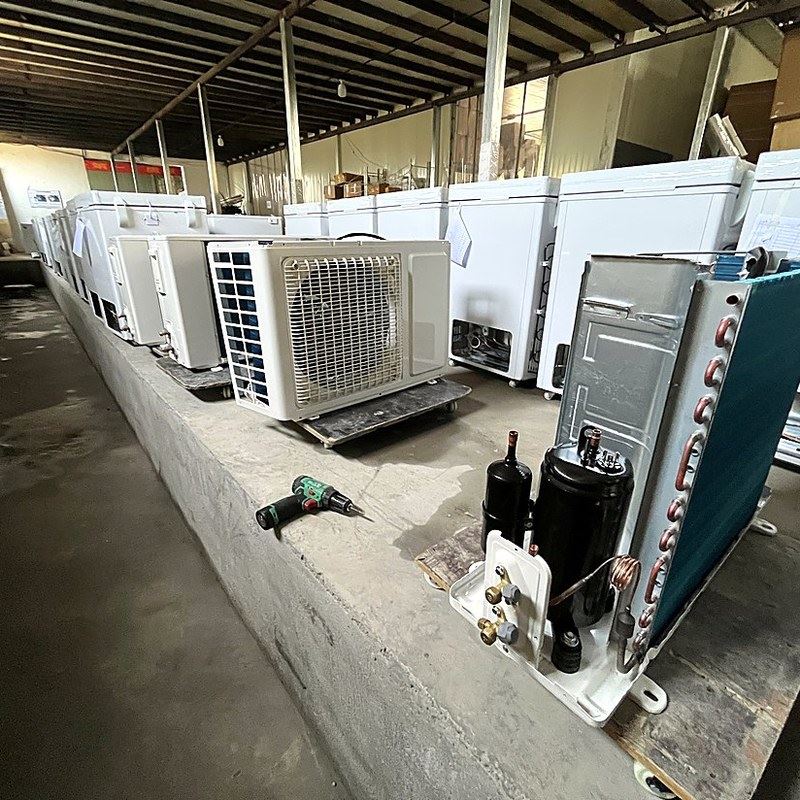
This is the order we use when we stand up an assembly line with a partner, and it is the order that keeps rework low. Modules 01 to 04 are preparation and can be done while the container is still at sea. Modules 05 to 09 are the line. Module 10 is the one most projects skip, and it is the one that decides whether the second container is cheaper than the first.
Hall, floor and layout
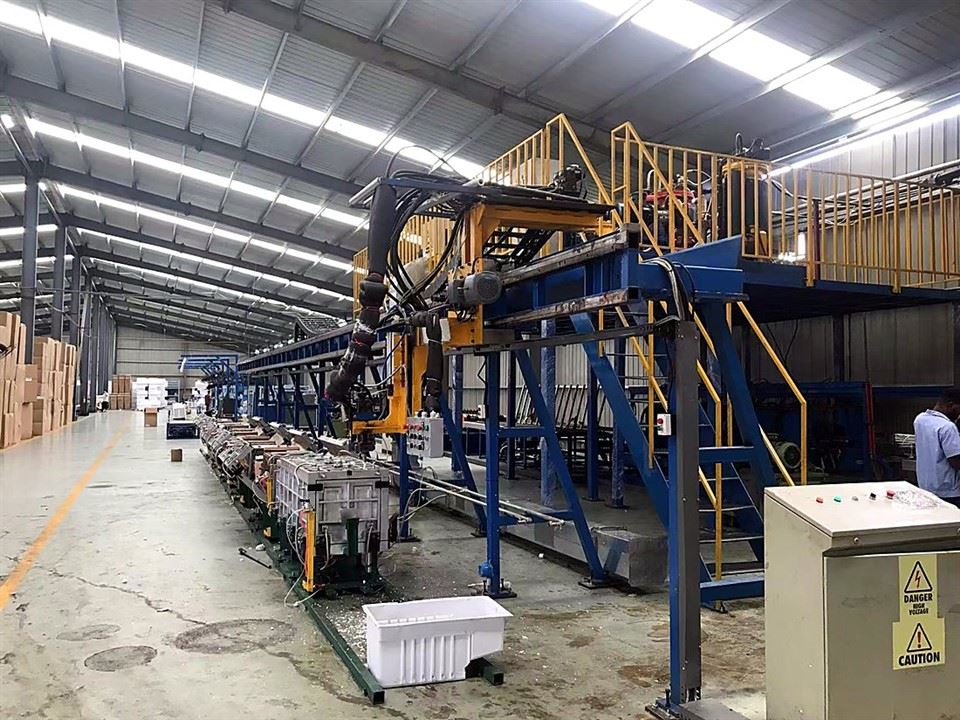
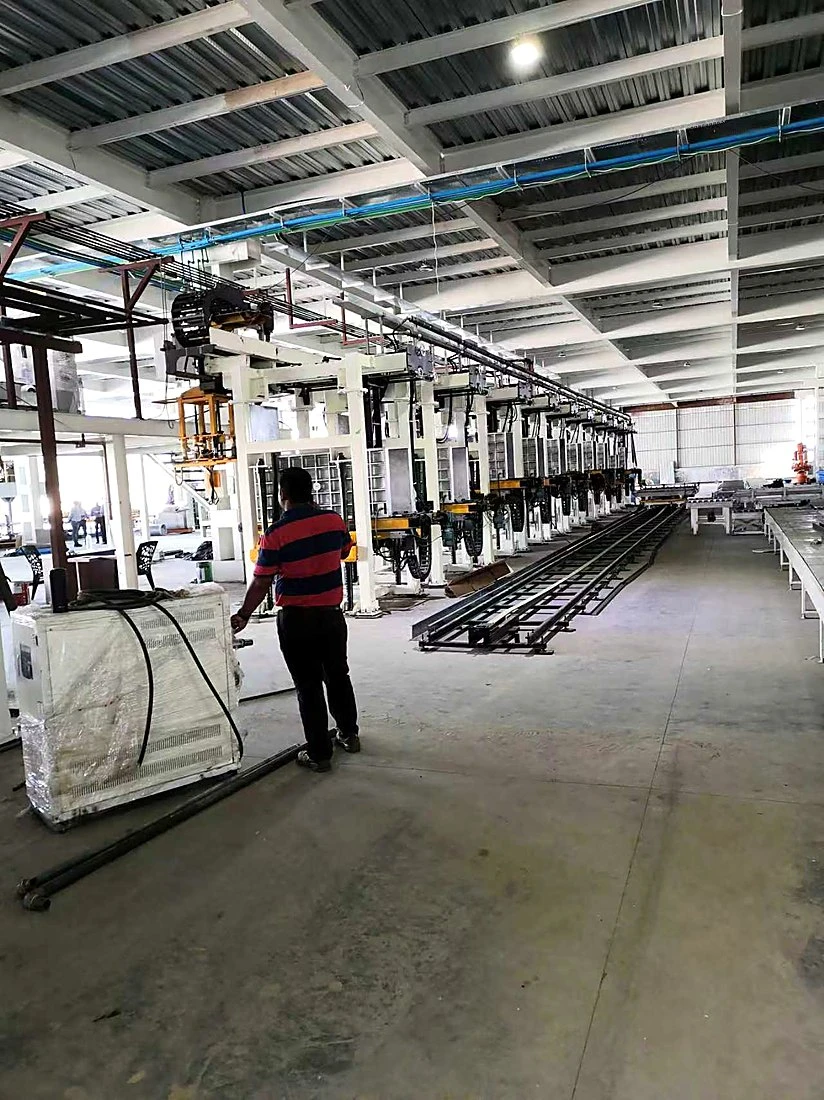
Two hundred to four hundred square metres for a single capacity, laid out in a straight line rather than a U, because long copper runs and long units both want straight travel. Floor loading is modest, but the floor must be level to within a few millimetres over the length of the line or every chassis sits twisted and every panel gap shows it.
Power, air and gas
A 20 to 30 kW supply is enough for a one capacity line including the vacuum pump, the brazing station and the test bench, but only if it is distributed as separate circuits rather than one long chain of sockets. Dry compressed air at 6 to 8 bar for leak testing and blowing through, and a nitrogen manifold with a two stage regulator for purge and pressure hold.
Tooling and gauges
Flaring block, tube cutter, deburring tool, torque wrench, vacuum gauge with a digital micron readout, refrigerant scale accurate to 5 grams, recovery machine, clamp meter, insulation tester, hipot tester. The gauge and the scale are the two instruments that decide the quality of everything downstream, so they are the two we insist are bought new and calibrated.
First kit count and staging
One kit, one bench, one photograph per carton. Lay the nine cartons out in the order of assembly and count against the packing list before anything is opened, because a shortage discovered in week three has to travel by air freight. This module feels slow and it saves the most money.
Coil pack and chassis
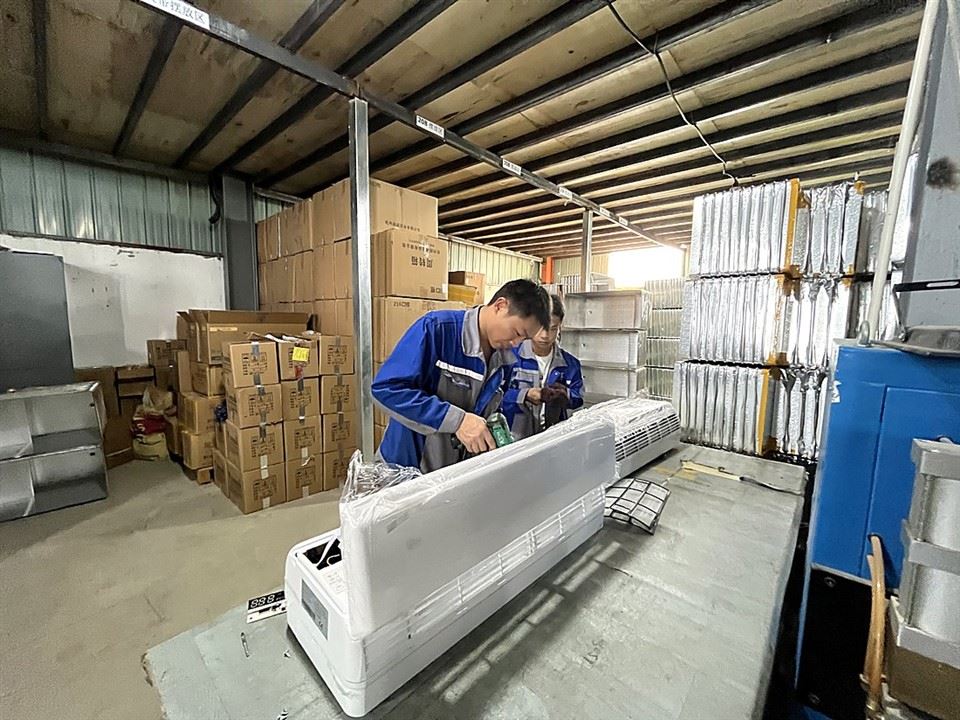
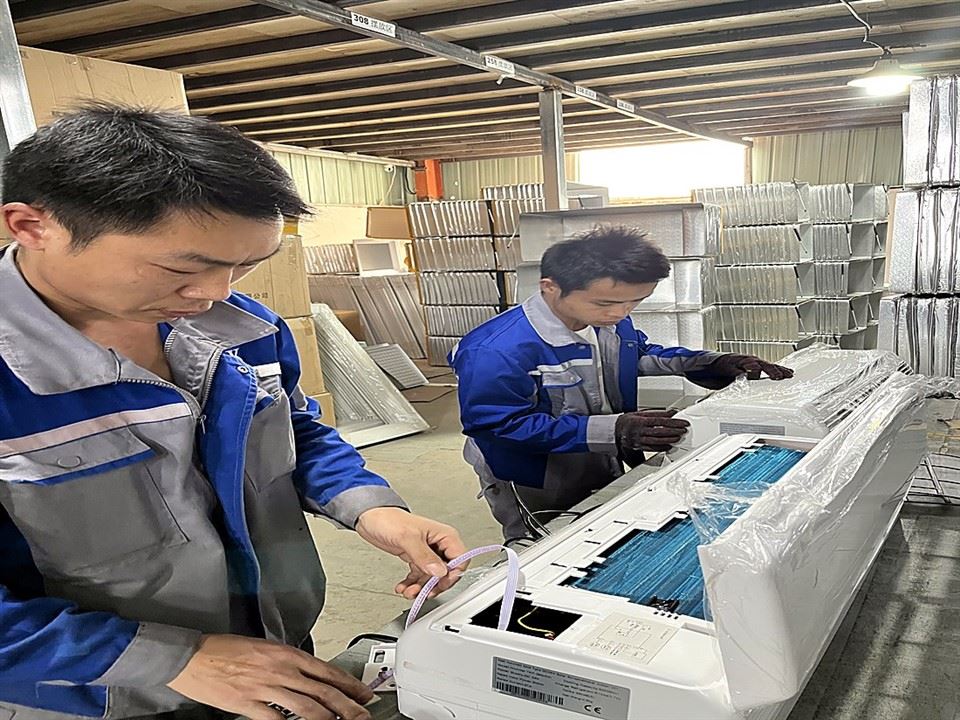
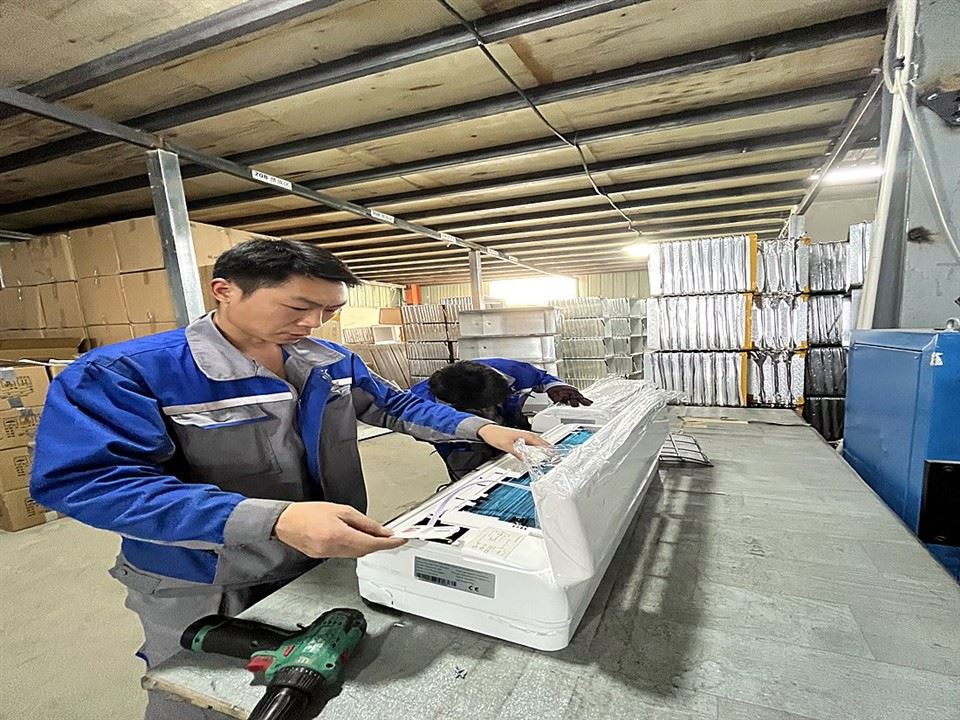
Coil into the chassis, drain pan under it, and the whole assembly checked for fin damage before the blower goes in. A coil that has been dropped shows up as a bent fin block on one corner, and the unit will still pass a pressure test, so this is a visual gate and it has to be a real one.
Blower, motor and drain slope
Blower into its rubber mounts, motor seated square, harness routed away from the coil face. Then the drain slope, checked with a spirit level on the pan rail rather than by eye. A pan that slopes the wrong way runs condensate into the electrical box in the customer's ceiling, and no test on your line will catch it.
Panel, filter and cosmetics
Front panel, filter frame, display window and badge. This is the module that gives the product its local identity: the badge, the model code on the rating label, the language of the manual, the plug type. All of it is decided by you, and none of it needs to come from us.
Brazing and pressure hold
The three outdoor joints and, in CKD, the indoor header joints as well. Nitrogen purge while brazing, wet rag on the valve body, then a pressure hold at 25 to 30 bar for at least one hour with the gauge marked and photographed. A joint that drops two bar overnight is a joint that will leak in year three.
Evacuation, charge and electrical test
Vacuum to below 200 microns and hold, then charge by weight, then hipot, earth continuity and a run test with the unit actually cooling. The order matters: charging before evacuation traps moisture in the circuit and moisture plus POE oil is acid.
Run-in, packing and the second container
A short run-in on every unit, not a sample, because the defects that survive modules 01 to 09 are assembly defects and they repeat. Then packing, then a review meeting where the rework list from the first container becomes the checklist for the second.
Two Numbers Decide Whether A Unit Lasts Five Years Or Fifteen
Every shortcut in this industry is taken at the vacuum station and at the charging station, because both are slow, both are invisible after the panel goes on, and both cost nothing to skip. They are also the two operations your customer cannot inspect, which is exactly why they have to be instrumented rather than trusted.
| Step | Specification we work to | Instrument | What a failure looks like later |
|---|---|---|---|
| Evacuation depth | Below 200 microns, held 10 minutes without rise | Digital micron gauge at the service port | Ice formation at the capillary; short compressor life |
| Moisture check | Rise under 50 microns per minute after isolation | Same gauge, valve closed | Acid in the oil; copper plating on the compressor windings |
| Pressure hold | 25 to 30 bar dry nitrogen, 1 hour minimum | Manifold with a marked gauge | Slow leak at a braze; complaint in month three, not week one |
| Charge accuracy | Plus or minus 5 grams against the nameplate | Refrigerant scale with 5 g resolution | Low capacity, high current, or liquid floodback |
| Leak detection | Electronic sniff at every joint plus soap on the brazes | Sniffer and brush | Gradual loss over a season, blamed on the installer |
| Run test | Suction and discharge pressure inside the chart at 30 minutes | Manifold set, clamp meter | Unit cools on the bench and fails in a 45 degree room |
The Joint Is The Product
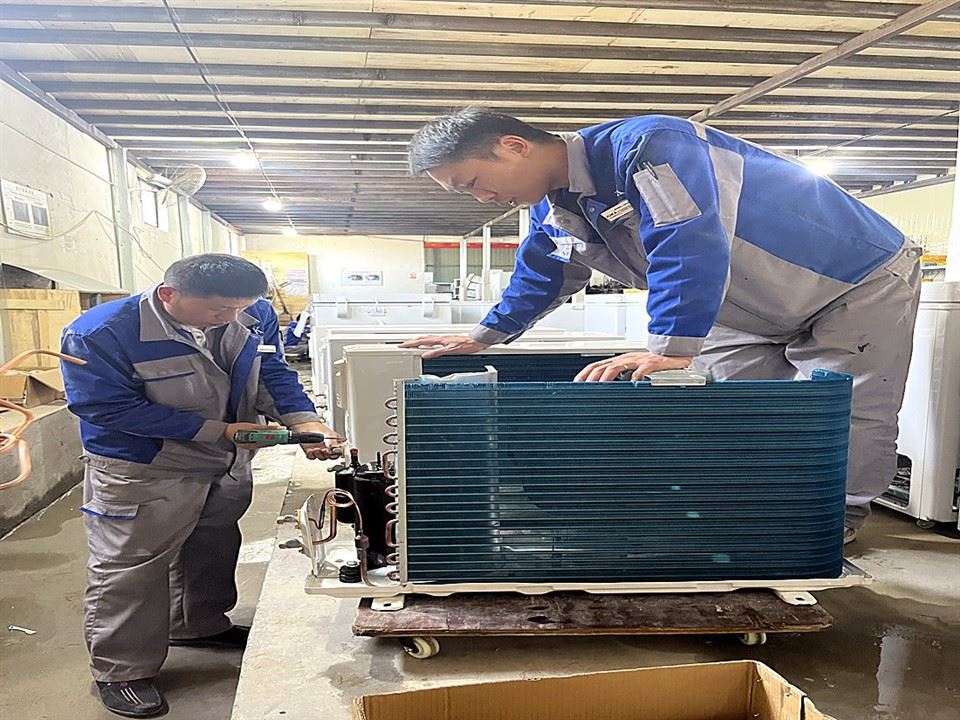
A split system is judged by its joints. Flare joints at the indoor unit, braze joints at the outdoor unit, and in CKD a set of header joints inside the chassis that never existed in a finished unit. Three rules cover most of the failures we see: cut square and deburr, flare to the gauge rather than to feel, and never braze without nitrogen flowing.
Four Tests That Must Pass On Every Unit, Not On A Sample
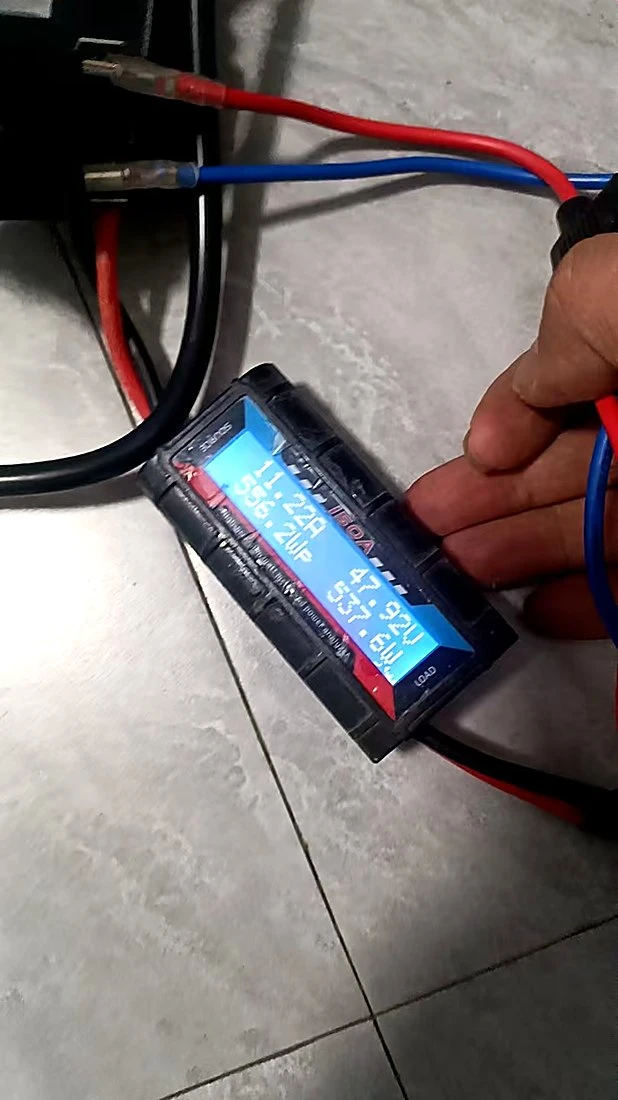
Air conditioners are the appliance most often blamed for electrical incidents in hot climates, usually unfairly, because the installation is out of the factory's hands. What a factory can control is that every unit leaving the line is electrically sound before the installer ever touches it.
| Test | Method | Pass criterion | Why it is not optional |
|---|---|---|---|
| Earth continuity | 25 A between the earth pin and any exposed metal | Under 0.1 ohm | The one test that stands between a fault and a fatality |
| Insulation resistance | 500 V DC between live parts and earth | Over 2 megohm | Catches moisture and pinched harness before the customer does |
| Hipot | 1,000 V AC plus twice rated, one second, on the primary circuit | No breakdown, no flashover | The only test that finds a marginal creepage distance on a local PCB |
| Leakage current | At rated voltage, unit running | Under 3.5 mA for a plug connected unit | RCD nuisance tripping is almost always leakage, not the RCD |
What You Buy Once, And What You Buy Per Container
One rule keeps tooling cost honest: instruments are bought once and calibrated forever, fixtures are bought per capacity, and consumables are bought per container. Most first time buyers over-invest in fixtures for capacities they will not sell and under-invest in the gauges that decide whether anything they build works.
| Item | Type | Indicative quantity | Note |
|---|---|---|---|
| Digital micron gauge | Instrument | 2 | One at the pump, one spare. This is the single most important purchase |
| Refrigerant scale, 5 g resolution | Instrument | 1 | A kitchen scale is not a substitute and will not pass an audit |
| Manifold gauge set | Instrument | 2 | R32 and R410A need different sets; do not share |
| Vacuum pump, 4 to 6 cfm, two stage | Instrument | 2 | Two stage matters in humid climates |
| Refrigerant recovery machine | Instrument | 1 | Required by most authorities before you may open a circuit |
| Clamp meter, insulation tester, hipot tester | Instrument | 1 each | The three electrical gates in the table above |
| Electronic leak detector | Instrument | 2 | Sniffers drift; keep a calibrated spare |
| Flaring block and torque wrench | Hand tool | 4 sets | One per bench, not one per hall |
| Tube cutter, deburring tool, bender | Hand tool | 4 sets | Cheap tools produce out-of-round tube and bad flares |
| Brazing torch set with nitrogen regulator | Station | 1 to 2 | Nitrogen purge is a station, not an accessory |
| Run test bench with power and gauges | Fixture | 1 | Built locally to our drawing, not shipped |
| Packing jig and carton set | Fixture | 1 per capacity | Local cartons are usually cheaper than imported ones |
A Clear Split Prevents The Most Expensive Argument
| Work | Juka | You | Third party |
|---|---|---|---|
| Assembly drawings, torque and charge specifications | Provides | Follows | Not involved |
| Coil packs, compressors, PCBs, copper, fasteners | Supplies to the kit list | Receives and counts | Freight forwarder |
| Site, floor, power, compressed air, nitrogen | Reviews the drawing you send | Builds | Local contractor |
| Line layout and bench drawings | Provides | Installs | Local fabricator |
| Training of operators and one supervisor | Two engineers on site | Releases staff for training | Not involved |
| Local certification and energy label | Supplies test reports and declarations | Applies to the authority | Local test house |
| Import clearance, duty and local transport | Documentation only | Owns the process | Customs broker |
| After sales in market | Spare parts at kit pricing | First line service | Local service network |
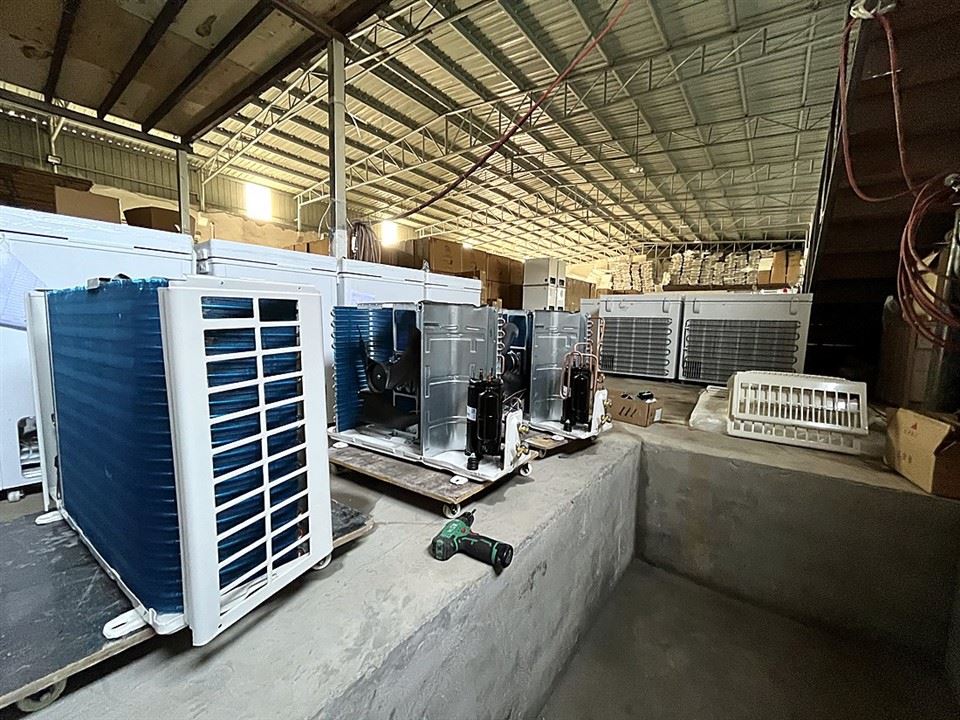
What A Single Capacity Line Actually Needs
These are the numbers we plan a first line against. They are not a target to grow into; they are the floor below which the line cannot run a full container without overtime and rework.
| Resource | Single capacity, one shift | Two capacities, one shift | Comment |
|---|---|---|---|
| Floor area | 200 to 400 sqm | 400 to 700 sqm | Plus 100 sqm of raw material and packed goods storage |
| Electrical supply | 20 to 30 kW | 40 to 60 kW | Separate circuits for pump, braze and test bench |
| Compressed air | 6 to 8 bar, dry | Same, higher volume | Dryer is not optional in a humid climate |
| Nitrogen | Manifold with two stage regulator | Two manifolds | Purge and pressure hold both draw from it |
| Operators | 6 to 10 | 12 to 18 | One of them must be a dedicated tester, not a shared role |
| Supervisor | 1, trained by us | 1 to 2 | The supervisor owns the leak rate number |
| Output after ramp up | One 40 HQ per 10 to 15 working days | One 40 HQ per 7 to 10 days | Confirmed against your model mix |
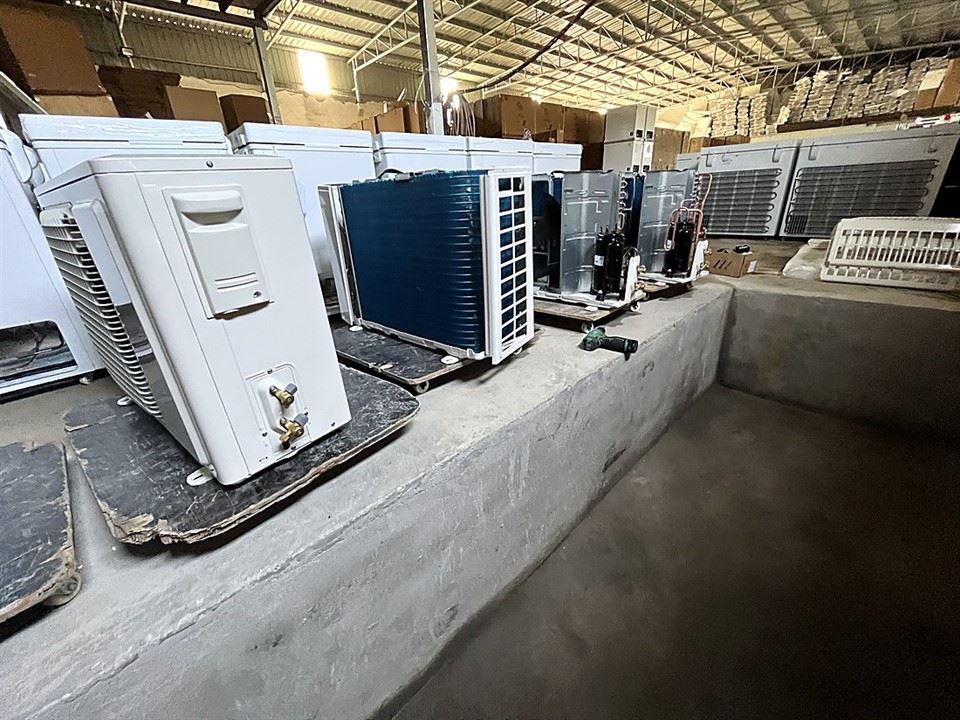
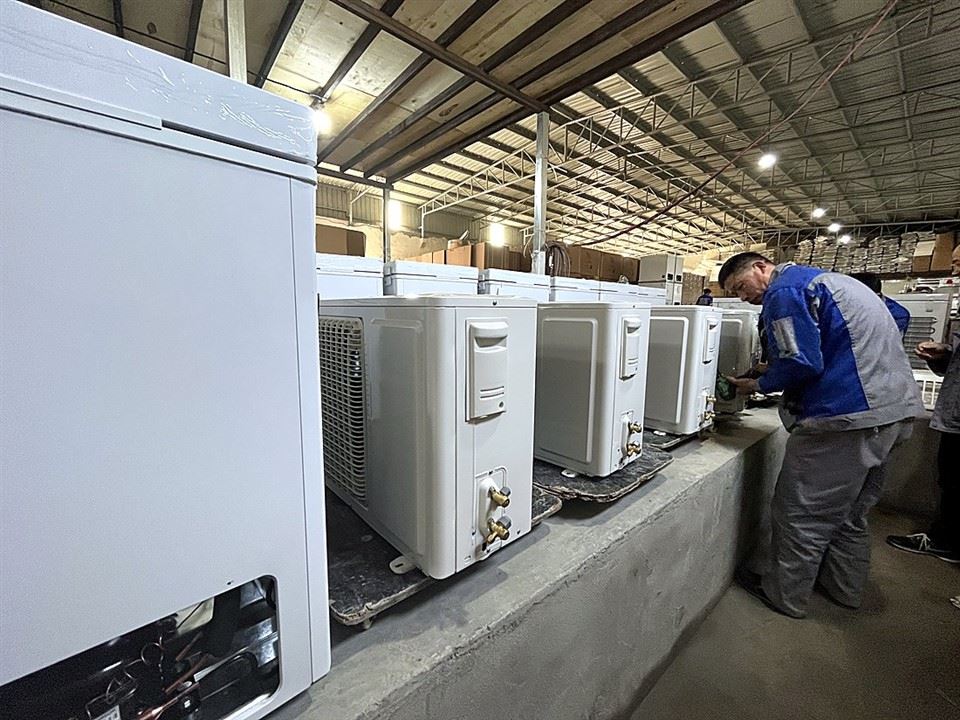
From Deposit To A Line That Holds A Vacuum
| Milestone | Typical duration | Depends on |
|---|---|---|
| Kit specification and packing list frozen | 1 to 2 weeks | Your voltage, refrigerant and capacity decision |
| First kit manufactured and crated | 25 to 35 days | Component lead times, mainly compressors and PCBs |
| Sea freight to your port | 25 to 45 days | Route and season |
| Site ready, power and air commissioned | Runs in parallel | Your contractor, not us |
| Engineer on site, first units built | 15 to 20 days | Containers cleared and staged before arrival |
| First container assembled and tested | 10 to 15 days after training | Operator retention; a new team restarts the curve |
| Second container without our engineer | 30 to 45 days | Whether the supervisor kept the checklist |
Two: your first container will have a higher defect rate than your fifth. That is a training curve, not a supply problem, and any supplier who says otherwise has not stood on a new line.
Three: we cannot make a compressor or a PCB cheaper than the brand that makes it. What we can do is buy it at the volume price and pass the documentation with it.
Four: cycle time is set by your slowest station forever. Buying faster benches does not fix a braze station that one person owns.
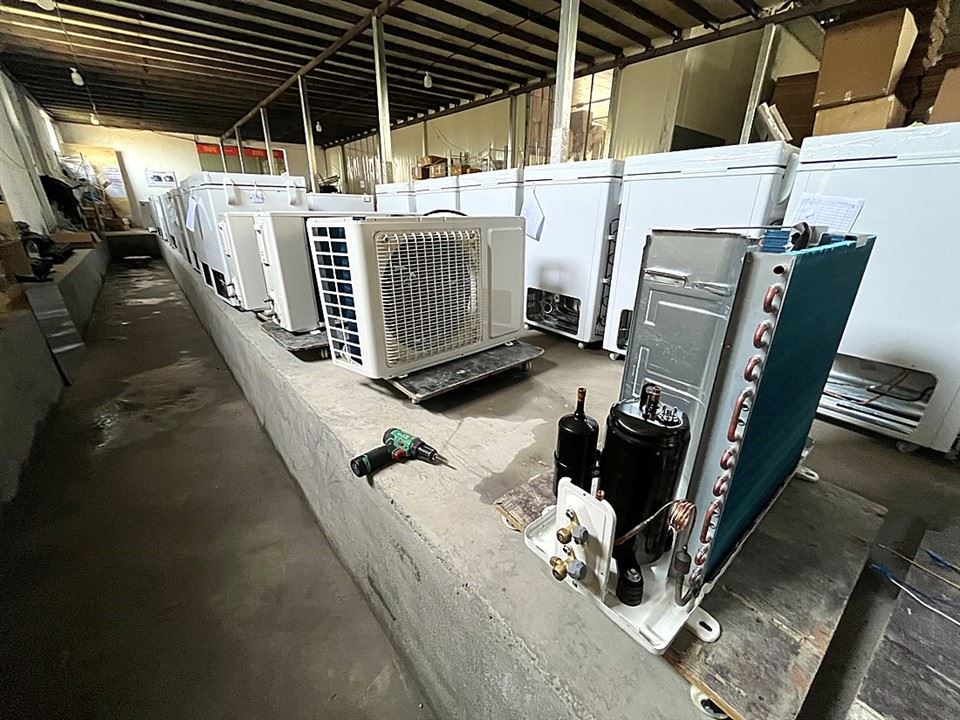
One Engineer, Fifteen To Twenty Days, Then Every Year
The engineer who travels is a line engineer, not a sales engineer, and the visit has a fixed shape: three days building the first units with your team watching, then your team builds while the engineer watches, then a day of testing every unit that was built and a written list of what has to change. The annual visit is shorter and exists to catch the drift that always appears once the first supervisor leaves.
Spare parts after the first year are sold at kit pricing rather than finished goods pricing, which matters more than it sounds: the parts that fail in the field are compressors, boards and fan motors, and those are exactly the parts a kit programme already buys in volume.
Checked On Every Unit, Not Sampled
| Gate | Check | Reject if |
|---|---|---|
| 01 | Fin block and coil face, both assemblies | Any bent fin block larger than a thumbprint |
| 02 | Drain pan slope and hose routing | Water stands in the pan, or the hose rises before it falls |
| 03 | Blower seating and free rotation | Any rub, or more than a light click at one point |
| 04 | Braze penetration, all joints | Visible gap, or discolouration indicating no nitrogen purge |
| 05 | Pressure hold at 25 to 30 bar | Any drop beyond ambient temperature correction |
| 06 | Evacuation below 200 microns | Rise over 50 microns per minute after isolation |
| 07 | Charge weight against nameplate | Outside plus or minus 5 grams |
| 08 | Hipot, earth continuity, leakage, run test | Any failure, with no retest without finding the cause |


Reference Markets, And What Each One Taught Us
The kit programme started with refrigeration cabinets and moved to air conditioning when buyers in the same markets asked for the second product from the same container. What follows is where that has been done and what the local conditions changed in the kit.
| Market | What was assembled locally | What the market changed |
|---|---|---|
| Cameroon | Chest freezers, then split air conditioners | High humidity; drier packing and longer evacuation times |
| Chad | Chest freezers and showcases | Dust; filters and coil cleaning became part of the training |
| Congo | Freezers and upright coolers | Voltage sag; boards set for wide input tolerance |
| Uzbekistan | Chest freezers | Cold winters; charge and pipe lengths re-specified |
| Yemen | Split air conditioners and freezers | Import documentation; full declaration pack per container |
Eight Answers, Including The Uncomfortable Ones
A kit is quoted per container, not per unit. One 40 HQ in CKD typically carries the assemblies for two to three times the number of finished units it would carry as CBU, and the exact count is confirmed against your model mix before the order is placed.
No. In SKD the indoor and outdoor units arrive already charged and the only joints you make are flare joints at the wall, so the first container needs vacuum and torque, not a torch. Brazing enters at CKD.
Yes for cartons, brackets and manuals, and that is usually worth doing. Copper is a different question: the tube wall thickness and the cleanliness of the inside surface decide whether the circuit holds a vacuum, so we supply the coil and you supply everything around it.
Refrigerant is almost always sourced locally because cylinders are dangerous and expensive to ship. The kit documentation specifies the type and the charge weight per model, and the line is set up to charge by weight from locally purchased cylinders.
Your authority does, and whether they accept a local assembly line as the manufacturer is a question only they can answer. We supply the test reports and declarations the kit was built against, and we will tell you honestly if we think the label will have to stay with an importer.
Two containers, in our experience. The first with an engineer on site for fifteen to twenty days, the second with remote support and a weekly call, and by the third the supervisor is training new operators.
Not tooling and not skill: it is the vacuum station being treated as a waiting step instead of a measured one. A line with a good micron gauge and a supervisor who reads it will outperform a better equipped line without those two things.
Yes. Badge, rating label, manual language, carton print and model code are yours. What stays ours is the test documentation, because that is what your authority and your customers will ask for later.
Kit Data At A Glance
| Item | Value |
|---|---|
| Kit type | CKD or SKD, quoted against a capacity ladder rather than a single model |
| Capacities covered | 9,000 / 12,000 / 18,000 / 24,000 BTU split systems; other capacities on request |
| Indoor assemblies | Coil pack with chassis, blower and drain pan; front panel and filter as a flat bundle |
| Outdoor assemblies | Fully assembled outdoor unit, compressor mounted and nitrogen charged |
| Copper circuit | Insulated pair coil 3 to 5 m, flare nuts, drain hose, interconnecting cable |
| Electrical | 220 to 240 V 50 Hz or 110 to 120 V 60 Hz; DC ready interface board available as an option |
| Refrigerant | R32 or R410A, selected at order; charge weight stated per model on the nameplate |
| Holding charge | Dry nitrogen, 1 to 2 bar, in every coil and every outdoor unit |
| Packing | Nine cartons per set as standard, timber crates built to your container plan |
| Container load | Two to three times the CBU unit count, confirmed per model and per mix |
| Documentation | Packing list, assembly drawings, torque and charge tables, test reports, declarations |
| Training | Two engineers, 15 to 20 days on site for the first container, annual visit after |
| Spare parts | Kit pricing after year one, on compressors, boards, fan motors and valves |
| Certification support | CE and CB test reports where the kit was built to those standards |
| Not included | Local certification fees, refrigerant, local cartons, site works, customs clearance |
| Lead time | 25 to 35 days ex works after specification freeze, plus sea freight |
| Minimum order | One 40 HQ, one capacity, to keep the first training curve short |
| Warranty basis | Component level, per the kit documentation, with the assembly steps you have been trained on |
Four Companies, One Supply Chain
Hangzhou Juka Intelligent Technology is the head office and the export entity. Zhejiang Gangtong Electrical Appliance is the manufacturing base for refrigeration. Hangzhou Juka Solar Technology develops the DC direct drive and hybrid systems. Huzhou Transtec Electrical Appliance runs the CKD and SKD programme, including the kit engineering, the packing design and the training that goes with it. Founded in 2009, with CE, CB, ErP and ISO 9001 in place, and OEM work for buyers who bring their own brand.
Hot Tags: spare parts ckd skd for air conditioner, China spare parts ckd skd for air conditioner manufacturers, suppliers, factory


