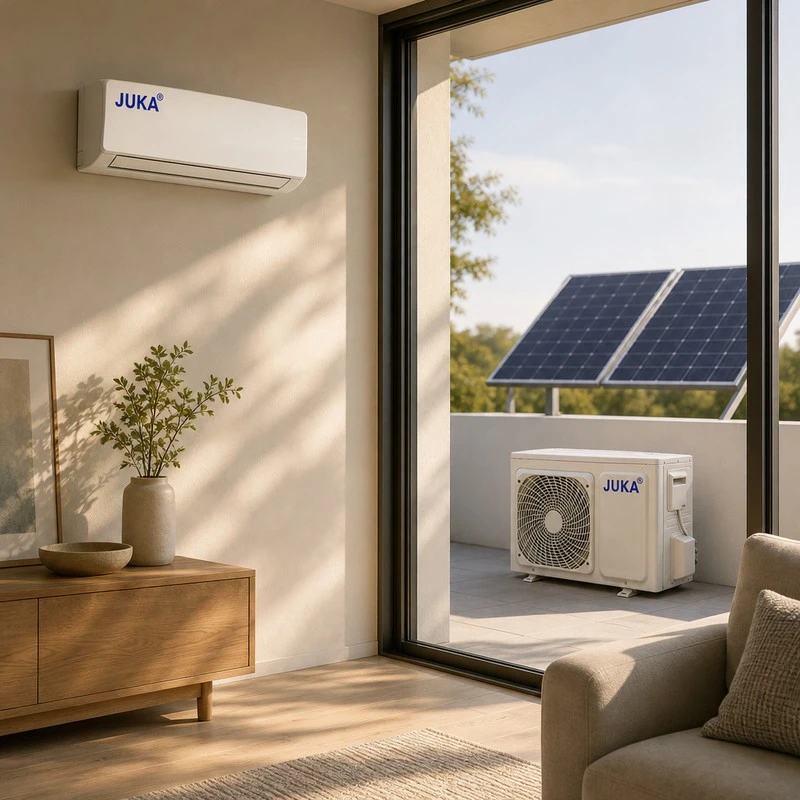
When it comes to the world of greenhouse management, maintaining the right temperature is crucial for the health and productivity of plants. This is where the concept of using an on grid hybrid solar air conditioner in a greenhouse comes into play. As a reputable on grid hybrid solar air conditioner supplier, I've received numerous inquiries about the feasibility and benefits of integrating this technology into greenhouse settings. In this blog, I'll delve into the details to help you understand whether an on grid hybrid solar air conditioner can indeed be used in a greenhouse.
Understanding On Grid Hybrid Solar Air Conditioners
Before we explore their application in greenhouses, let's first understand what on grid hybrid solar air conditioners are. These systems combine the power of solar energy with the traditional electrical grid. They are designed to operate primarily on solar power when sunlight is available. Solar panels installed on the building or nearby capture sunlight and convert it into electricity, which is then used to run the air conditioner. When solar power is insufficient, such as during cloudy days or at night, the system automatically switches to drawing power from the electrical grid.
The 9000btu Solar Air Conditioner On Grid Hybrid Solar Air Conditioner [/solar-air-conditioner/on-grid-hybrid-solar-air-conditioner/9000btu-solar-air-conditioner-on-grid-hybrid.html] is a prime example of such a product. With its appropriate cooling capacity, it can be customized to meet the specific needs of different spaces, including greenhouses.
Advantages of Using On Grid Hybrid Solar Air Conditioners in Greenhouses
1. Energy Efficiency and Cost Savings
One of the most significant advantages of using on grid hybrid solar air conditioners in greenhouses is the potential for energy efficiency and cost savings. Greenhouses often require continuous temperature regulation, which can lead to high electricity bills if traditional air conditioning systems are used. By harnessing solar power, the on grid hybrid system can significantly reduce the amount of electricity drawn from the grid. Over time, this can result in substantial cost savings for greenhouse owners. In addition, in regions where there are incentives or subsidies for using renewable energy sources, the financial benefits can be even more pronounced.

2. Environmental Friendliness
In today's world, environmental sustainability is a growing concern. On grid hybrid solar air conditioners offer a more eco - friendly alternative to traditional air conditioning systems. Solar power is a clean, renewable energy source that produces no greenhouse gas emissions during operation. By using solar energy to cool the greenhouse, we can reduce the carbon footprint associated with greenhouse operations. This not only helps to protect the environment but also aligns with the growing demand for sustainable agricultural practices.
3. Reliability
The hybrid nature of these air conditioners ensures reliability. Even on days when solar energy production is low, the system can seamlessly switch to grid power. This means that greenhouse owners don't have to worry about sudden temperature fluctuations that could harm their plants. Whether it's a sunny day or a cloudy one, the on grid hybrid solar air conditioner can maintain a stable temperature inside the greenhouse.
4. Customizable Cooling
On grid hybrid solar air conditioners come in a variety of sizes and capacities. This allows greenhouse owners to choose a system that is tailored to the specific size and requirements of their greenhouse. For larger greenhouses, multiple units can be installed to ensure uniform cooling throughout the space. The 9000btu Solar Air Conditioner On Grid Hybrid Solar Air Conditioner mentioned earlier can be an ideal choice for medium - sized greenhouses, providing efficient and targeted cooling.
Considerations for Using On Grid Hybrid Solar Air Conditioners in Greenhouses
1. Solar Panel Placement
The effectiveness of the on grid hybrid solar air conditioner depends largely on the placement of the solar panels. In a greenhouse setting, it's essential to install the solar panels in a location where they can receive maximum sunlight throughout the day. This may require careful planning to avoid shading from nearby structures or trees. Additionally, the solar panels should be installed at an optimal angle to capture the most sunlight.
2. Greenhouse Design
The design of the greenhouse also plays a role in the performance of the on grid hybrid solar air conditioner. Factors such as insulation, ventilation, and the orientation of the greenhouse can affect the overall cooling requirements. A well - insulated greenhouse will retain cool air better, reducing the load on the air conditioning system. Proper ventilation can also help to remove heat and humidity, further enhancing the efficiency of the air conditioner.
3. Initial Investment
While on grid hybrid solar air conditioners can offer long - term cost savings, the initial investment can be relatively high compared to traditional air conditioning systems. This includes the cost of the air conditioner itself, the solar panels, and the installation. However, it's important to consider the long - term benefits and return on investment. Many greenhouse owners find that the energy savings and environmental benefits outweigh the initial cost.
Case Studies of On Grid Hybrid Solar Air Conditioners in Greenhouses
To illustrate the practical application of on grid hybrid solar air conditioners in greenhouses, let's look at a few case studies.
In a small - scale organic greenhouse in California, the owner installed a 9000btu On Grid Hybrid Solar Air Conditioner. The greenhouse was growing a variety of herbs and leafy greens. Before the installation, the owner was spending a significant amount on electricity bills for the traditional air conditioning system. After switching to the hybrid solar system, the electricity costs were reduced by nearly 50%. The stable temperature maintained by the air conditioner also led to a 20% increase in plant growth and quality.
In another case, a large commercial greenhouse in Spain was facing challenges with high energy costs and environmental regulations. The installation of multiple on grid hybrid solar air conditioners helped the greenhouse meet its cooling needs while reducing its carbon footprint. The system's ability to switch between solar and grid power ensured continuous operation, even during periods of low sunlight.
How to Choose the Right On Grid Hybrid Solar Air Conditioner for Your Greenhouse
When selecting an on grid hybrid solar air conditioner for your greenhouse, there are several factors to consider:
1. Cooling Capacity
As mentioned earlier, the cooling capacity of the air conditioner should match the size and specific cooling requirements of your greenhouse. A professional HVAC technician can help you determine the appropriate BTU (British Thermal Unit) rating for your greenhouse.
2. Energy Efficiency Rating
Look for air conditioners with a high energy efficiency rating. This will ensure that the system consumes less energy while providing the same amount of cooling. The Energy Star label is a good indicator of energy - efficient products.
3. Brand Reputation
Choose a reputable brand that has a proven track record of manufacturing high - quality on grid hybrid solar air conditioners. Read customer reviews and testimonials to get an idea of the product's performance and reliability.
Conclusion
In conclusion, an on grid hybrid solar air conditioner can be a viable and beneficial option for use in a greenhouse. It offers energy efficiency, cost savings, environmental friendliness, and reliability. While there are some considerations such as solar panel placement, greenhouse design, and initial investment, the long - term benefits make it a worthwhile investment for many greenhouse owners.
If you're interested in learning more about our on grid hybrid solar air conditioners or are considering purchasing one for your greenhouse, we'd be happy to discuss your specific needs. Contact us for more information and to start a procurement discussion. We're here to help you create the ideal environment for your plants while saving on energy costs and contributing to a more sustainable future.
References
- Smith, J. (2022). The Future of Greenhouse Climate Control. Agricultural Technology Journal.
- Johnson, A. (2021). Energy - Efficient Cooling Systems for Greenhouses. Renewable Energy Research.
- Greenhouse Management Association. (2020). Best Practices for Temperature Regulation in Greenhouses.
Where JUKA Builds These Greenhouse Units
JUKA builds the on grid hybrid solar air conditioners in its own plant in Zhejiang, where sheet metal forming, foaming, refrigerant charging and final testing sit on one site. Every unit is leak tested and run under load before it is packed. For greenhouse projects the split units can leave as complete machines or as CKD and SKD kits, so an installer can match them to the panels and charge controller already on site. The range is CE certified.