

As a supplier to a solar freezer factory, I've had the privilege of witnessing the intricate process of manufacturing these essential appliances. Solar freezers are a remarkable blend of technology and sustainability, designed to provide reliable cooling in areas with limited or no access to grid electricity. In this blog, I'll delve into the raw materials used in a solar freezer factory, exploring their functions and importance in the production process.
1. Insulation Materials
Insulation is a critical component of solar freezers, as it helps to maintain the internal temperature and reduce energy consumption. One of the most commonly used insulation materials is polyurethane foam. This material is known for its excellent thermal insulation properties, which help to keep the cold air inside the freezer and prevent heat from entering.
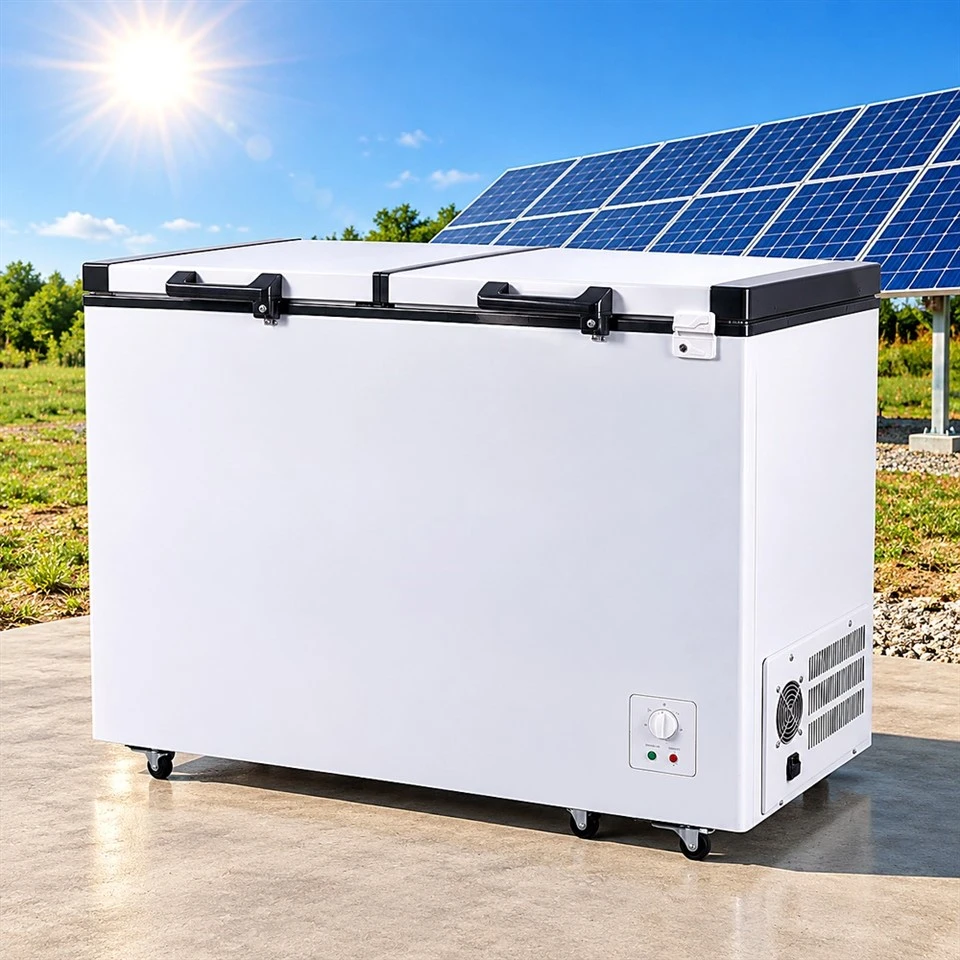
The thickness of the insulation is also an important factor. For instance, our 85mm Foaming Thickness Normal 12v/24v Solar Deep Freezer Double Doors BD/BC - 708 and 85mm Foaming Thickness Normal 12v/24v Solar Deep Freezer Double Doors BD/BC - 508 are equipped with 85mm of polyurethane foam insulation. This thicker insulation layer provides better heat resistance, ensuring that the freezer can maintain a stable temperature even in hot environments.
Foam density and wall thickness are set at the foaming station, which is why a 65 mm cabinet and an 85 mm cabinet can leave the same line with the same compressor deck.
Another insulation material that may be used is expanded polystyrene (EPS). EPS is a lightweight and cost - effective option, although it generally has lower insulation performance compared to polyurethane foam. However, in some cases where cost is a major consideration, EPS can be a viable alternative.
2. Refrigeration System Components
The refrigeration system is the heart of a solar freezer, responsible for removing heat from the interior and maintaining a cold temperature. The key components of the refrigeration system include the compressor, condenser, evaporator, and refrigerant.
- Compressor: The compressor is a crucial part of the refrigeration system. It compresses the refrigerant gas, increasing its pressure and temperature. A high - quality compressor is essential for the efficient operation of the freezer. We often source compressors that are designed to work with low - voltage DC power, which is suitable for solar power systems. For example, in our BD/BC - 208H 85mm Foaming Thickness Normal DC Solar Deep Freezer Refrigerator, the compressor is carefully selected to ensure reliable performance and energy efficiency.
- Condenser: The condenser is responsible for releasing the heat absorbed by the refrigerant in the evaporator. It consists of a series of coils through which the hot refrigerant gas flows. As the gas passes through the condenser, it releases heat to the surrounding environment and condenses into a liquid. The condenser is typically made of copper or aluminum due to their good thermal conductivity.
- Evaporator: The evaporator is where the refrigerant absorbs heat from the interior of the freezer. As the liquid refrigerant evaporates, it cools the air inside the freezer. Similar to the condenser, the evaporator is also made of materials with high thermal conductivity, such as copper or aluminum.
- Refrigerant: The refrigerant is the substance that circulates through the refrigeration system, absorbing and releasing heat. In recent years, there has been a shift towards using more environmentally friendly refrigerants, such as R - 134a and R - 600a. These refrigerants have a lower impact on the ozone layer and global warming potential compared to traditional refrigerants like R - 12.
3. Solar Panels
Solar panels are the primary source of power for solar freezers. They convert sunlight into electricity, which is then used to power the refrigeration system and other components of the freezer. The most common type of solar panels used in solar freezers are crystalline silicon solar panels, which are known for their high efficiency and durability.
The power output of the solar panels depends on their size and efficiency. A larger solar panel with higher efficiency will be able to generate more electricity. When designing a solar freezer, it is important to select the appropriate size and number of solar panels based on the power requirements of the freezer. For example, in our 65mm Foaming Thickness Normal 12v/24v Solar Chest Freezer Single Door BD/BC - 88, the solar panels are carefully sized to ensure that the freezer can operate efficiently even on cloudy days.
4. Cabinet Materials
The cabinet of a solar freezer provides the structure and protection for the internal components. The most common materials used for the cabinet are steel and plastic.
- Steel: Steel is a strong and durable material that can withstand the rigors of transportation and use. It is often used for the outer shell of the freezer, providing protection against physical damage. Steel cabinets can be painted or coated to prevent rust and corrosion.
- Plastic: Plastic is a lightweight and cost - effective material that is often used for the inner liner of the freezer. It is easy to clean and resistant to stains and odors. Some plastic materials also have good insulation properties, which can help to reduce energy consumption.
5. Electrical Components
In addition to the solar panels and compressor, there are several other electrical components that are essential for the operation of a solar freezer. These include the charge controller, battery, and wiring.
- Charge Controller: The charge controller regulates the flow of electricity from the solar panels to the battery. It prevents overcharging and over - discharging of the battery, which can extend the battery's lifespan. A good charge controller is essential for the efficient and safe operation of the solar power system.
- Battery: The battery stores the electricity generated by the solar panels for use when there is no sunlight. Deep - cycle batteries are commonly used in solar freezers because they can withstand repeated charging and discharging. The capacity of the battery depends on the power requirements of the freezer and the duration of backup power needed.
- Wiring: The wiring connects all the electrical components of the freezer together. It is important to use high - quality wiring that can handle the electrical current without overheating. The wiring should also be properly insulated to prevent short circuits.
6. Door Seals
Door seals are an often - overlooked but important part of a solar freezer. They prevent cold air from leaking out of the freezer and warm air from entering. A good door seal should be flexible, durable, and airtight. Silicone rubber is a common material used for door seals due to its excellent sealing properties and resistance to temperature changes.
Conclusion
The raw materials used in a solar freezer factory play a crucial role in determining the performance, efficiency, and durability of the final product. From the insulation materials that keep the cold air in, to the solar panels that provide the power, each component is carefully selected and engineered to ensure that the solar freezer can meet the needs of users in off - grid areas.


If you are interested in purchasing solar freezers or learning more about the raw materials and manufacturing process, please feel free to contact us for further discussion. We are committed to providing high - quality products and excellent customer service.
Inside the Plant
Juka Solar has been building solar refrigeration in Zhejiang since 2015, and the materials above are handled in one building: sheet metal is cut and bent on automatic lines, cabinets are foamed on a dual-gun high-pressure machine, and every circuit is checked with an INFICON leak detector before the unit is closed up. That is why 65 mm, 85 mm and 110 mm foaming can be specified on the same order without outsourcing the box body.
Products carry CE certification, the company holds 2 invention patents and 17 utility model patents, and warranty runs one year on the machine with three years on the compressor. Cabinets and refrigeration parts also ship as CKD and SKD kits for partners assembling locally in Ghana, Nigeria, Cameroon, Laos, Kazakhstan and India.

Foamed liners waiting for assembly - the box body is moulded in-house rather than bought in as a finished cabinet.
References
- "Solar Refrigeration Technology: A Review" - International Journal of Refrigeration
- "Thermal Insulation Materials for Cold Storage Applications" - Building and Environment Journal
- "Refrigeration System Design and Operation" - ASHRAE Handbook