

What is the power output of an on grid hybrid solar air conditioner?
As a supplier of on - grid hybrid solar air conditioners, I often get asked about the power output of these innovative systems. Understanding the power output is crucial for customers as it directly impacts the efficiency, cost - effectiveness, and overall performance of the air conditioner.
Basics of On - grid Hybrid Solar Air Conditioners
On - grid hybrid solar air conditioners are a revolutionary solution in the field of cooling technology. These systems combine the use of solar energy with the traditional power grid. During the day, when the sun is shining brightly, the solar panels on the air conditioner capture sunlight and convert it into electricity. This solar - generated electricity can then be used to power the air conditioner, reducing the reliance on the grid. When the solar power is insufficient, such as at night or on cloudy days, the system automatically switches to draw power from the grid.
Factors Affecting Power Output
The power output of an on - grid hybrid solar air conditioner is influenced by several factors.
Solar Panel Efficiency
The efficiency of the solar panels is a key determinant. High - efficiency solar panels can convert a larger percentage of sunlight into electricity. For instance, modern monocrystalline solar panels can have an efficiency of up to 22% or even higher in some cases. If the solar panels on an on - grid hybrid solar air conditioner are more efficient, they will generate more power, increasing the overall power output of the system.
Solar Irradiance
Solar irradiance refers to the amount of solar power that reaches a given area. It varies depending on the geographical location, time of day, season, and weather conditions. In regions closer to the equator, the solar irradiance is generally higher throughout the year. For example, areas in the deserts of the southwestern United States or the Sahara Desert in Africa receive a large amount of sunlight. On a sunny day, the solar irradiance can reach up to 1000 watts per square meter. In contrast, in northern regions or during cloudy days, the solar irradiance can drop significantly, reducing the power output of the solar panels on the air conditioner.
Size of the Solar Panel Array
The size of the solar panel array also plays a vital role. A larger array of solar panels can capture more sunlight and generate more electricity. For a small - scale on - grid hybrid solar air conditioner used in a single - room application, a relatively small solar panel array may be sufficient. However, for larger commercial or multi - room installations, a larger and more extensive solar panel array is required to meet the power demands.
Air Conditioner's Power Consumption
The power consumption of the air conditioner itself affects the power output requirements. Different models have different cooling capacities, which are usually measured in British Thermal Units (BTUs). A higher - capacity air conditioner will consume more power. For example, a 9000btu Solar Air Conditioner On Grid Hybrid Solar Air Conditioner will have a different power consumption compared to a 12,000 BTU unit. The system needs to generate enough power from the solar panels to cover at least a significant portion of this consumption during the day.
Calculating the Power Output
To calculate the power output of an on - grid hybrid solar air conditioner, we first need to understand the power rating of the solar panels. Solar panels are rated in watts (W). For example, if a solar panel has a power rating of 300 W, it means that under ideal conditions (standard test conditions of 1000 W/m² solar irradiance, 25°C cell temperature), it can generate 300 watts of power.
Let's assume we have an on - grid hybrid solar air conditioner with a solar panel array consisting of 5 solar panels, each with a power rating of 300 W. The total theoretical power output of the solar panel array under ideal conditions would be 5 * 300 = 1500 W or 1.5 kilowatts (kW).
However, in real - world scenarios, we need to account for the factors mentioned above. Due to non - ideal solar irradiance, panel inefficiencies, and other losses, the actual power output will be lower. A common rule of thumb is that the actual power output is around 70 - 80% of the theoretical power output. So, in our example, the actual power output of the solar panel array might be around 1.05 - 1.2 kW.
Benefits of Knowing the Power Output
Understanding the power output of an on - grid hybrid solar air conditioner is beneficial in multiple ways.

Cost Savings
By knowing the power output, customers can estimate how much electricity they will be able to generate from solar energy and how much they will need to draw from the grid. This allows them to calculate the potential cost savings on their electricity bills. For example, if the air conditioner can generate enough solar power to meet 80% of its power needs during the day, the customer will only need to pay for the remaining 20% from the grid, resulting in significant long - term savings.
System Sizing
For those planning to install an on - grid hybrid solar air conditioner, knowledge of the power output helps in proper system sizing. They can determine the number and size of solar panels required based on the cooling capacity of the air conditioner and their local solar irradiance conditions. This ensures that the system is neither under - sized (leading to insufficient cooling) nor over - sized (resulting in unnecessary costs).
Environmental Impact
A higher power output from solar energy means a lower reliance on grid - based electricity, which is often generated from non - renewable sources such as coal and natural gas. By using an on - grid hybrid solar air conditioner with a good power output, customers can significantly reduce their carbon footprint and contribute to a more sustainable environment.
Contact for Purchase and Consultation
If you are interested in learning more about on - grid hybrid solar air conditioners and their power output, or if you are considering purchasing one for your home or business, we are here to help. Our team of experts can provide you with detailed information, perform site assessments, and offer customized solutions based on your specific needs. Whether you are looking for a small - scale unit for a single room or a large - scale commercial installation, we have the right product for you. Reach out to us to start a conversation about how our on - grid hybrid solar air conditioners can meet your cooling and energy - saving requirements.
Matching power output to a JUKA solar air conditioner
9,000 to 18,000 BTU. JUKA builds on-grid hybrid solar air conditioners from 9,000 BTU to 18,000 BTU, plus a 48 V off-grid line, so the same indoor unit can take PV, battery or grid input and keep the peak load inside the limits described above.

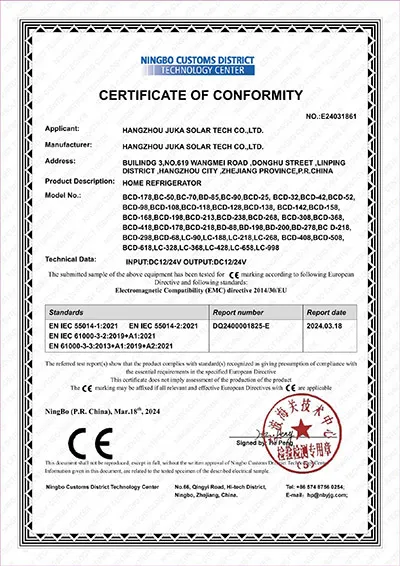
Units are assembled on our own sheet-metal, foaming and refrigeration lines and tested against CE, CB, ErP, ISO 9001 and ISO 14001 before shipment.
References
- Duffie, J. A., & Beckman, W. A. (2013). Solar Engineering of Thermal Processes. John Wiley & Sons.
- Kreith, F., & Goswami, D. Y. (2019). Principles of Heat Transfer. Cengage Learning.
- ASHRAE Handbook - HVAC Systems and Equipment (2020). American Society of Heating, Refrigerating and Air - Conditioning Engineers.