



Same 198 Litre Body, Same Carton, Same Footprint As The Ten Plate Version - The Only Thing You Give Up Is Simultaneous Output
There is a habit in this trade of treating plate count as a size ladder: seven is the small one, ten is the serious one, eleven is the one for people who mean it. That reading is convenient for a catalogue and misleading for a buyer. All four cabinets in this family share one body, one footprint and one carton family. The plates change how much product you can freeze at the same time, not how big the machine is and not how cold it gets.
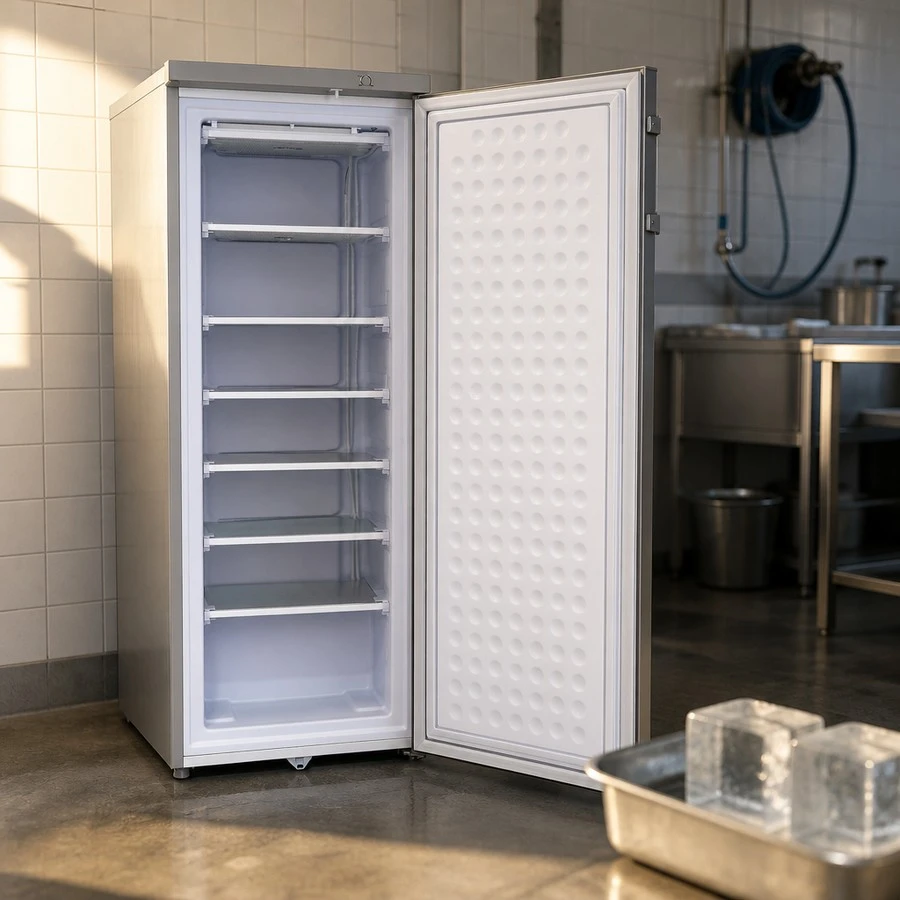
So the honest question is not "which is the biggest" but "what does my day actually need". A route that sells out of block ice by noon wants short, frequent harvests. A plant that loads once and leaves the cabinet alone wants everything freezing at once. The BD-198-7 is the shortest stack in that family, with seven plate shelves, a 198 litre interior and the same DC compressor family as its brothers.
What follows is the working detail: what a plate physically is, what seven of them change about your loading rhythm, how the DC side is wired when the sun is the supplier, and where this cabinet earns its keep on a real site.
7 FREEZING PLATES |
198 L GROSS CAVITY |
1410 mm TOTAL HEIGHT |
3 SUPPLY OPTIONS |
The three BD-198 cabinets below are built on the same 550 × 635 mm footprint. They differ in how many plates are stacked inside, which changes loading capacity and harvest rhythm but not the space you reserve on the floor, not the door swing, and not the carton family that goes on the container.
| Model | Plates | Cavity | Cabinet mm | Per 40'HQ |
|---|---|---|---|---|
| BD-198-7 | 7 | 198 L | 550 × 635 × 1410 | 123 |
| BD-198-10 | 10 | 198 L | 550 × 635 × 1410 | 123 |
| BD-198-11 | 11 | 198 L | 550 × 635 × 1410 | 123 |
Loading capability differs by plate count; the exterior envelope, the container count and the power options do not. If you are replacing a unit in an existing corner, the BD-198-7 needs the same space as the ten plate version.
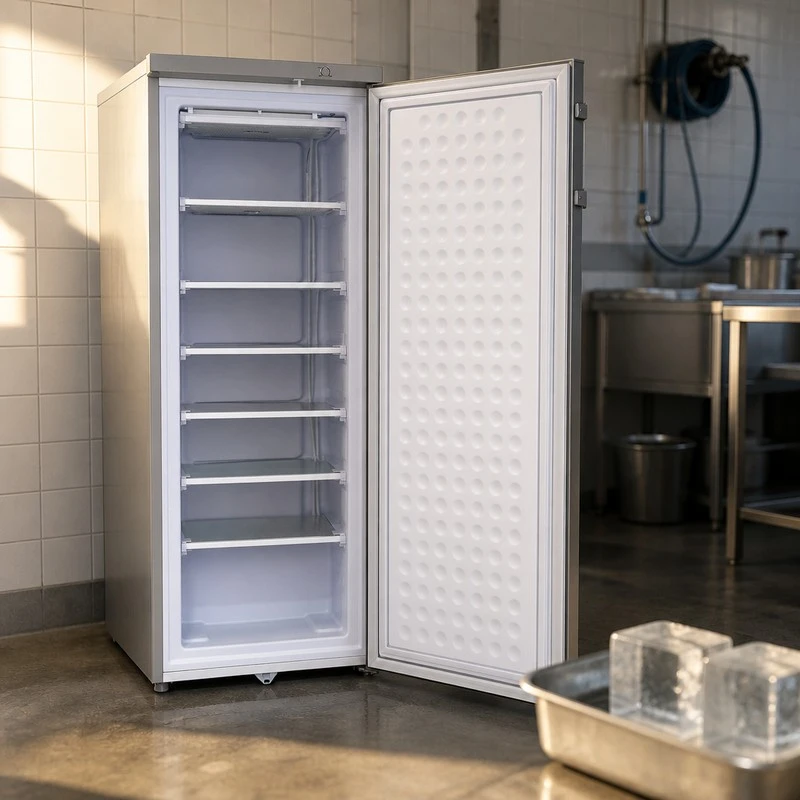
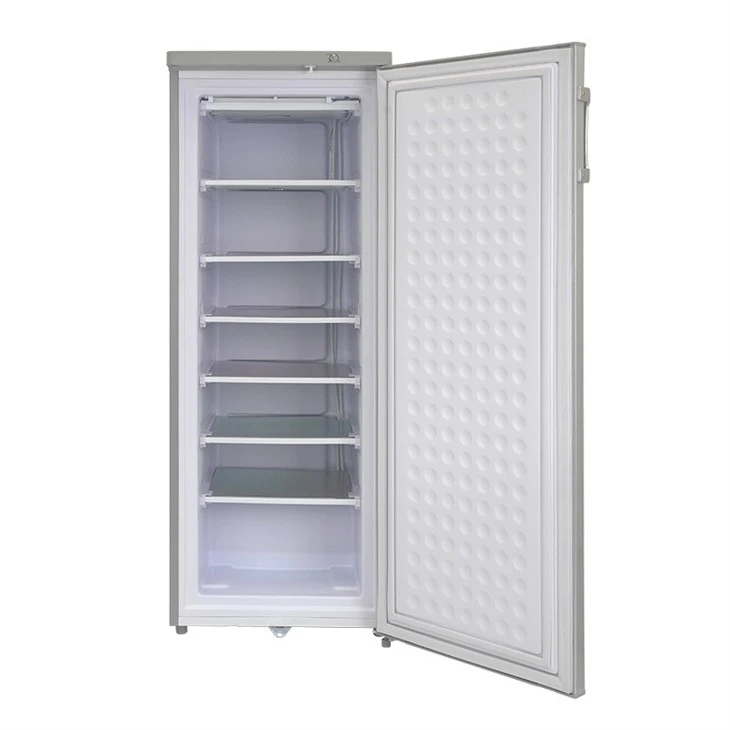
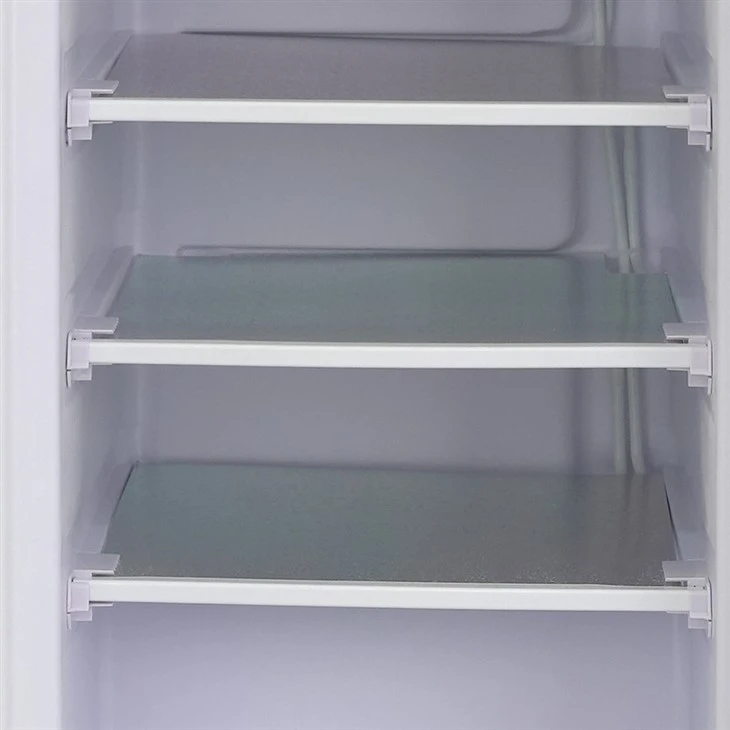
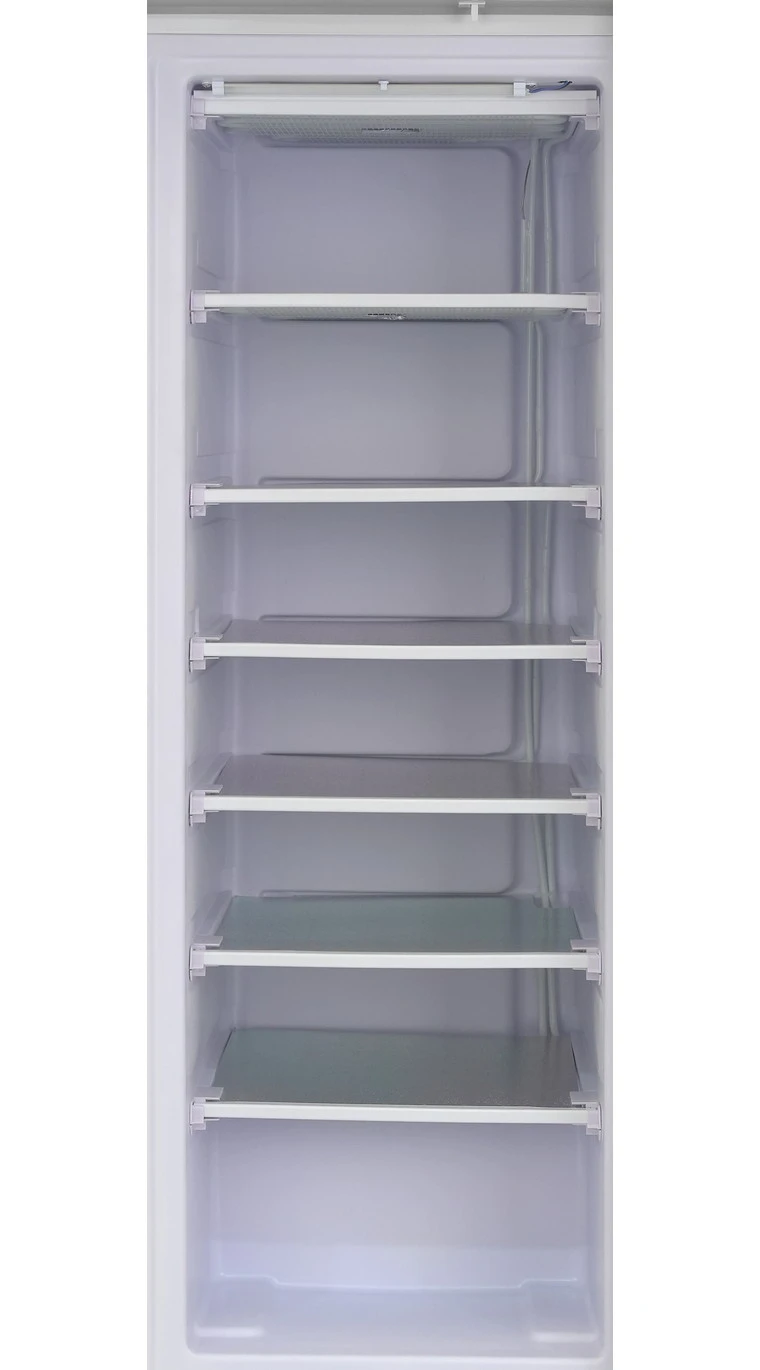
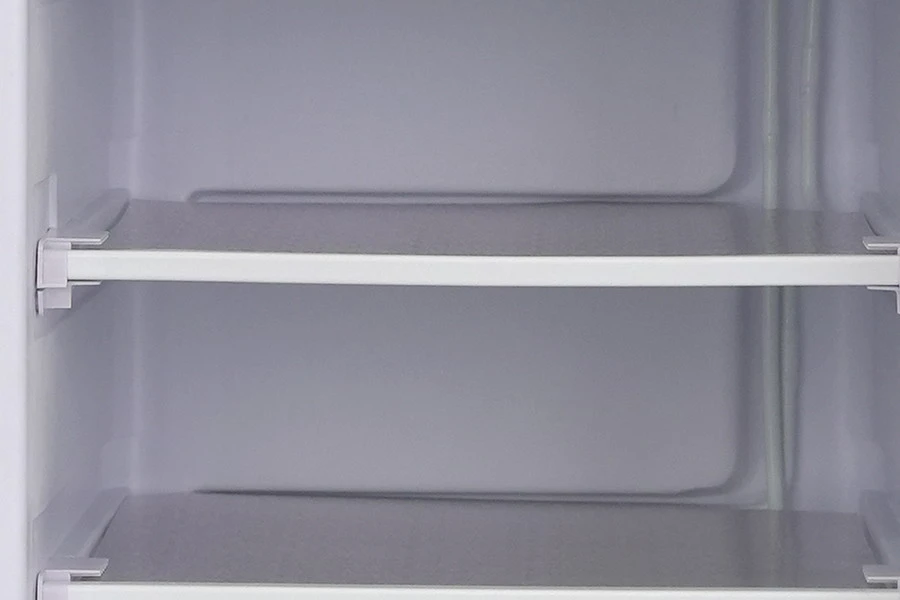
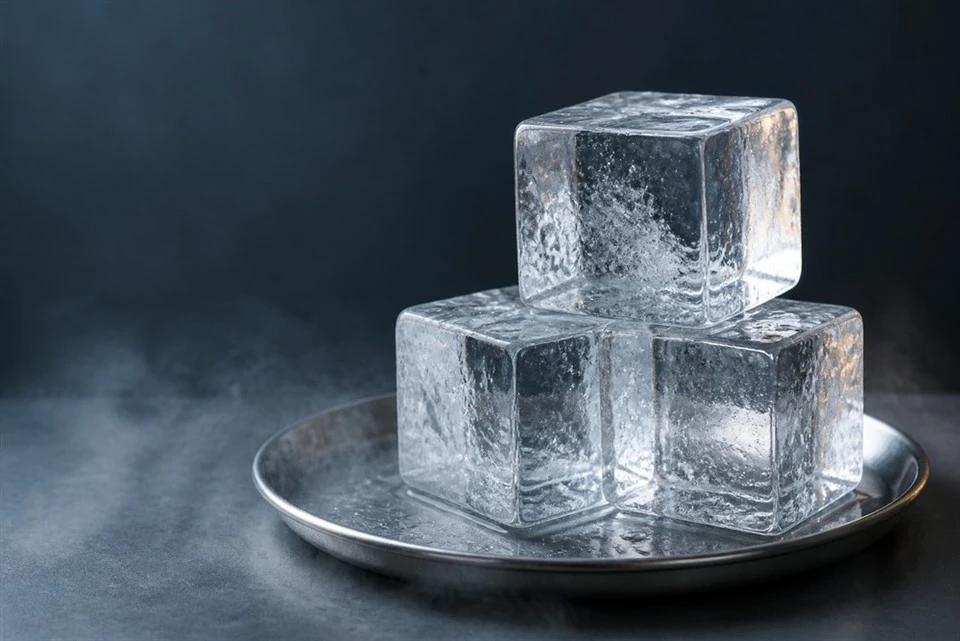
Inside the cabinet there is no ice bin and no auger. There are seven horizontal freezing shelves, each one a roll bonded aluminium plate carrying refrigerant through its own channels. Product sits on the plate, the plate pulls heat out of it from below, and the block releases when the surface releases it. That is the whole machine.
Once you look at it that way, seven is not seven tenths of a ten plate machine. It is seven independently loaded shelves, which is exactly what a shop that freezes on a daily loop wants: you can load three today, four tomorrow, and never have to wait for a full stack to justify switching the compressor on.
The trade is simultaneity. Ten plates let you put more product in at the same moment; seven plates keep the loading pattern smaller and the turnaround shorter to manage. Neither is better in the abstract. They suit different routes.
WHAT SEVEN PLATES GIVE YOU A loading rhythm that matches a small route: shorter batches, more frequent harvests, less product sitting in the cabinet waiting for company. |
WHAT SEVEN PLATES COST YOU Simultaneous capacity. On a day when a customer wants a full stack at once, a ten or eleven plate cabinet will get there in fewer loading rounds. |
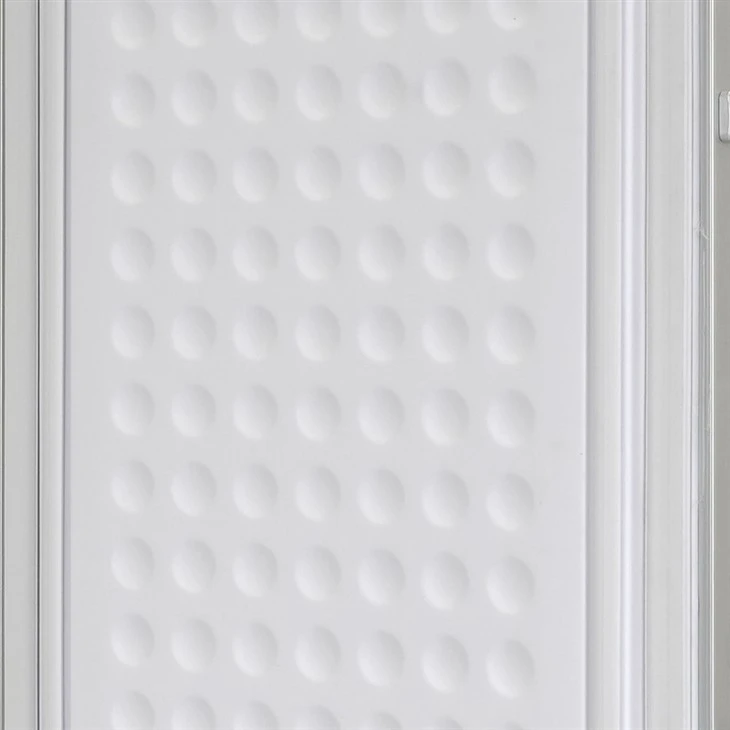
A block ice cabinet spends its life at −18 deg C and below, and the largest heat leak on any such cabinet is the seam where the door meets the frame. That is why the inner face of this door is a moulded panel with a regular field of raised bosses rather than a flat sheet: the pattern stiffens the panel, holds a layer of still air across the face, and keeps the gasket line loaded evenly when the door is pulled shut.
Practical consequence: do not defeat the door to save time. Propping it open during a long loading round, or leaving a block wedged in the gasket, is what turns a freezer into a wet cabinet. Close it, let it pull down, and accept the wait.
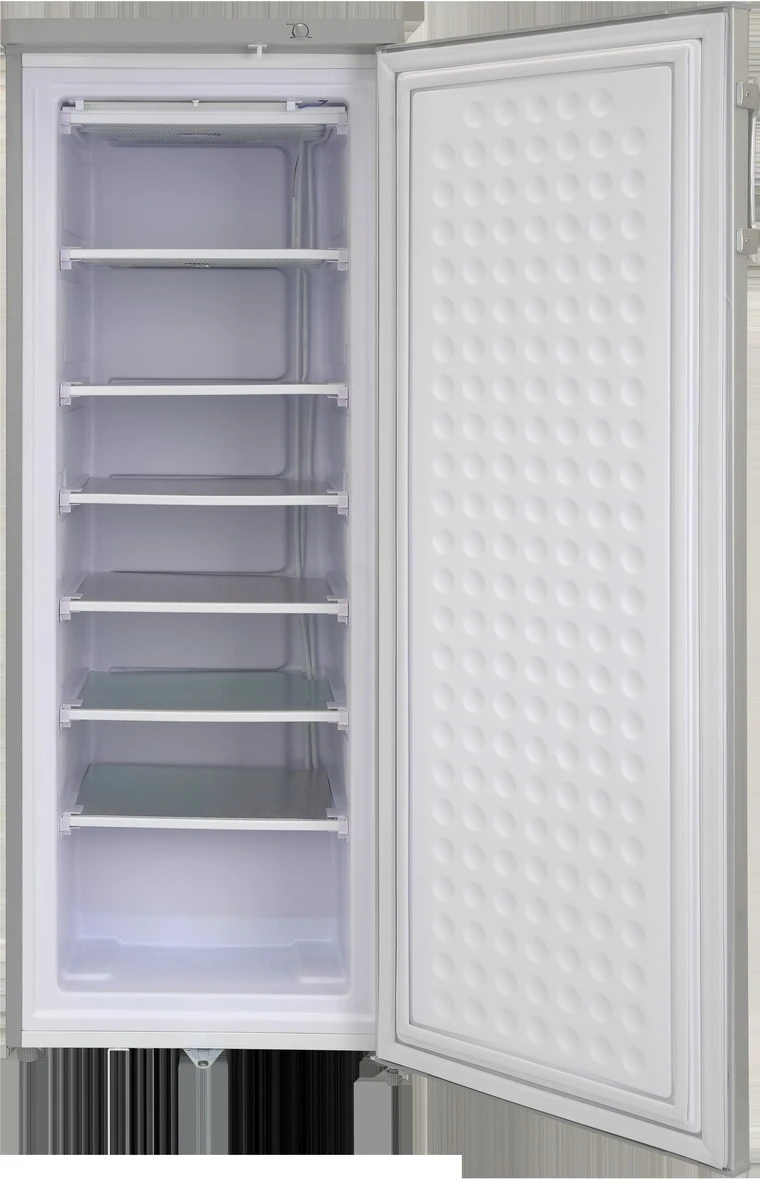
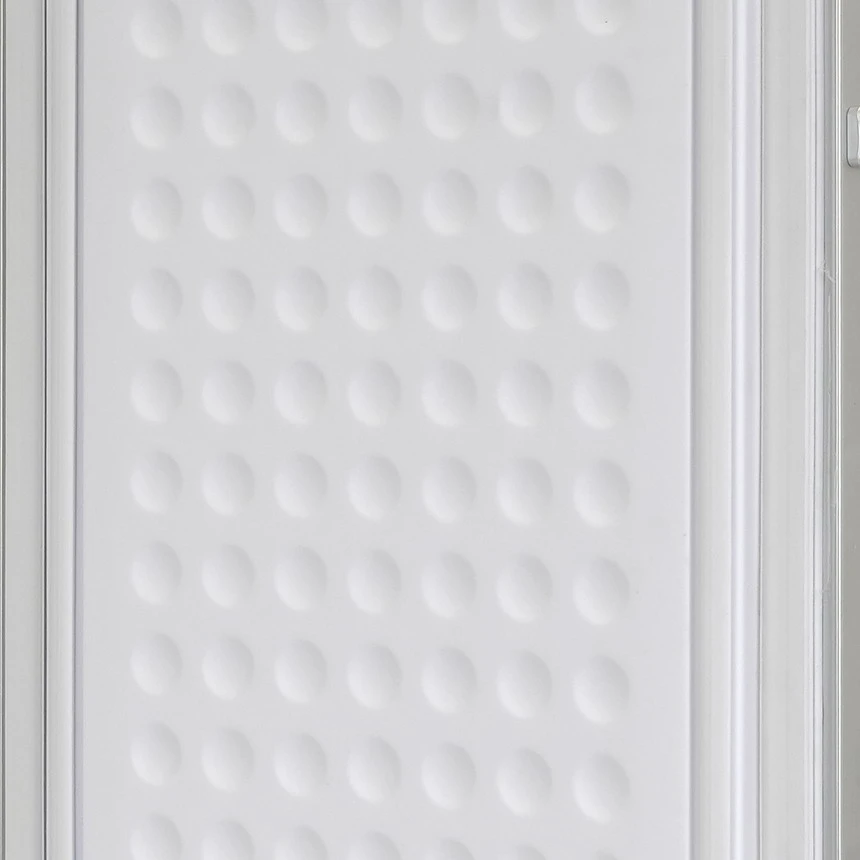
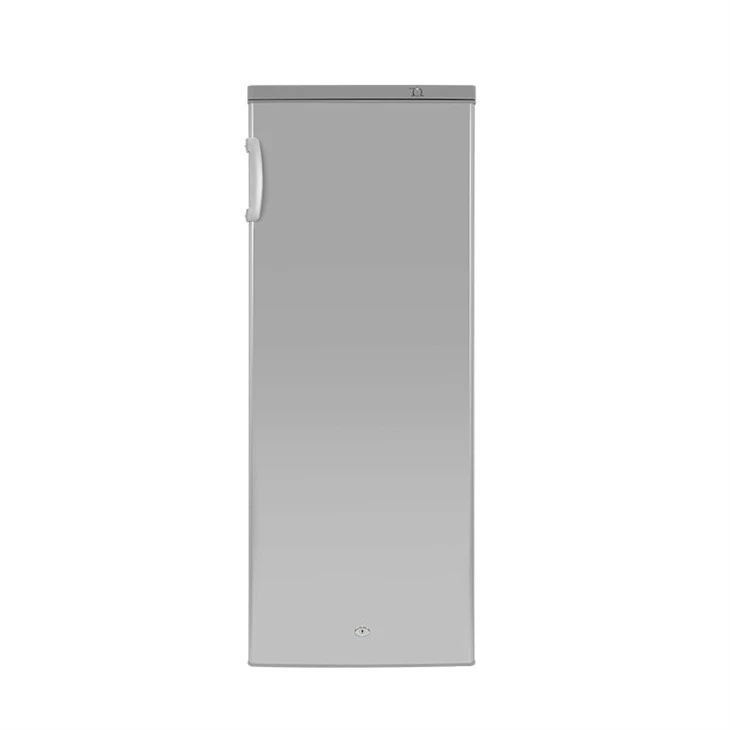
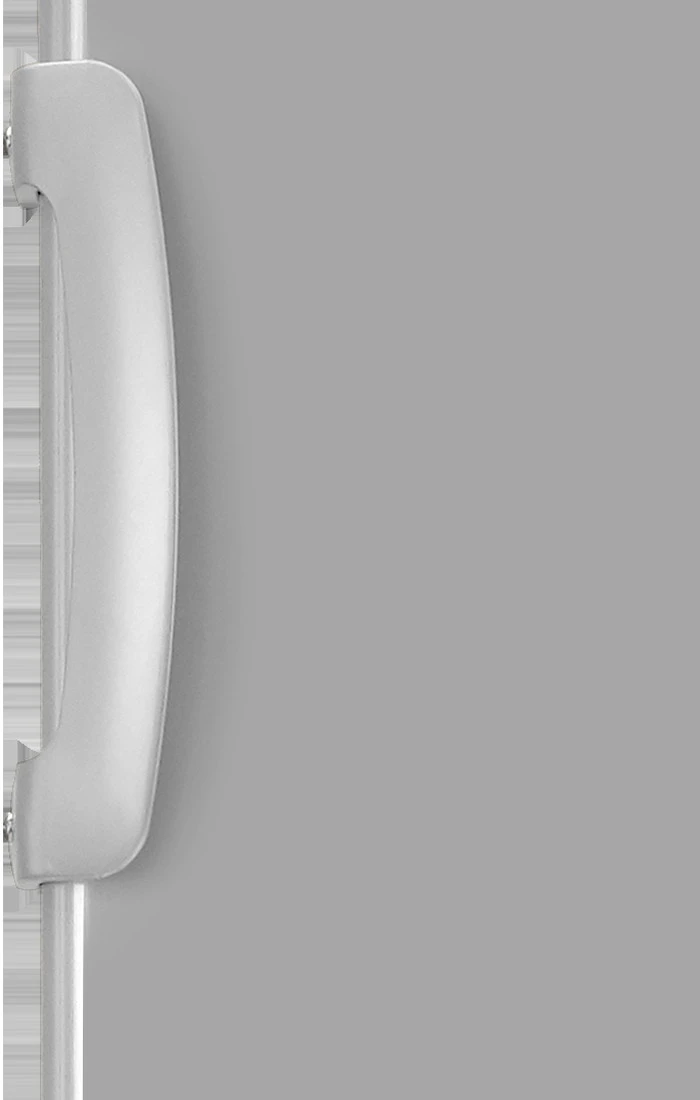
The cabinet is 550 mm wide, 635 mm deep and 1410 mm tall. Add the handle and the door swing and the working depth in front of it becomes the real constraint on site, not the cabinet itself. Measure the swing, measure the corridor you will carry blocks down, then measure the cabinet.
| Width | 550 mm |
| Depth | 635 mm |
| Height | 1410 mm |
| Carton | 570 × 650 × 1455 mm |
| Gross / net weight | 52 kg / 49 kg |
| Loading | 123 cabinets per 40'HQ |
Because the carton is only 1455 mm tall and stands upright, these load standing, not on their side, and 123 of them fill a 40 foot high cube exactly as the packing list says. It is worth checking your own door widths against the 570 mm carton before the container arrives.
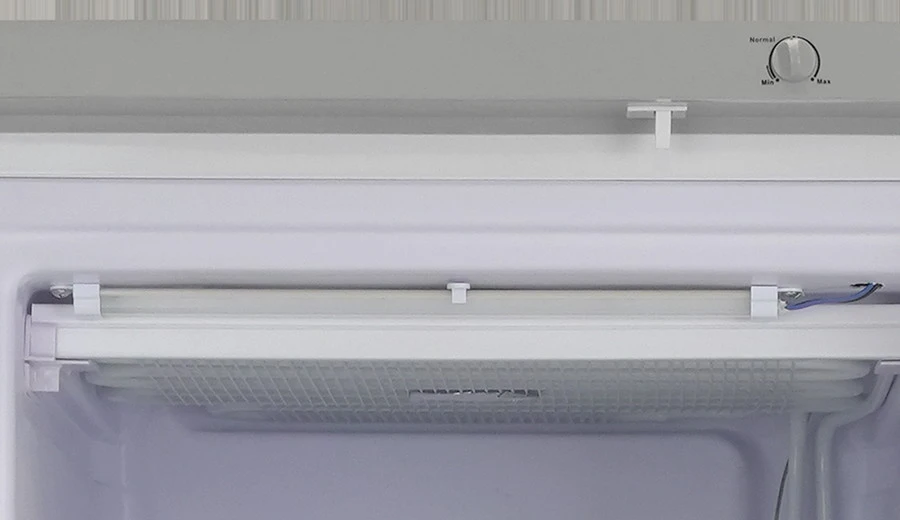
This is an air cooled cabinet with the condenser at the back. The single most common installation mistake is pushing it flat against a wall in a corner that already has no air movement, then blaming the machine when it struggles in a hot week.
DO
|
AVOID
|
The walls are foamed in place, and the refrigerant is either R134a or R600a depending on the build. Both are stated on the label on the back panel, and both matter to whoever services the unit: a technician who assumes the wrong one will recharge it wrong. Photograph the label when the unit lands and keep the photo with the paperwork.
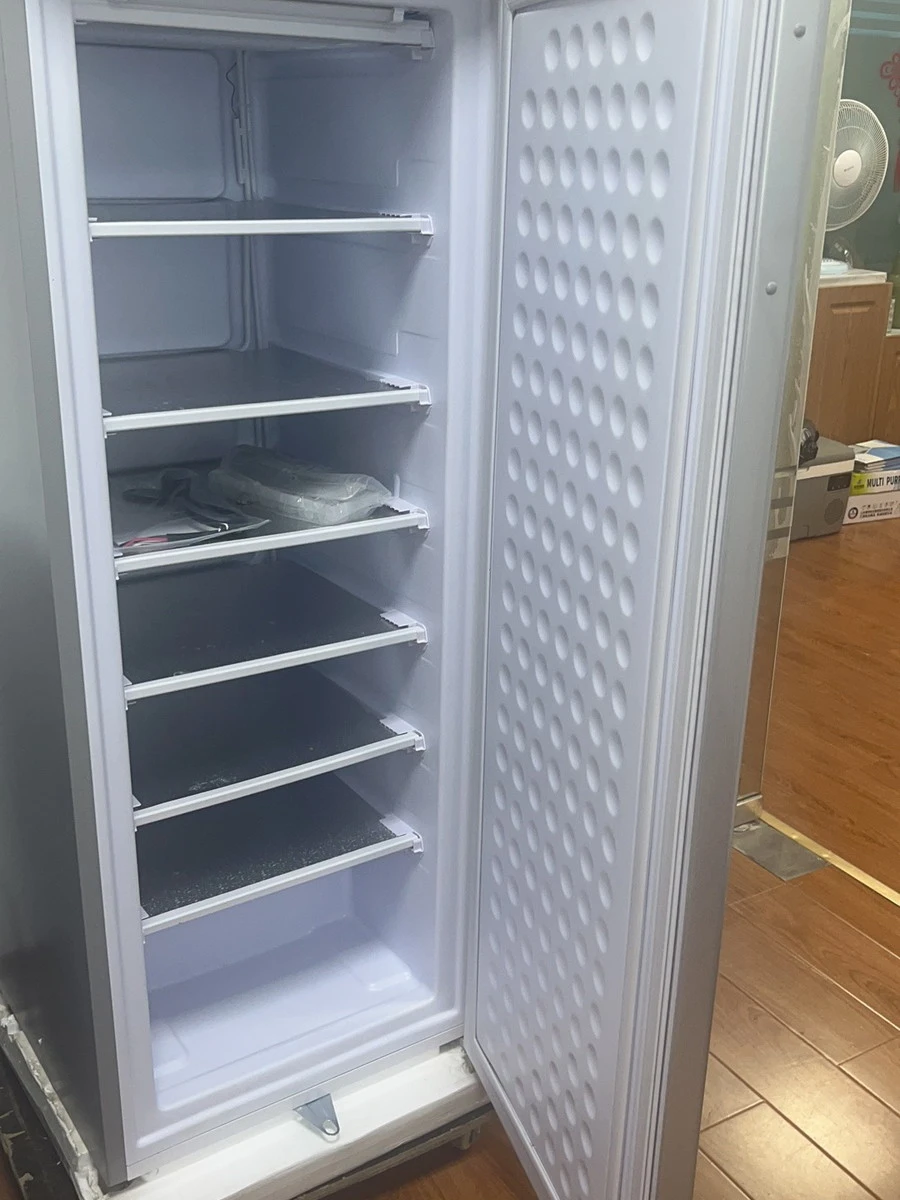
The BD-198-7 is specified for 12 V DC, 24 V DC and 220 V AC. On a grid connection it behaves like any chest freezer: plug it in, set it, forget it. On a battery it becomes a load that has to be planned, because a freezer is not a lamp - it runs for hours, cycles on and off, and does not care that the sun went down.
| Supply | What it suits | What you must provide |
|---|---|---|
| 220 V AC | Shops with a reliable grid | A socket on its own circuit, earthed |
| 12 V DC | Small PV systems, vehicles, boats | Battery bank plus short, thick cable runs |
| 24 V DC | PV systems that have to travel further | The same bank wired in series, half the current |
Between the two DC options, choose 24 V when the cable run is long. Doubling the voltage halves the current for the same work, and on a DC freezer the cable loss is the difference between a compressor that starts cleanly at dawn and one that trips the protection. Size the array to the daily duty cycle rather than to the nameplate, and keep the run from battery to cabinet as short as the layout allows.
If the site is off grid, the sequence that works is boring and reliable: charge controller, battery, cabinet. Nothing else in between. Counters, inverters and changeover switches added later are where most of the avoidable service calls come from.
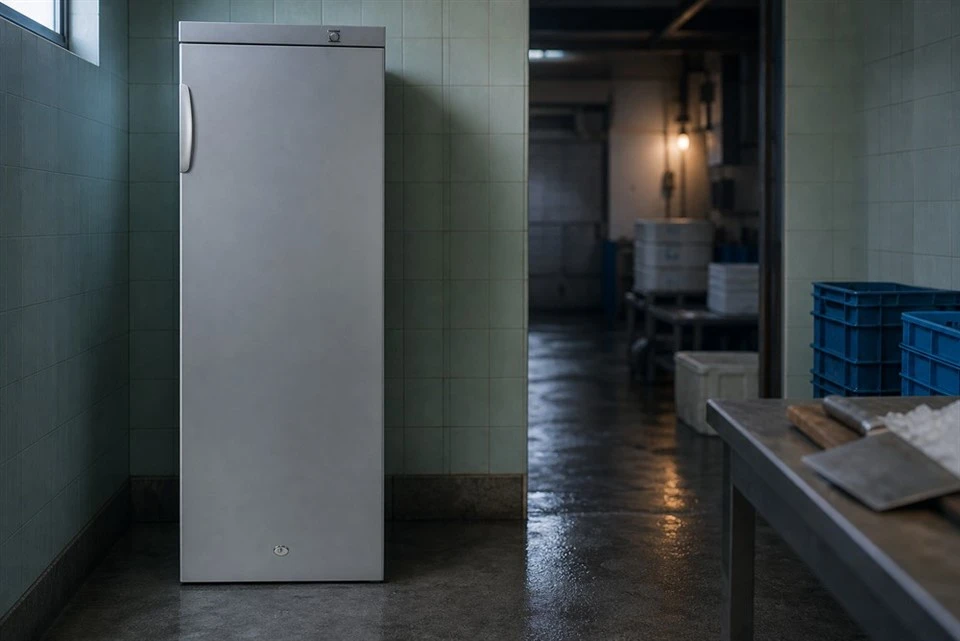
A block ice cabinet is not a convenience appliance. It is a small production unit, and it belongs wherever ice is consumed faster than it can be bought in bags, or where bagged ice arrives too expensive, too soft or too late.
| Fish and seafood stalls | Blocks laid under and around the display, harvested in the morning before the market fills. |
| Cafes and juice bars | Crushed or broken block ice for blenders and cold displays, made on site instead of delivered. |
| Rural shops and kiosks | Ice sold by the block to households, with the cabinet running from the same PV array as the lights. |
| Farms and dairies | Rapid chilling of produce and milk cans where the grid is weak or absent. |
| Clinics and labs | Cold packs and sample transport, kept independent of an unreliable mains supply. |
The pattern across all five is the same: demand is steady but not enormous, and the buyer would rather produce than purchase. That is precisely the case for seven plates. A stall that needs a dozen blocks a day does not want an eleven plate cabinet running half empty, and it does not want to wait for a ten plate stack to fill before it can harvest anything.
Every operator develops their own rhythm, but the loop itself does not change much. Written down, it looks like this:
| 01 | Open and check. Look at the plate surfaces before loading. A block that has not released is a block that is still pulling heat. |
| 02 | Release. Work from the top plate down, so cold air is not dumped onto the plates you have already emptied. |
| 03 | Move it out fast. Blocks go into an insulated box, not onto the floor. Ten minutes on a warm floor undoes hours of freezing. |
| 04 | Reload what you can sell. Seven plates means you can reload partially, which is the whole point of the smaller stack. |
| 05 | Close, and write it down. One line a day - filled, harvested, ambient temperature. The log is what tells you the machine is drifting before the customer does. |
| Model | BD-198-7 |
| Freezing plates | 7 roll bonded aluminium plate shelves |
| Cavity volume | 198 L |
| Cabinet dimensions | 550 × 635 × 1410 mm |
| Carton dimensions | 570 × 650 × 1455 mm |
| Gross / net weight | 52 kg / 49 kg |
| Operating temperature | −18 deg C and below |
| Supply | 12 V DC / 24 V DC / 220 V AC |
| Refrigerant | R134a or R600a, per build (stated on the rear label) |
| Condensing | Air cooled, rear condenser |
| Container loading | 123 pcs per 40'HQ |
| Configuration | Voltage, refrigerant, plug type and packaging confirmed per build on the order confirmation |
Two figures are deliberately left to the order confirmation: the rated power draw and the harvest weight per cycle. They depend on the compressor and plate set actually fitted to your build, and quoting a single number for the whole family would be a guess dressed up as a specification.
| Cabinet | Assembled, leak tested, run tested before packing |
| Shelves | Seven plate shelves, fitted on rails, boxed separately inside the cavity |
| Power lead | Fitted to the build voltage; plug type confirmed on the order |
| Documents | Packing list, wiring diagram, refrigerant label on the rear panel |
| Packaging | Carton 570 × 650 × 1455 mm, 52 kg gross, upright handling only |
Optional 220 V adapters, spare shelf sets, ice boxes and additional plates are quoted per order. Tell us the voltage and the refrigerant at the time of booking, not after the container is loaded, and the build goes out right the first time.
| Is seven plates enough for a small fish shop? | Usually yes, because a shop that size sells ice daily and reloads daily. If your peak is one large delivery a week, take the ten or eleven plate version instead. |
| Can I add plates later? | The rails are the same, but the plate set, refrigerant charge and control settings belong together. Do not treat this as a field upgrade without factory confirmation. |
| How cold does it get? | −18 deg C and below. That is cold enough to freeze the plates solid and cold enough to hold blocks for storage. |
| Does it need water plumbing? | No. You fill your molds by hand and load them on the plates. There is no water valve, no drain line and no pump in the circuit. |
| Will it run from my existing solar array? | It will run from 12 V or 24 V DC, but whether your array supports it is a question about your battery and daily load, not about the cabinet. Send us the array and battery figures and we will do the arithmetic with you. |
| Which refrigerant will mine have? | R134a or R600a depending on build. It is printed on the rear label, and that label is the authority for your unit. |
| How many fit in a container? | 123 units in a 40 foot high cube, standing upright, in the carton size listed above. |
| What if the door seal gets damaged in transit? | Gaskets are a stocked spare. Send a photo of the seal profile and we ship the matching one rather than asking you to improvise. |
Send the model you are comparing against, the blocks you sell in a week, and the supply you have on site. We will answer with a build sheet, not a brochure: BD-198-7, 198 L, seven plates, 550 × 635 × 1410 mm, 12 V / 24 V / 220 V, R134a or R600a, 123 pcs per 40'HQ.
Inside the factory that builds this system
|
Hangzhou Juka Solar Technology was founded in 2015 around one problem: putting solar energy, new energy and smart control to work inside a refrigeration circuit. The range has since grown from a single DC chest freezer to solar refrigerators, solar ice makers, mobile ice-cream carts, delivery tricycles and beverage retail carts - all of them exported, most of them to Belt and Road markets. The work does not stop at the container. Partners in Ghana, Gabon, Cameroon, Nigeria, Kazakhstan and India are supported in setting up their own local production for retail and delivery refrigeration, which is how a cold chain becomes permanent rather than a series of one-off shipments. For a solar system this matters more than for a mains-only freezer. Panel sizing, controller rating and battery capacity all depend on cabinet volume and site conditions, so the cabinet and the electronics are engineered together instead of being bought separately by the importer. |

|
What is decided before the cabinet is built
|
Wall thickness is a production parameter 65 mm or 110 mm foam is set on the foaming line, not assigned in a brochure. Insulation that is specified but not achieved is the usual reason a solar cabinet underperforms in its first hot season. |
One bill of materials Panel, controller, battery and cabinet are listed together, so the importer receives a system whose parts were sized against each other rather than sourced independently. |
|
Voltage as an order option DC input, AC adapter voltage, plug type and control panel artwork are selected per market on the same platform - no separate tooling run for a different destination. |
Repeatable on the second container Foam thickness, fittings and controller model are held per customer, so a follow-up order matches the first one instead of drifting. |
Certification and test documentation
CE marking covers the electrical arrangement, and utility model patents cover the cabinet and the direct-drive control layout. Documents travel with the order so they can be presented at customs and to institutional or tender buyers.

CE - low voltage and EMC |

CE - supplementary schedule |

Utility model patent - cabinet structure |
On the floor

|

|

|

|
Six control points behind every cabinet
01 |
Foaming runs inside a constant 20-23 °C room, so the foam quality does not shift with the season. |
02 |
Condenser and evaporator are nitrogen purged before any pipe joint is made, keeping the internal circuit clean. |
03 |
Vacuum is pulled to below 20 Pa. A unit that does not reach spec is never charged with refrigerant. |
04 |
Two leak tests per cabinet with an INFICON detector - one unpowered, one running. |
05 |
A constant-temperature test room confirms refrigeration parameters under identical conditions all year. |
06 |
Production and quality control are separate departments. Only cabinets signed off by a QC inspector are packed and warehoused. |
Machines on the line
Equipment |
What it gives the buyer |
Automatic laser cutting machine |
Consistent panel geometry, tight tolerances, clean edges |
Punch press and bending machine |
Repeatable cabinet forming from unit to unit |
Dual-gun high-pressure foaming machine |
Even density across the whole cabinet, no thin spots |
CACL high-precision filling machine |
Precise refrigerant charge on every unit |
INFICON high-sensitivity leak detector |
Finds leaks that ordinary detectors pass |
OEM, ODM and local assembly
Cabinet-only supply, private label, SKD and CKD shipments are all available, together with technical guidance for partners who would rather assemble locally than import finished units. Helping partners build their own refrigeration business is the part of the work that outlasts a single purchase order.
What can be changed on a standard order:
✓ Customer logo and cabinet colour
✓ Voltage options and plug type
✓ Packaging design
✓ Product configuration, baskets and fittings
✓ Panel, controller and battery included, or cabinet supplied on its own
Hot Tags: ice maker for sale, China ice maker for sale manufacturers, suppliers, factory, commercial use hybrid 10 50vdc solar ice maker, Commercial Use Normal10v 50vdc Solar Ice Maker BD 198 11, solar ice maker


